
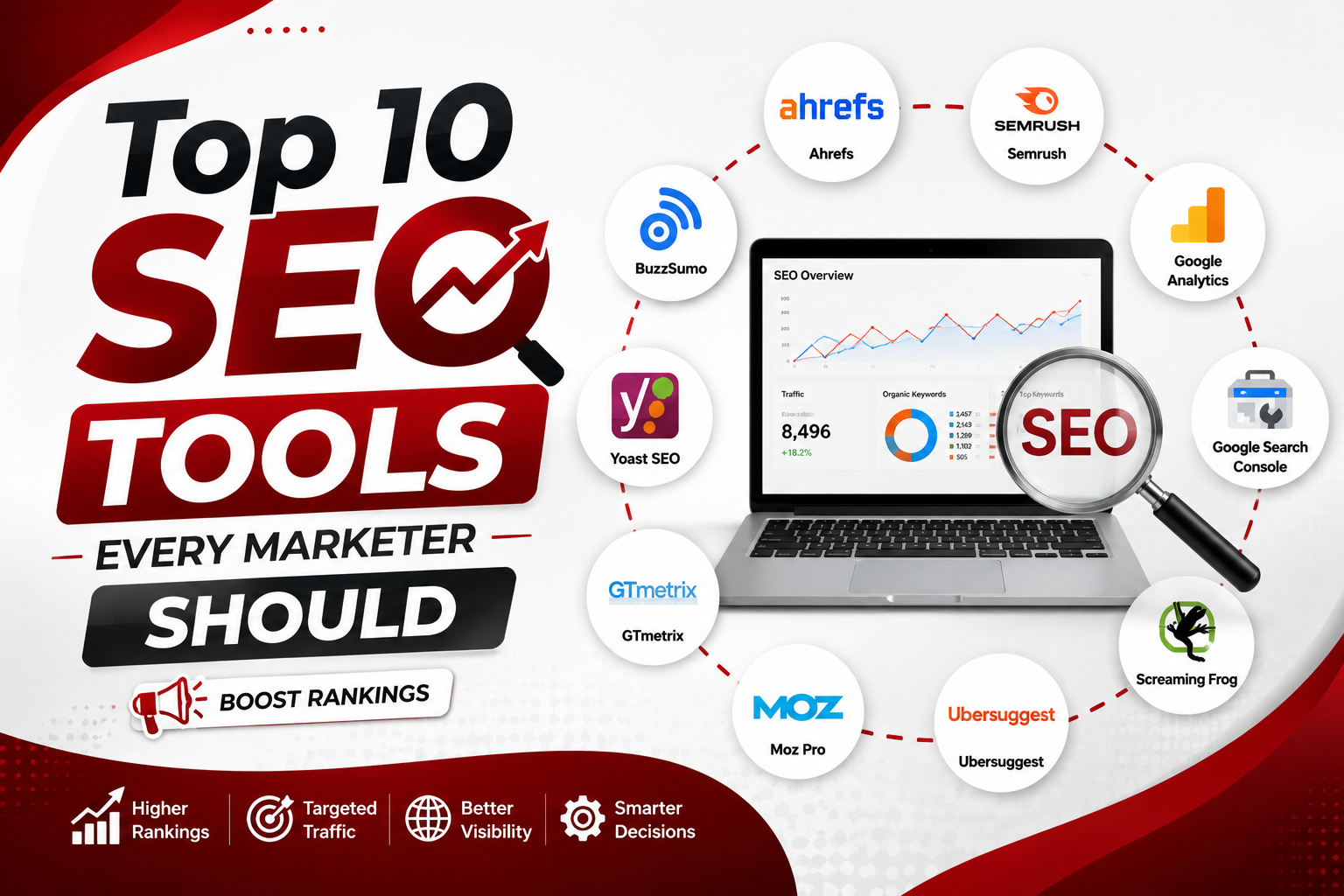
Search engine optimization is no longer optional for businesses that want to grow online, it is a necessity. With millions of websites competing for visibility, marketers need more than guesswork to rank higher on search engines. This is where SEO tools come in. These platforms help marketers research keywords, analyze competitors, track rankings, audit websites, and refine content strategies, all backed by real data rather than assumptions.
Whether you are a solo content creator, a small business owner, or part of a large marketing team, having the right SEO tools in your arsenal can make the difference between stagnant traffic and consistent organic growth. In this blog, we will walk through the top 10 SEO tools every marketer should use in 2026, along with what makes each one valuable.
Why SEO Tools Matter for Marketers
Before jumping into the list, let’s understand why these tools are essential:
- Data-Driven Decisions: SEO tools provide accurate metrics like search volume, keyword difficulty, and traffic estimates, removing the guesswork from strategy.
- Competitor Insights: Marketers can analyze what’s working for competitors and identify gaps in their own strategy.
- Time Efficiency: Automated audits and reports save hours of manual research and analysis.
- Improved Rankings: Tracking keyword performance helps marketers refine content and improve search visibility over time.
- Technical Health: Site audit tools catch issues like broken links, slow load times, and crawl errors that can hurt rankings.
Top 10 SEO Tools Every Marketer Should Use
1. Google Search Console
Google Search Console is a free, essential tool directly from Google. It shows how your website performs in search results, which keywords bring traffic, and any indexing or technical issues affecting visibility. Since the data comes straight from Google, it’s one of the most accurate sources for understanding your site’s search performance.
2. Google Analytics
While not exclusively an SEO tool, Google Analytics is crucial for understanding how organic traffic behaves once visitors land on your site. Marketers can track bounce rates, session duration, conversion paths, and traffic sources, helping them connect SEO efforts to actual business outcomes.
3. Ahrefs
Ahrefs is a comprehensive SEO platform known for its powerful backlink analysis and keyword research capabilities. Marketers use it to study competitor strategies, find content gaps, track keyword rankings, and audit site health. Its extensive database makes it a favorite among SEO professionals for in-depth research.
4. SEMrush
SEMrush is an all-in-one marketing toolkit that covers SEO, content marketing, competitor research, and paid advertising insights. It offers detailed keyword analysis, site audits, and position tracking, making it a strong choice for marketers who want a single platform for multiple digital marketing needs.
5. Moz Pro
Moz Pro is a well-established SEO suite offering keyword research, rank tracking, link building tools, and site audits. Its Domain Authority metric has become an industry standard for evaluating website credibility, and its beginner-friendly interface makes it accessible for marketers at any experience level.
6. Ubersuggest
Created by Neil Patel, Ubersuggest is a budget-friendly SEO tool that offers keyword suggestions, content ideas, and backlink data. It’s particularly useful for small businesses and freelancers who need solid SEO insights without the higher price tag of enterprise tools.
7. Screaming Frog SEO Spider
Screaming Frog is a technical SEO tool that crawls websites to identify issues like broken links, duplicate content, missing meta tags, and redirect chains. It’s an invaluable tool for conducting thorough site audits, especially for larger websites with complex structures.
8. Yoast SEO
For marketers using WordPress, Yoast SEO is a go-to plugin that simplifies on-page optimization. It provides real-time suggestions for improving readability, keyword usage, and meta descriptions directly within the content editor, making it easier to optimize pages before publishing.
9. Answer The Public
Answer The Public helps marketers understand what questions and phrases people are searching for around a specific topic. This tool is especially useful for content ideation, helping marketers create content that directly addresses audience search intent.
10. GTmetrix
Page speed is a critical ranking factor, and GTmetrix helps marketers analyze website loading times and performance issues. It provides actionable recommendations for improving speed, which can positively impact both user experience and search rankings.
Tips to Get the Most Out of SEO Tools
Owning the right tools is only half the battle, using them effectively is what drives results:
- Combine Multiple Tools: No single tool covers everything, use a mix for keyword research, technical audits, and analytics.
- Focus on Actionable Data: Don’t get lost in metrics, prioritize insights that directly inform your content and technical strategy.
- Track Progress Regularly: SEO is a long-term game, monitor rankings and traffic trends consistently rather than expecting overnight results.
- Prioritize Technical Health: Fix crawl errors, broken links, and slow-loading pages before focusing heavily on content expansion.
- Align SEO with Content Strategy: Use keyword and search intent data to guide content creation, not just optimization of existing pages.
Conclusion
SEO remains one of the most powerful, cost-effective ways to grow organic traffic and build long-term online visibility. With the right combination of tools, marketers can move beyond guesswork and make data-backed decisions that improve rankings, user experience, and overall site performance. From free essentials like Google Search Console to comprehensive platforms like Ahrefs and SEMrush, there is a tool suited for every budget and skill level.
As search algorithms continue to evolve, staying equipped with reliable SEO tools will remain a key advantage for marketers in 2026 and beyond. Start integrating these tools into your workflow today, and watch your search performance improve steadily over time.