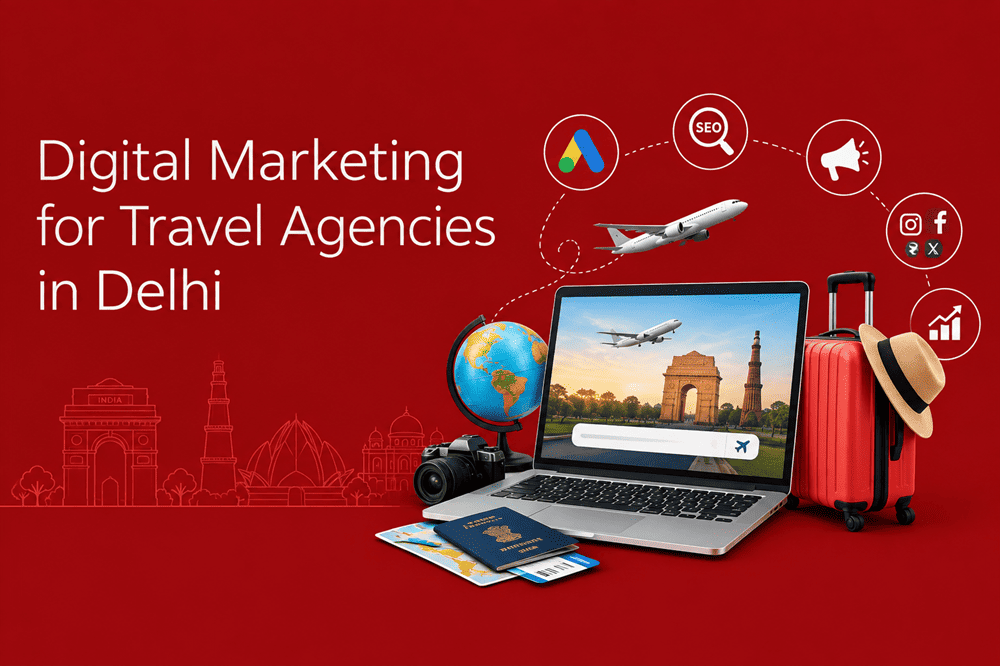
How traditional and boutique travel agencies in Delhi can compete against OTAs and each other for the same customer
Delhi’s travel agency market sits in a genuinely difficult competitive position: agencies compete not only against dozens of other local operators but against large online travel aggregators with vastly bigger advertising budgets and a self-service booking experience many customers have grown used to. And yet, travel agencies in Delhi that have built a real digital presence continue to win business precisely because a meaningful share of travellers, particularly for complex, high-value or first-time international trips, still want a human expert guiding the planning rather than assembling everything themselves across multiple booking sites.
The digital marketing challenge for a Delhi travel agency is proving that human expertise is genuinely worth choosing over a self-service OTA booking, and doing it in a way that is visible to the right customers at the right moment in their planning. Here is what actually works.
Why Travel Agencies Need a Different Digital Strategy Than OTAs
An OTA competes on price, selection and self-service convenience, and a travel agency cannot realistically out-compete that model directly. Instead, a Delhi travel agency’s digital marketing needs to lean into exactly what a large aggregator cannot offer: genuine destination expertise, a custom-built itinerary, a real person available for complications and changes, and the kind of trust that comes from an actual local business with a track record, not an anonymous global platform.
Six Digital Marketing Strategies for Delhi Travel Agencies
1. Build Content Around Complex, High-Value Trip Types
Rather than competing on generic destination searches an OTA already dominates, content built around genuinely complex trip planning, multi-country itineraries, honeymoon packages, group pilgrimage tours, visa-heavy destinations, captures exactly the customers most likely to value a human expert over self-booking, since these are the trips where planning mistakes are costly and expertise genuinely matters.
2. Showcase Real Client Trips With Specific Detail
A case study or testimonial naming the actual destination, the specific itinerary built, and a genuine client photo or quote builds far more credibility than generic marketing claims about “customised packages,” and gives a prospective customer something concrete to picture for their own trip.
3. Make WhatsApp the Primary Enquiry and Planning Channel
Delhi travel customers overwhelmingly prefer WhatsApp for exchanging itinerary details, documents and quick questions over email or a lengthy phone call, and an agency that builds its enquiry and planning workflow around WhatsApp from the first contact consistently sees faster engagement and higher conversion than one relying on a traditional contact form.
4. Use Local SEO for Both the Agency’s Location and Specific Destination Expertise
A Delhi-based traveller searching for a “travel agent near me” or a specific neighbourhood combination should find the agency easily, but equally important is ranking for the agency’s genuine destination specialisations, “Europe visa assistance Delhi,” “Kailash Mansarovar yatra package Delhi,” since these searches signal a customer looking for exactly the kind of expertise a boutique agency offers.
5. Build Trust Through Video Content Featuring the Actual Team
Short videos of the agency’s actual team discussing a specific destination, answering a common visa question, or walking through a sample itinerary humanise the business in a way static text cannot, and directly counter the anonymous, faceless feeling of booking through a large OTA platform.
6. Run Retargeting Campaigns Specifically for Long Planning Cycles
International and high-value trip planning often takes weeks or months, and a prospective customer who visited the agency’s website once, weeks ago, remains a genuinely warm lead worth reaching again through retargeting ads, particularly timed around typical booking windows for popular travel seasons.
Handling the OTA Comparison Directly
Rather than avoiding the comparison, some of the most effective Delhi travel agency marketing addresses it directly: content explaining specifically what a human travel expert catches that a self-booked OTA itinerary often misses, visa timing issues, seasonal closures, realistic day-to-day pacing, builds genuine credibility by acknowledging the competition honestly rather than pretending it does not exist.
Getting Started
A Delhi travel agency does not need to out-advertise an OTA to compete successfully; it needs to make its genuine expertise and human trust advantage visible to the specific customers who value it most. Start by building content and campaigns around the complex, high-value trip types where a human expert clearly outperforms self-booking, and make WhatsApp the backbone of how enquiries actually get handled from first contact onward.
Frequently Asked Questions
Can a small travel agency in Delhi really compete with large OTAs online?
Yes, particularly for complex, high-value or first-time international trips where genuine expertise and a human point of contact carry real value that a self-service platform cannot replicate. Competing on price and pure selection against a large OTA is far harder.
Is social media or SEO more important for a travel agency’s digital marketing?
Both play distinct roles: SEO captures customers actively searching for specific destination expertise, while social media, particularly video content and client trip showcases, builds the trust and human connection that ultimately converts an enquiry into a booking.
How should a travel agency handle customers who are just comparing prices against an OTA?
Rather than trying to win a pure price comparison, content and conversation that clearly articulates the specific value of expert planning, problem-solving and personal support tends to convert genuinely interested customers better than competing purely on cost.
How important is WhatsApp specifically for Delhi travel agencies?
Very important, since it has become the dominant preferred channel for exchanging travel documents, itinerary details and quick questions among Delhi-based customers, often outperforming email or phone-based communication in both response speed and customer comfort.