Customer expectations are changing rapidly in the digital world. People want quick answers, personalised recommendations and convenient communication when interacting with businesses online. Whether someone is visiting a company website, exploring products, asking about services or looking for support, a slow response can create frustration and affect their experience.
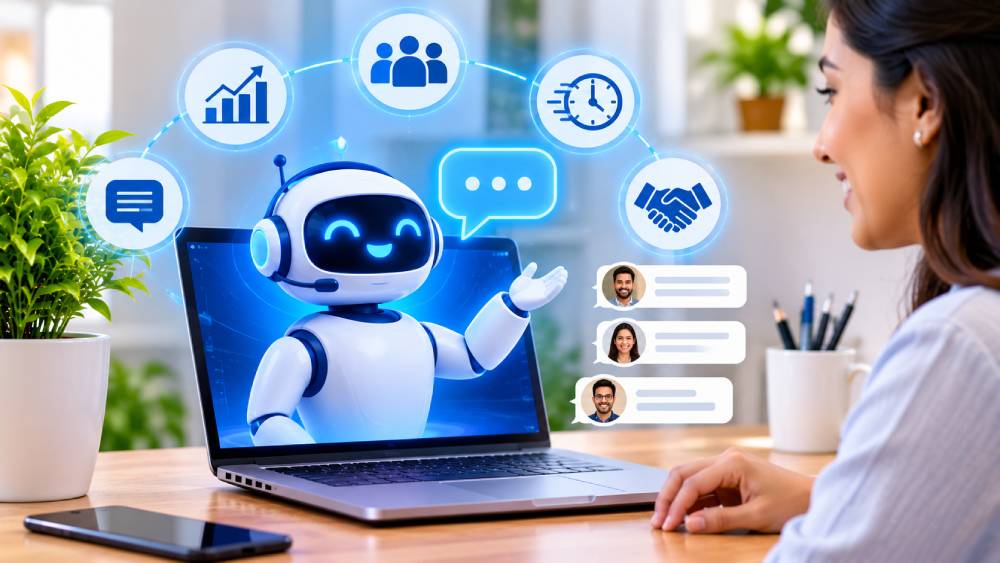
This is where artificial intelligence is becoming an important part of modern digital marketing. AI-powered chatbots allow businesses to communicate with website visitors, answer common questions, recommend relevant products and support customers throughout their buying journey.
An AI Digital Marketing Agency can help businesses integrate chatbot technology into their marketing strategies to improve customer interactions and create more efficient communication systems. Instead of relying entirely on manual responses, businesses can use AI chatbots to handle routine conversations while allowing human teams to focus on more complex customer requirements.
However, successful chatbot implementation involves more than simply adding a chat window to a website. Businesses need to understand customer expectations, choose suitable technology, prepare accurate information and monitor chatbot performance.
In this guide, we explore how AI chatbots improve customer engagement, their practical applications, benefits, limitations and the steps businesses can follow to use them effectively.
What Are AI Chatbots in Digital Marketing?
AI chatbots are software applications designed to communicate with users through text or voice-based conversations. They use artificial intelligence technologies, such as natural language processing (NLP) and machine learning, to understand questions and provide relevant responses.
Unlike basic rule-based chatbots that follow predefined instructions, advanced AI chatbots can interpret different ways of asking a question and generate context-aware responses.
For example, a visitor might ask an online furniture store:
- Which sofa is suitable for a small living room?
- Do you offer delivery in Noida?
- What are the available payment options?
- Can I return a damaged product?
An AI chatbot can understand these questions and provide answers based on the information available in the business’s product catalogue, policies and knowledge base.
In digital marketing, chatbots can support several activities, including:
- Answering customer queries.
- Recommending products and services.
- Collecting potential customer information.
- Supporting website visitors.
- Sharing relevant content.
- Assisting with appointment bookings.
- Directing customers towards suitable sales channels.
An AI chatbot does not replace every customer interaction. Instead, it helps businesses make communication more accessible and organised.
How an AI Digital Marketing Agency Uses Chatbots to Improve Customer Engagement
AI chatbots can become an important part of a business’s customer communication strategy. Here are the major ways they help improve engagement.
1. Providing Faster Responses to Customer Queries
<AsyncImage query=”modern business website chatbot interface on laptop screen customer support conversation clean professional office” aspectRatio=”16:9″ width=”100%”/>
Customers often visit websites with specific questions about products, pricing, availability or services. If they cannot find the information quickly, they may leave the website and explore another business.
AI chatbots help reduce this communication gap by providing automated responses to common questions.
For example, a digital marketing company may receive repeated enquiries about SEO services, website development, social media management and advertising packages.
A chatbot can provide introductory information about these services and direct visitors to the relevant website pages.
How faster responses improve engagement:
- Visitors can access basic information without waiting for an employee.
- Common questions can be handled automatically.
- Customers can explore services more conveniently.
- Businesses can reduce repetitive communication tasks.
- Sales teams can focus on enquiries that require personal attention.
However, chatbot responses should be accurate and easy to understand. If a question requires specialised knowledge, the system should offer an option to contact a human representative.
2. Offering Personalised Product and Service Recommendations
<AsyncImage query=”AI powered ecommerce shopping chatbot recommending products on desktop computer modern online store interface” aspectRatio=”16:9″ width=”100%”/>
Personalisation helps businesses provide information that is more relevant to individual customers.
AI chatbots can use information shared during a conversation, along with authorised customer and product data, to suggest suitable products or services.
For example, a customer visiting an online home decor store might ask for affordable wall paintings for a small living room.
Based on the customer’s preferences, the chatbot can suggest relevant product categories, explain available sizes and guide the visitor towards suitable options.
Similarly, a digital marketing agency can use a chatbot to understand whether a visitor needs SEO, paid advertising, content marketing or website development.
Personalised chatbot interactions can help businesses:
- Understand customer requirements.
- Recommend relevant services.
- Guide users through product categories.
- Provide information based on stated preferences.
- Make website navigation easier.
Businesses should ensure that recommendations are based on accurate information. They should also avoid collecting unnecessary personal information or making assumptions about customers.
3. Generating and Qualifying Potential Leads
<AsyncImage query=”AI chatbot lead generation conversation interface collecting business enquiry details on laptop screen” aspectRatio=”16:9″ width=”100%”/>
Lead generation is an important objective for many businesses. However, not every website visitor is ready to make a purchase or contact a sales representative.
AI chatbots can help identify visitors who show genuine interest in a product or service.
For example, a visitor exploring an SEO agency website might ask about improving organic traffic. The chatbot can ask relevant follow-up questions, such as:
- What type of business do you operate?
- Which services are you interested in?
- Do you currently have a business website?
- What is your primary marketing objective?
- Would you like to schedule a consultation?
Based on the responses, the chatbot can collect relevant enquiry details and pass them to the sales team.
Benefits for lead generation include:
- Collecting enquiries directly from website visitors.
- Understanding customer requirements.
- Identifying relevant service interests.
- Reducing repetitive qualification questions.
- Helping sales teams prioritise follow-ups.
Businesses should clearly explain why contact information is being collected and obtain appropriate permission before using it for marketing communications.
4. Supporting Customers Beyond Regular Business Hours
<AsyncImage query=”person using laptop at night with website customer service chatbot open on screen modern home workspace” aspectRatio=”16:9″ width=”100%”/>
Customers do not always browse websites during normal office hours. Some people research products late at night, while others look for information during weekends or holidays.
AI chatbots can provide automated assistance outside regular business hours.
For example, an online travel company may use a chatbot to answer common questions about booking procedures, cancellation policies and available destinations.
Similarly, an ecommerce business can provide basic information about shipping, product specifications and return procedures.
This can help businesses:
- Make basic information accessible at different times.
- Respond to common enquiries outside office hours.
- Reduce dependence on immediate employee availability.
- Provide a consistent communication channel.
- Collect enquiries for later follow-up.
It is important to distinguish automated assistance from live customer support. A chatbot should not promise immediate human assistance if no support representative is available.
5. Improving Customer Support and Reducing Repetitive Work
<AsyncImage query=”customer support team working with AI chatbot dashboard on computer screens modern office environment” aspectRatio=”16:9″ width=”100%”/>
Customer support teams often handle similar questions repeatedly. These may include order status, payment methods, account access, delivery information and service availability.
AI chatbots can help manage routine questions by retrieving information from approved business resources.
For example, an ecommerce chatbot connected to an authorised order management system may help customers check their order status after verifying the required information.
This allows customer support representatives to spend more time handling complicated complaints, unusual requests and situations that require human judgement.
However, businesses should establish clear escalation procedures.
A chatbot should transfer conversations to a human representative when:
- A customer has a complex complaint.
- The chatbot cannot understand the request.
- A payment or account issue requires verification.
- The customer explicitly asks for human assistance.
- The conversation involves sensitive information.
A combination of automated assistance and human support can create a more balanced customer experience.
6. Helping Customers Discover Relevant Website Content
AI chatbots can also work as interactive website navigation assistants.
Many business websites contain several pages covering products, services, pricing, case studies, blogs and frequently asked questions. Visitors may struggle to find the information they need.
A chatbot can guide users towards relevant pages based on their questions.
For example, someone visiting a digital marketing website may ask:
- What is technical SEO?
- How does local SEO work?
- What is the difference between SEO and PPC?
- Do you provide ecommerce marketing services?
The chatbot can respond with suitable explanations and recommend relevant website resources.
This can encourage visitors to explore more useful content and understand a company’s offerings.
For better results, businesses should connect chatbots to an organised and regularly updated knowledge base rather than allowing them to generate answers without reliable information.
7. Creating Consistent Communication Across Marketing Channels
<AsyncImage query=”omnichannel digital customer engagement smartphone laptop tablet messaging platforms business communication concept” aspectRatio=”16:9″ width=”100%”/>
Customers may interact with a business through multiple digital channels, including its website, messaging applications and social media platforms.
AI-powered conversational systems can help organise these interactions when they are properly integrated.
For example, a customer might discover a product through social media, visit the website to learn more and later contact the business through a messaging channel.
An integrated customer communication system can help authorised teams access relevant conversation history and provide more consistent assistance.
Possible applications include:
- Website chat support.
- Social media messaging assistance.
- Frequently asked questions.
- Appointment enquiries.
- Product information.
- Customer service routing.
Not every chatbot works across every platform automatically. Businesses should check available integrations, platform policies and data-sharing permissions before implementation.
8. Collecting Customer Feedback and Understanding User Intent
Customer feedback helps businesses understand what visitors like, what problems they face and where improvements are needed.
AI chatbots can collect feedback through short conversational questions.
For example, after a customer completes a support conversation, a chatbot might ask whether the issue was resolved.
Businesses can also use chatbots to understand:
- Which products customers frequently ask about.
- What information visitors cannot find.
- Which services generate the most enquiries.
- What common objections prevent purchases.
- Which support topics require additional resources.
These insights can help marketing and customer service teams improve website content, product information and communication strategies.
However, chatbot feedback should be interpreted carefully. Responses collected from chatbot users may not represent the opinions of every customer.
Key Benefits of Using AI Chatbots in Digital Marketing
AI chatbots offer several potential advantages when implemented with a clear business objective.
| Benefit | How it helps businesses |
|---|---|
| Faster communication | Provides automated responses to common questions |
| Lead generation | Collects and organises relevant enquiries |
| Personalisation | Suggests relevant products and services |
| Customer support | Handles routine support requests |
| Website navigation | Guides visitors towards useful information |
| Customer insights | Helps identify recurring questions and interests |
| Operational efficiency | Reduces repetitive communication tasks |
The actual benefits depend on chatbot quality, business requirements, data accuracy and the availability of human support.
How to Implement AI Chatbots in a Digital Marketing Strategy
Simply installing chatbot software does not guarantee better customer engagement. Businesses need a structured implementation process.
Step 1: Identify Your Business Objectives
Start by deciding what you want the chatbot to achieve.
Possible objectives include improving customer support, collecting leads, answering product questions or helping visitors navigate your website.
Avoid trying to automate every customer interaction at once.
Step 2: Understand Your Target Audience
Identify the questions your customers frequently ask and the problems they want to solve.
Review customer enquiries, website forms, support conversations and sales team feedback.
This information will help you design relevant chatbot conversations.
Step 3: Select the Right Chatbot Platform
Choose a chatbot solution based on your business requirements, technical capabilities and available budget.
Consider:
- Natural language understanding.
- Website integration.
- CRM compatibility.
- Knowledge base support.
- Human handoff options.
- Data security features.
- Reporting and analytics.
- Pricing and usage limits.
Some businesses may only need a simple rule-based chatbot, while others may benefit from more advanced AI-powered conversational systems.
Step 4: Prepare Accurate Business Information
A chatbot is only as useful as the information it can access.
Prepare reliable resources covering:
- Products and services.
- Pricing information.
- Delivery and payment policies.
- Frequently asked questions.
- Contact details.
- Refund and cancellation conditions.
- Service limitations.
Review this information regularly to prevent outdated or misleading answers.
Step 5: Design Clear and Natural Conversations
Avoid making chatbot conversations unnecessarily complicated.
Use simple questions, short responses and clear options.
For example, a business website chatbot might begin with:
“Hello! How can we help you today?”
It can then offer relevant options such as service information, pricing enquiries, technical support or speaking with a representative.
Customers should also be able to correct the chatbot, ask a different question or request human assistance.
Step 6: Test Before Launching
Test the chatbot using realistic customer questions.
Check whether it:
- Understands different ways of asking questions.
- Provides accurate answers.
- Handles unexpected queries.
- Avoids unsupported claims.
- Protects personal information.
- Transfers conversations appropriately.
Testing should continue after launch because customer behaviour and business information can change.
How to Measure AI Chatbot Performance
Businesses should evaluate chatbot performance using meaningful metrics rather than focusing only on the number of conversations.
Here are some useful indicators:
1. Conversation volume: Measures how many conversations the chatbot handles.
2. Resolution rate: Indicates the proportion of conversations resolved without requiring additional support.
3. Human handoff rate: Shows how often customers need assistance from a human representative.
4. Lead conversion rate: Measures how many chatbot-assisted enquiries become qualified leads or customers.
5. Customer satisfaction: Helps understand whether users find chatbot interactions helpful.
6. Response accuracy: Evaluates whether chatbot answers are relevant and factually correct.
7. Engagement rate: Measures how visitors interact with chatbot features.
Businesses should define how each metric is calculated and compare results over time. For example, a high conversation volume does not necessarily mean that customers are receiving useful answers.
Challenges and Limitations of AI Chatbots
Although AI chatbots can improve digital communication, they also have limitations.
Incorrect or Misleading Responses
Generative AI chatbots can sometimes produce incorrect information or misunderstand customer questions. Businesses should restrict important answers to verified sources and provide human escalation options.
Lack of Human Understanding
AI can recognise conversational patterns, but it may not fully understand emotional situations or complicated customer problems.
Sensitive complaints often require human attention.
Data Privacy and Security
Chatbots may collect personal information such as names, email addresses, phone numbers and enquiry details.
Businesses should collect only necessary information, explain its intended use, apply appropriate security controls and follow applicable data protection requirements.
Integration Difficulties
Connecting a chatbot with a CRM, ecommerce platform or internal business system may require technical configuration.
Poor integrations can create incorrect responses or inconsistent customer records.
Maintenance Requirements
Business information, prices, policies and services change over time. Chatbot knowledge bases should be reviewed and updated regularly.
A successful chatbot strategy requires ongoing monitoring rather than a one-time installation.
How to Choose the Right AI Digital Marketing Agency for Chatbot Integration
Businesses that lack in-house technical expertise may consider working with an experienced digital marketing agency.
Before selecting an agency, evaluate the following factors:
- Technical knowledge: Check whether the agency understands chatbot platforms, AI integrations and website requirements.
- Marketing experience: The agency should understand how chatbots support lead generation and customer engagement.
- Customisation: Check whether chatbot conversations can be adapted to your business needs.
- Data protection: Ask how customer information is collected, stored and handled.
- Human support integration: Ensure that the chatbot can transfer conversations to the appropriate team.
- Performance tracking: Check whether the agency provides meaningful reports and improvement recommendations.
- Transparency: Understand the technology, pricing, maintenance requirements and limitations before signing an agreement.
An experienced AI Digital Marketing Agency should focus on business objectives rather than recommending automation simply because it is a popular technology.
The right solution should make customer interactions easier, not create additional complexity.
Future of AI Chatbots in Digital Marketing
AI chatbot technology continues to evolve as language models, conversational interfaces and business integrations improve.
Several developments are shaping how businesses may use conversational AI in the future.
More Natural Conversations
Improvements in language models are making it possible for chatbots to understand context and respond more naturally.
Voice-Based Customer Interactions
Voice-enabled assistants may provide additional ways for customers to search for information and interact with businesses.
Better Personalisation
With appropriate permissions and reliable customer data, AI systems may provide more relevant recommendations and communication experiences.
Integration with Business Systems
Chatbots are increasingly being connected with CRM platforms, ecommerce systems and customer support tools to support more useful workflows.
Human and AI Collaboration
Rather than replacing every human interaction, future chatbot strategies are likely to focus on combining automated assistance with human expertise.
Businesses should adopt these developments according to their actual requirements, available resources and customer expectations.
Frequently Asked Questions (FAQs)
1. How do AI chatbots improve customer engagement?
AI chatbots improve customer engagement by answering common questions, providing personalised recommendations, guiding website visitors and supporting communication outside regular business hours. They can also collect feedback and help customers find relevant information.
2. Can AI chatbots generate leads for businesses?
Yes. AI chatbots can ask visitors relevant questions, collect enquiry details and identify potential customers based on their stated requirements. Businesses can then pass suitable enquiries to their sales teams for follow-up.
3. What is the difference between AI chatbots and traditional chatbots?
Traditional chatbots generally follow predefined rules and decision paths. AI chatbots can use natural language processing and other AI technologies to understand varied questions and generate more flexible responses.
4. Are AI chatbots useful for small businesses?
Yes. Small businesses can use AI chatbots to answer frequently asked questions, provide basic product information, collect enquiries and support website visitors. The selected solution should match the business’s budget and actual requirements.
5. Can AI chatbots replace human customer support?
AI chatbots can handle many routine enquiries, but they cannot replace every human interaction. Complex complaints, sensitive issues and situations requiring judgement should be handled by trained customer support representatives.
6. How much does it cost to implement an AI chatbot?
The cost depends on the chatbot platform, number of conversations, integrations, customisation requirements and ongoing maintenance. Some platforms offer basic plans, while advanced business solutions may require higher investments.
7. Do AI chatbots work with ecommerce websites?
Yes. AI chatbots can be integrated with ecommerce websites to answer product questions, provide recommendations, explain delivery policies and support order-related enquiries when connected to appropriate systems.
8. Why should businesses work with an AI Digital Marketing Agency?
An AI Digital Marketing Agency can help businesses identify suitable automation opportunities, select chatbot technology, plan customer conversations, integrate marketing systems and measure performance. Professional guidance can make implementation more structured and aligned with business objectives.
Conclusion
AI chatbots are becoming a useful part of modern digital marketing because they help businesses communicate with customers more efficiently. From answering common questions and recommending products to collecting leads and supporting website visitors, conversational AI offers several opportunities to improve the customer experience.
However, successful implementation requires more than choosing an advanced chatbot platform. Businesses must understand customer needs, provide accurate information, protect personal data and maintain access to human support.
An experienced AI Digital Marketing Agency can help organisations integrate chatbot technology into their broader marketing strategies and identify opportunities for improvement.
The most effective approach is to use AI for repetitive tasks while allowing human teams to handle situations that require personal attention, judgement and expertise. When technology and human communication work together, businesses can build more useful and meaningful customer relationships.