Social media has become an important marketing channel for businesses looking to connect with customers, promote products, and build brand awareness. Platforms such as Instagram, Facebook, LinkedIn, and YouTube offer opportunities to reach audiences, share useful content, and generate business enquiries. However, simply creating social media accounts does not guarantee visibility or engagement.
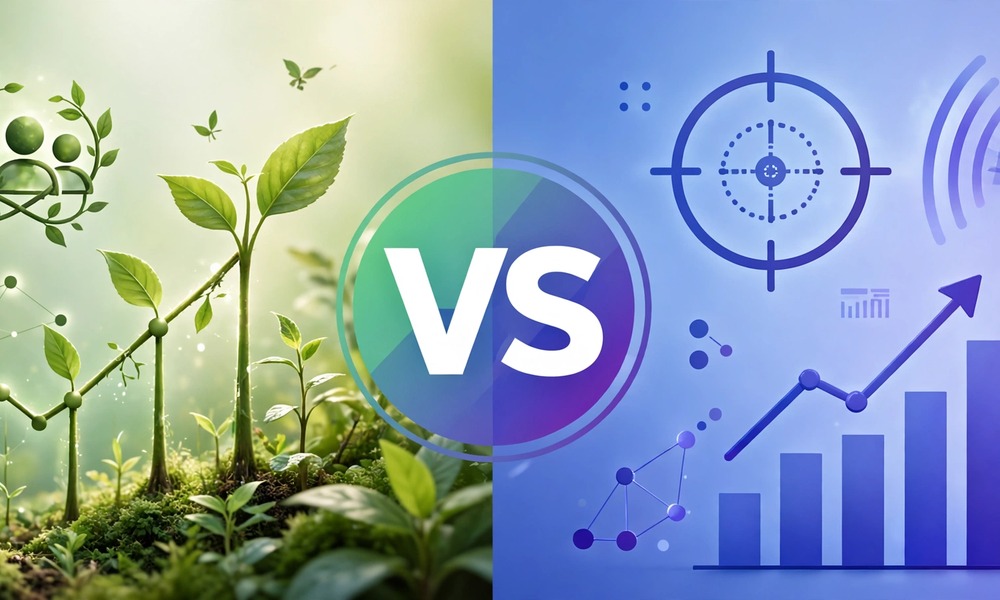
Businesses generally use two major approaches to social media promotion: organic social media marketing and paid advertising. Organic marketing focuses on building an audience through regular content and genuine interactions, while paid advertising uses sponsored campaigns to reach selected audiences.
Choosing between these approaches can be challenging, particularly for businesses with limited marketing budgets. A professional Social Media Marketing Agency can help companies understand their objectives, select suitable platforms, and develop a strategy that combines organic activities with paid campaigns when necessary.
In this guide, we will explain the differences between organic social media and paid advertising, explore their benefits and limitations, and help businesses determine which approach is more suitable for their marketing goals.
What Is Organic Social Media Marketing?
Organic social media marketing refers to promoting a business through unpaid activities on social media platforms. It involves publishing content, engaging with followers, participating in relevant conversations, and developing a consistent brand presence without paying for advertising distribution.
For example, a clothing brand can publish product photographs, styling suggestions, customer feedback, and short videos on Instagram to connect with potential customers.
Organic social media activities commonly include:
- Publishing regular posts and stories.
- Creating reels and short-form videos.
- Sharing educational and informative content.
- Responding to comments and messages.
- Building relationships with followers.
- Participating in relevant discussions.
- Sharing customer-generated content with permission.
- Monitoring audience engagement.
The primary objective is to build an audience that recognises the brand, finds its content useful, and develops an interest in its products or services.
Benefits of Organic Social Media Marketing
1. Builds Long-Term Brand Relationships
Organic content gives businesses opportunities to communicate regularly with their audiences. Helpful posts, product demonstrations, and genuine conversations can gradually develop familiarity and trust.
2. Supports Brand Awareness
Consistent publishing helps businesses maintain an active presence on relevant social platforms. Followers may share useful content, recommend a business, or introduce its products to new audiences.
3. Encourages Customer Engagement
Comments, polls, questions, and direct messages allow businesses to interact with their audiences. These interactions can also help companies understand customer preferences and common concerns.
4. Provides Opportunities for Creative Content
Businesses can experiment with different content formats, including reels, educational carousels, behind-the-scenes videos, and customer stories.
5. Does Not Require a Direct Advertising Budget
Organic publishing does not involve paying an advertising platform for each impression or click. However, businesses may still need to invest in content creation, design, tools, and marketing staff.
Limitations of Organic Social Media Marketing
Organic social media has several advantages, but businesses should understand its limitations.
- Limited distribution: Platform algorithms influence how widely organic content is shown.
- Slower audience development: Building an engaged audience usually requires consistent effort.
- Uncertain reach: Publishing regularly does not guarantee a particular number of views or interactions.
- Content requirements: Businesses need fresh, relevant content to maintain audience interest.
- Platform dependency: Changes in platform features and algorithms can affect content visibility.
Organic marketing is therefore better viewed as a long-term relationship-building activity rather than a guaranteed source of immediate leads or sales.
What Is Paid Social Media Advertising?
Paid social media advertising involves spending money to promote content, products, services, or business offers through advertising platforms.
Businesses can use paid campaigns to reach selected audience groups based on available targeting options, campaign objectives, location, interests, and other permitted signals.
Popular advertising platforms include Meta Ads for Facebook and Instagram, LinkedIn Ads, TikTok Ads where available, and YouTube advertising through Google Ads.
For example, a real estate company in Noida may run a Facebook and Instagram campaign to promote a residential project to relevant audiences in selected locations.
Paid social media advertising can include:
- Sponsored posts.
- Image and video advertisements.
- Story and reel advertisements.
- Lead generation campaigns.
- Website traffic campaigns.
- Product and catalogue advertisements.
- Retargeting campaigns, where supported and appropriately configured.
Benefits of Paid Social Media Advertising
1. Faster Audience Reach
Paid campaigns can start generating impressions and traffic soon after approval and launch. Businesses do not need to wait until they have built a large organic following.
2. Audience Targeting
Advertising platforms provide targeting options that help businesses reach audiences relevant to their products and services. Available options vary by platform, location, campaign type, and advertising policies.
3. Campaign Budget Control
Businesses can set campaign budgets and monitor advertising expenditure. They can adjust spending based on campaign performance and business requirements.
4. Lead Generation Opportunities
Paid campaigns can direct users to landing pages, websites, messaging destinations, or platform lead forms. This can help businesses collect enquiries from interested prospects.
5. Performance Measurement
Advertising dashboards provide information such as impressions, reach, clicks, cost per click, and conversions when tracking is configured correctly.
Limitations of Paid Social Media Advertising
Despite its advantages, paid advertising is not automatically profitable.
- Requires ongoing investment: Visibility generally depends on continued advertising expenditure.
- No guaranteed sales: Clicks and impressions do not necessarily turn into customers.
- Campaign management skills: Poor targeting, weak creative content, or unsuitable landing pages can waste money.
- Competition: Advertisers may compete for the same audience, affecting campaign costs.
- Ad fatigue: People may lose interest when they repeatedly see the same advertisement.
- Platform restrictions: Ads must comply with advertising policies and applicable laws.
Businesses should treat paid advertising as an investment that needs proper planning, monitoring, and optimisation.
Organic Social Media vs Paid Advertising: Key Differences
Although both approaches use social media platforms, they have different purposes and operating models.
| Comparison Factor | Organic Social Media | Paid Advertising |
|---|---|---|
| Cost | No direct media spend for organic distribution | Requires an advertising budget |
| Reach | Influenced by followers, engagement, and algorithms | Can reach selected audiences through paid delivery |
| Speed | Usually develops gradually | Can generate exposure soon after launch |
| Audience growth | Built through content and interactions | Can accelerate visibility and audience discovery |
| Lead generation | Can generate enquiries over time | Can support targeted lead generation campaigns |
| Content | Regular posts, stories, reels, and discussions | Sponsored creatives and campaign-specific ads |
| Measurement | Platform insights and engagement metrics | Advertising reports and conversion tracking |
| Sustainability | Can support ongoing brand presence | Visibility generally depends on continued spending |
| Main objective | Community building and brand relationships | Campaign reach, traffic, leads, or sales |
Neither approach is universally better. The right choice depends on the business’s objectives, target audience, resources, and marketing timeline.
Which Is Better for Small Businesses?
Small businesses often operate with limited budgets and need to prioritise marketing activities carefully. The choice between organic social media and paid advertising should depend on the company’s immediate requirements.
When Organic Social Media Is Better
Organic social media can be a practical starting point for businesses that:
- Are developing their brand identity.
- Want to build an initial audience.
- Have useful information to share.
- Can publish content consistently.
- Want to encourage customer interaction.
- Have limited advertising funds.
For example, a local bakery can share photographs of new products, baking videos, customer feedback, and seasonal offers. This content can help the business become familiar to people who follow or discover its account.
When Paid Advertising Is Better
Paid advertising may be more suitable when a business:
- Wants to promote a new product.
- Has a time-sensitive offer.
- Needs to reach audiences in selected locations.
- Wants to generate enquiries for a specific service.
- Has a landing page and conversion process ready.
- Can allocate and monitor an advertising budget.
For example, a coaching institute may use paid campaigns to promote admissions, direct interested students to an enquiry form, and measure the number of qualified leads generated.
Why Combining Organic Social Media and Paid Advertising Works
For many businesses, combining both approaches is more practical than relying entirely on one.
Organic social media helps create a consistent brand presence, while paid advertising can expand campaign reach and support specific business objectives.
Here are some ways to combine them effectively.
1. Build a Strong Organic Foundation First
Before spending on advertisements, businesses should create complete social media profiles with accurate contact details, useful descriptions, and relevant content.
An active profile gives potential customers more information when they visit after seeing an advertisement.
2. Identify Content That Connects with the Audience
Monitor organic content to understand which topics, formats, and messages generate meaningful engagement.
For example, if product demonstration videos consistently attract relevant questions, the business can consider testing similar creative concepts in paid campaigns.
However, organic engagement alone does not guarantee advertising conversions.
3. Use Paid Campaigns for Specific Goals
Instead of promoting every post, select campaigns based on clear objectives.
Examples include:
- Generating enquiries for a service.
- Promoting a new product collection.
- Driving relevant website traffic.
- Increasing registrations for an event.
- Reaching audiences in a particular service area.
4. Retain Consistent Brand Messaging
Organic posts and advertisements should communicate the same brand values, product information, and customer benefits.
A consistent message helps customers recognise the business across different social media interactions.
5. Measure Both Approaches Separately
Businesses should evaluate organic and paid performance using appropriate metrics.
For organic content, useful indicators include reach, engagement, shares, saves, profile visits, and relevant enquiries.
For paid campaigns, businesses can track impressions, clicks, cost per click, conversions, cost per lead, and return on advertising spend where reliable revenue data is available.
How a Social Media Marketing Agency Can Help
Managing organic content and paid advertising requires different skills, tools, and planning. A professional Social Media Marketing Agency can help businesses coordinate these activities through a structured strategy.
Social Media Strategy Development
An agency can study the business, identify target audiences, understand competitors, and recommend suitable social media platforms.
Content Planning and Creation
It can develop content calendars, write captions, create graphics, plan short-form videos, and organise publishing schedules according to business objectives.
Paid Campaign Management
An agency can plan advertising campaigns, prepare creatives, configure targeting, manage budgets, and monitor performance.
Audience Engagement
Depending on the agreed scope, an agency may help manage comments, messages, and other audience interactions.
Performance Analysis and Reporting
Regular reporting helps businesses understand campaign results, identify areas for improvement, and make informed marketing decisions.
Before hiring an agency, businesses should confirm which activities are included in the agreement. Content creation, community management, advertising management, and media spending may be priced separately.
Common Mistakes Businesses Should Avoid
Whether using organic social media or paid advertising, certain mistakes can reduce marketing effectiveness.
1. Posting Without a Strategy
Random content publishing can make it difficult to maintain a consistent brand message. Businesses should plan content around customer interests and marketing objectives.
2. Expecting Immediate Results from Organic Marketing
Building an engaged audience takes time. Businesses should avoid judging organic performance based on only a few posts.
3. Running Ads Without Clear Objectives
Every campaign should have a defined purpose, such as website visits, qualified enquiries, or purchases.
4. Ignoring Creative Quality
Poor images, unclear messaging, and weak calls to action can reduce audience interest.
5. Failing to Track Conversions
Businesses should configure suitable tracking to understand whether advertising interactions lead to meaningful actions.
6. Using the Same Content Everywhere
Different platforms have different audiences and content formats. A single creative may need adjustments before being used across multiple channels.
7. Focusing Only on Likes and Followers
Engagement numbers can provide useful context, but they do not always represent business growth. Qualified leads, sales, and customer retention may be more meaningful indicators.
How to Measure Social Media Marketing Success
A business should define success before launching a social media campaign. The right metrics depend on the campaign objective.
| Marketing Goal | Useful Metrics |
|---|---|
| Brand awareness | Reach, impressions, video views |
| Audience engagement | Comments, shares, saves, interactions |
| Website traffic | Link clicks, sessions, landing page visits |
| Lead generation | Enquiries, qualified leads, cost per lead |
| Online sales | Purchases, revenue, conversion rate |
| Advertising efficiency | Cost per click, cost per acquisition, ROAS |
Businesses should also consider the quality of leads and the revenue generated rather than evaluating campaigns only through surface-level engagement.
Frequently Asked Questions (FAQs)
1. Is organic social media marketing better than paid advertising?
Neither is always better. Organic social media is useful for building brand relationships and maintaining an active presence, while paid advertising can help businesses reach selected audiences and promote specific offers. The right approach depends on marketing objectives and available resources.
2. Can businesses grow on social media without paid advertising?
Yes. Businesses can build an audience through useful content, consistent publishing, genuine engagement, and relevant conversations. However, organic reach is influenced by platform algorithms, so growth and visibility are not guaranteed.
3. How much should a small business spend on social media advertising?
There is no universal advertising budget. It depends on the business, campaign objective, audience, competition, and ability to convert enquiries into customers. Businesses should start with an affordable test budget and evaluate results before increasing spending.
4. Which social media platform is best for business marketing?
The best platform depends on the target audience and business model. Instagram and Facebook may be relevant for many consumer-facing businesses, LinkedIn can support B2B marketing, and YouTube can be useful for video-led content and product education.
5. How long does organic social media marketing take to show results?
The timeline varies according to content quality, audience interest, publishing consistency, competition, and platform distribution. Businesses should monitor progress over time rather than expecting a fixed result within a specific number of days.
6. Why should a business hire a social media marketing agency?
An agency can provide strategy development, content planning, creative production, campaign management, audience analysis, and performance reporting. Businesses should choose an agency based on its relevant expertise and clearly defined deliverables.
Conclusion
Choosing between organic social media and paid advertising depends on what a business wants to achieve. Organic marketing supports brand awareness, audience engagement, and long-term customer relationships, while paid advertising helps businesses promote specific offers and reach selected audiences through sponsored campaigns.
For many companies, combining both approaches provides a more balanced strategy. Organic content builds a foundation for brand communication, while paid campaigns can support targeted marketing objectives.
A professional Social Media Marketing Agency can help businesses identify the right platforms, create relevant content, manage advertising campaigns, and measure meaningful results. Instead of focusing only on followers or impressions, companies should develop a strategy that connects social media activity with genuine customer interest and business growth.