
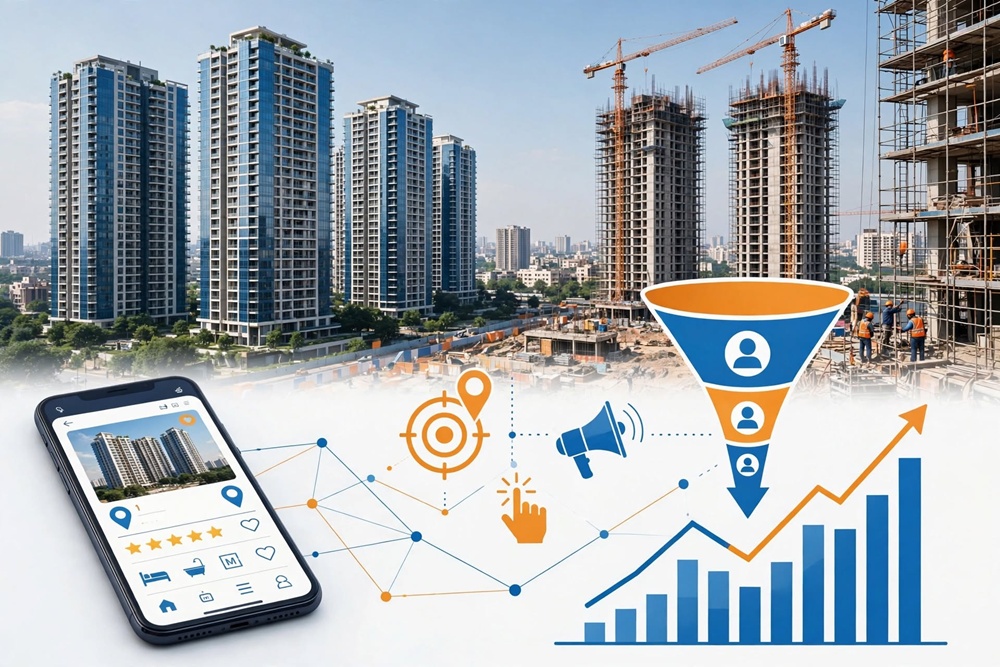
The real estate industry in Noida has become increasingly competitive, with residential apartments, luxury homes, commercial spaces, and new development projects attracting buyers from different parts of India. For builders and property developers, reaching potential customers is no longer limited to newspaper advertisements, outdoor promotions, and traditional sales networks. Today, digital marketing plays an important role in connecting real estate businesses with people actively searching for properties.
However, generating website traffic or receiving a large number of enquiries does not automatically result in property sales. Builders need to attract people who have genuine buying intentions, understand their requirements, and are financially prepared to consider a property purchase.
A professional Real Estate Digital Marketing Agency in Noida can help builders develop targeted online campaigns, improve search visibility, reach potential buyers through social media, and create effective lead generation strategies. By combining search engine optimization, paid advertising, content marketing, and conversion optimization, real estate businesses can build a more consistent approach to acquiring qualified property leads.
This guide explains how builders can use digital marketing to attract relevant prospects, improve enquiry quality, and support long-term business growth.
Why Digital Marketing Is Important for Real Estate Builders in Noida
Noida and the surrounding areas, including Greater Noida and Noida Extension, offer different residential and commercial property options. Buyers often research projects online before contacting a developer or visiting a property site.
They may compare locations, project amenities, pricing, connectivity, construction progress, and available configurations before making a decision.
This creates an opportunity for builders to connect with potential buyers during their research process.
Digital marketing helps real estate businesses:
- Reach people searching for residential and commercial properties.
- Promote new projects to relevant audiences.
- Build awareness among potential homebuyers and investors.
- Generate enquiries through websites and advertising campaigns.
- Share project information through videos, images, and informative content.
- Measure campaign performance and identify improvement opportunities.
- Maintain communication with interested prospects.
Instead of depending entirely on traditional promotional methods, builders can use digital platforms to create a measurable marketing strategy.
1. Build a Professional Real Estate Website
A professional website is one of the most important digital assets for a real estate builder. It acts as a central platform where potential customers can explore projects, understand property details, and submit enquiries.
When someone searches for a property online, they may visit several developer websites before deciding which project deserves further consideration. A slow, confusing, or incomplete website can discourage visitors from contacting the business.
A real estate website should include the following elements:
Dedicated Project Pages
Every major residential or commercial project should have a dedicated landing page containing relevant information.
Include:
- Project name and location
- Property types and configurations
- Available amenities
- Project photographs and videos
- Floor plans and site layouts
- Location and connectivity information
- Construction or possession details, where applicable
- Pricing information or a clear enquiry option
- Contact details and enquiry forms
Avoid publishing vague promotional claims. Buyers need accurate and useful information to evaluate a project.
Mobile-Friendly Website Design
Many potential buyers browse property listings and project websites through smartphones. Therefore, a website should provide a smooth experience across different screen sizes.
Important mobile optimization practices include readable text, easy navigation, properly displayed images, fast-loading pages, and accessible enquiry buttons.
Simple Enquiry Forms
Long enquiry forms can discourage visitors from submitting their details.
Start with essential fields such as name, phone number, email address, and property interest. Additional information can be collected during the sales conversation.
A clear call to action, such as “Request Project Details” or “Schedule a Site Visit,” can help visitors understand what to do next.
2. Use Local SEO to Attract Property Buyers
Search engine optimization helps real estate businesses improve their visibility when people search for relevant properties and services.
For builders targeting Noida, local SEO can help attract users looking for projects in specific locations.
For example, potential customers may search for:
- Flats for sale in Noida
- Residential projects in Noida Extension
- Luxury apartments in Noida
- Commercial property in Noida
- New residential projects in Greater Noida
- 3 BHK flats near Noida Expressway
These searches indicate different levels of interest and buying intent. A well-planned SEO strategy can help builders create relevant pages for these search requirements.
Conduct Real Estate Keyword Research
Keyword research should focus on how potential buyers actually search for properties.
Consider different keyword categories:
Location-based keywords: These include searches related to Noida sectors, Noida Extension, Greater Noida, and nearby residential areas.
Property-type keywords: These include apartments, villas, studio apartments, office spaces, and commercial properties.
Buyer-intent keywords: These include phrases such as property price, ready-to-move apartments, new residential projects, and flats with specific configurations.
Informational keywords: These include searches about home-buying procedures, property documents, home loans, and location comparisons.
Use these keywords naturally in website content, headings, page titles, descriptions, and project information.
Optimize Individual Project Pages
Each project page should target a clearly defined search intent.
For example, a page promoting a residential project in a particular Noida sector should explain the property’s location, configuration, amenities, connectivity, and relevant project information.
Avoid creating multiple nearly identical pages simply by replacing one locality name with another. Each page should provide genuinely useful and location-specific information.
Optimize Google Business Profile
An eligible real estate business can use its Google Business Profile to improve its local online presence.
Keep business information accurate and consistent. Add genuine photographs, correct contact details, relevant business information, and updates where appropriate.
Encourage genuine customers to share honest reviews without offering incentives or purchasing feedback.
A properly maintained profile can help potential customers discover the business and find its contact information.
3. Generate Qualified Leads Through Google Ads
Google Ads can help builders reach people actively searching for properties and real estate projects.
Unlike campaigns focused only on broad brand awareness, search advertising can target users based on relevant search queries.
For example, a builder promoting residential apartments in Noida may target searches related to specific property configurations, locations, or project requirements.
Create Intent-Based Campaigns
Organize campaigns around different customer requirements.
Possible campaign categories include:
- Residential property searches
- Luxury apartment enquiries
- Commercial property enquiries
- Location-specific project promotions
- New project launch campaigns
- Brand-related searches
This structure helps businesses create advertisements and landing pages that match the user’s search intent.
Write Relevant Ad Copy
Advertisements should communicate useful information instead of relying on exaggerated claims.
A property advertisement can highlight:
- Project location
- Available configurations
- Relevant amenities
- Verified project information
- Site visit opportunities
- Contact options
Make sure the claims in advertisements match the information available on the landing page.
Use Negative Keywords
Negative keywords help reduce irrelevant clicks.
For example, a builder selling premium residential apartments may want to exclude searches related to rental accommodation, jobs, free housing schemes, or unrelated property services.
Review search-term reports regularly to identify irrelevant queries and improve targeting.
Track Actual Lead Quality
A campaign should not be evaluated only by the number of form submissions.
Builders should monitor:
- Valid enquiries
- Relevant property requirements
- Qualified prospects
- Scheduled site visits
- Actual visits completed
- Booking progress
- Cost per qualified lead
Connecting advertising platforms with a CRM system and properly configured conversion tracking can provide a clearer picture of campaign performance.
4. Use Social Media Marketing to Build Project Awareness
Social media platforms give real estate developers opportunities to present their projects visually and communicate with potential buyers.
Platforms such as Instagram, Facebook, YouTube, and LinkedIn can support different marketing objectives.
Instagram Marketing
Instagram is useful for sharing visual content about residential and commercial projects.
Builders can publish:
- Property photographs
- Short project walkthroughs
- Construction progress updates
- Amenities and facilities
- Location highlights
- Frequently asked property questions
Reels can help present project features in a short and engaging format.
Facebook Marketing
Facebook can support project awareness campaigns, local audience targeting, and enquiry generation.
Builders can create campaigns based on relevant locations and audience interests, subject to the platform’s advertising policies.
Lead forms should clearly explain what information is being requested and how the sales team will use it.
YouTube Marketing
YouTube is particularly useful for longer property-related content.
Builders can publish:
- Complete project walkthroughs
- Virtual property tours
- Construction updates
- Location and connectivity videos
- Interviews with authorized project representatives
- Explanations of available property configurations
Useful videos can help potential customers understand a project before arranging a physical visit.
5. Create High-Quality Real Estate Content
Content marketing helps builders answer buyers’ questions and establish credibility.
Many property buyers research several topics before making a purchase. They may want to understand the location, available amenities, home-buying process, financing options, and property documentation.
Creating useful content around these subjects can attract relevant visitors through search engines.
Blog Topics for Real Estate Businesses
Builders can publish informative articles such as:
- Important Factors to Consider Before Buying a Flat in Noida
- How to Choose the Right Residential Property for Your Family
- Questions to Ask Before Booking a New Apartment
- Understanding Different Types of Residential Property Configurations
- What Buyers Should Know About Property Registration
- How to Evaluate the Location of a Residential Project
- Factors to Consider Before Investing in Commercial Property
Content should answer real customer questions rather than simply repeat promotional descriptions.
Create Location-Specific Guides
Location-focused content can help potential buyers understand the areas in which a builder operates.
For example, a guide about a specific Noida sector can discuss its connectivity, nearby facilities, transport options, and residential environment.
Use accurate and verifiable information. Avoid making unsupported claims about future infrastructure development, guaranteed appreciation, or investment returns.
6. Use Video Marketing to Showcase Properties
Real estate is a visual industry. Buyers often want to understand the appearance, layout, and surroundings of a property before contacting a developer.
Video marketing can make project information easier to explore.
Builders can create different types of videos depending on their marketing objectives.
Project walkthrough videos: Show available spaces, layouts, amenities, and important project features.
Location videos: Present nearby roads, public transport access, and relevant local facilities.
Construction updates: Share genuine progress information and explain the current development stage.
Explainer videos: Answer common questions about configurations, booking procedures, project features, and documentation.
Virtual tours: Allow prospective buyers to explore available spaces remotely.
Videos should represent the actual project accurately. If a promotional visual is a 3D rendering rather than a completed structure, label it appropriately.
7. Use Remarketing to Reconnect with Interested Buyers
Real estate purchases usually involve significant financial decisions. Many prospects may visit a website, view a project page, or interact with an advertisement without submitting an enquiry immediately.
Remarketing can help businesses reconnect with eligible audiences who have previously interacted with their digital platforms.
For example, a person who visits a residential project page may later see a relevant advertisement about the same project.
Useful remarketing strategies include:
- Promoting project details to previous website visitors.
- Sharing videos with people who engaged with earlier content.
- Reaching eligible audiences who interacted with advertisements.
- Encouraging interested users to request additional information.
- Promoting upcoming site visits or project updates.
Remarketing campaigns should follow applicable privacy requirements and advertising platform policies. Avoid excessive advertising frequency or misleading urgency.
8. Develop Landing Pages That Convert Visitors into Leads
Generating website traffic is only one part of digital marketing. Builders also need landing pages that encourage relevant visitors to take action.
A landing page should focus on one clear marketing objective, such as requesting project information or scheduling a site visit.
Important Landing Page Elements
A well-structured real estate landing page should contain:
- Clear headline: Explain what the project offers.
- Project information: Present the location, configuration, and relevant features.
- Quality visuals: Use genuine project photographs or clearly identified architectural renders.
- Useful benefits: Explain the features that matter to the target audience.
- Trust information: Display accurate developer details and relevant approvals.
- Simple enquiry form: Request only the information needed to begin a conversation.
- Clear call to action: Provide options to enquire or arrange a site visit.
Avoid overcrowding the page with excessive pop-ups, distracting animations, and repeated forms.
The objective is to make it easy for visitors to understand the project and contact the sales team.
9. Use CRM and Lead Nurturing to Improve Conversions
A real estate business may receive enquiries through websites, phone calls, Google Ads, social media, and property portals.
Without a proper lead management system, sales teams can struggle to track conversations and follow up consistently.
A Customer Relationship Management (CRM) system helps organize and manage these enquiries.
Categorize Leads Based on Requirements
Not every enquiry has the same level of buying intent.
Businesses can classify prospects based on:
- Preferred property type
- Budget range
- Preferred location
- Buying timeline
- Property configuration
- Interest in scheduling a site visit
This helps sales representatives understand customer requirements and prioritize appropriate follow-ups.
Follow Up at the Right Time
A timely response can make the enquiry experience more helpful.
Sales teams should acknowledge enquiries, provide requested information, answer relevant questions, and offer suitable next steps.
Follow-ups should be personalized and respectful. Avoid sending repeated unsolicited messages or making unrealistic promises.
Measure the Sales Journey
Track how leads move through different stages, such as:
- New enquiry
- Contact attempted
- Requirement confirmed
- Qualified prospect
- Site visit scheduled
- Site visit completed
- Booking or negotiation stage
This information helps builders identify where potential customers are dropping out of the sales process.
10. Focus on Trust, Transparency, and RERA Compliance
Trust is particularly important in real estate because property purchases involve substantial financial commitments.
Potential buyers want reliable information about developers, project details, approvals, timelines, and documentation.
Builders should ensure that their digital marketing communication is accurate and transparent.
Important practices include:
- Provide correct project information.
- Use genuine photographs and appropriately labelled renders.
- Clearly communicate pricing conditions and applicable charges.
- Avoid guaranteed investment returns or unsupported appreciation claims.
- Display relevant RERA registration details wherever required.
- Follow applicable Real Estate (Regulation and Development) Act requirements.
- Keep project advertisements consistent with approved information.
In Uttar Pradesh, builders should verify applicable requirements through the official UP RERA platform.
Transparent communication can help establish confidence and support better-quality customer enquiries.
11. Track Digital Marketing Performance and Lead Quality
A successful digital marketing strategy requires continuous monitoring.
Builders should understand which channels generate relevant prospects and which campaigns need improvement.
Useful performance indicators include:
| Metric | What It Measures |
|---|---|
| Website traffic | Visitors reaching the website |
| Organic clicks | Visitors coming from search results |
| Cost per lead | Advertising spend per recorded lead |
| Qualified lead rate | Percentage of leads meeting defined requirements |
| Site visit rate | Percentage of relevant leads scheduling or completing visits |
| Conversion rate | Percentage of visitors or leads completing a desired action |
| Cost per qualified lead | Advertising cost for generating a qualified prospect |
| Booking rate | Percentage of prospects progressing to bookings |
Google Analytics 4, Google Search Console, advertising dashboards, and CRM reports can help businesses evaluate performance.
Do not judge a campaign only by impressions, clicks, or low-cost enquiries. The quality and relevance of leads matter more when the ultimate objective is property sales.
12. How to Choose the Right Real Estate Digital Marketing Agency in Noida
Selecting a suitable digital marketing partner is an important decision for builders and property developers.
An agency should understand the real estate buying journey and be capable of developing a strategy around the business’s actual requirements.
Consider the following factors before selecting an agency:
Real estate industry understanding: Look for an agency that understands property marketing, buyer intent, project promotion, and lead management.
SEO expertise: Evaluate its approach to keyword research, technical SEO, local SEO, and content development.
Paid advertising capabilities: Ask how campaigns are structured, optimized, and measured.
Lead quality tracking: Check whether the agency can distinguish between general enquiries and qualified property prospects.
Reporting transparency: Reports should explain campaign activities, performance, spending, and areas requiring improvement.
Communication and support: Regular communication helps builders understand campaign progress and make informed decisions.
A reliable agency should explain its strategy clearly rather than promise guaranteed rankings, fixed lead volumes, or guaranteed property sales.
13. Why Builders Should Adopt an Integrated Digital Marketing Strategy
Using only one digital marketing channel may limit the opportunities available to a real estate business.
For example, SEO can support long-term organic visibility, while Google Ads can help capture active search demand. Social media can increase awareness, video marketing can present projects visually, and remarketing can reconnect with interested audiences.
An integrated strategy brings these activities together.
A practical approach could look like this:
- Use SEO to improve organic search visibility.
- Run Google Ads for relevant property searches.
- Publish social media content to increase project awareness.
- Create videos to showcase project features.
- Build landing pages to capture relevant enquiries.
- Use CRM software to organize prospects.
- Apply remarketing to reconnect with interested audiences.
- Review campaign data to improve performance.
The exact combination should depend on the project’s location, target audience, budget, competition, and sales objectives.
Frequently Asked Questions (FAQs)
1. How can a real estate digital marketing agency in Noida help builders generate quality leads?
A real estate digital marketing agency can help builders attract relevant prospects through SEO, Google Ads, social media marketing, landing pages, content marketing, and remarketing. It can also help track lead quality and improve conversion opportunities.
2. Which digital marketing strategy is best for real estate businesses?
There is no single strategy that works for every real estate business. SEO can support long-term visibility, Google Ads can capture active search demand, and social media can build project awareness. Combining suitable channels often provides a more comprehensive approach.
3. How can builders generate property leads through Google Ads?
Builders can create search campaigns targeting relevant property-related keywords and direct users to dedicated project landing pages. Accurate ad copy, relevant targeting, negative keywords, and conversion tracking can help improve campaign performance.
4. Is SEO important for real estate builders in Noida?
Yes. SEO can help builders appear in relevant organic search results when potential buyers look for properties, residential projects, and location-specific information. It can also support long-term website visibility.
5. How does social media marketing help real estate companies?
Social media helps real estate companies showcase projects, share property videos, communicate with interested audiences, and promote new developments. It can also support targeted advertising and enquiry generation.
6. What is a qualified real estate lead?
A qualified real estate lead is a prospect whose requirements are relevant to the property being marketed. Qualification may consider budget, preferred location, property type, buying timeline, and genuine interest in the project.
7. Why is a landing page important for real estate lead generation?
A landing page provides project-specific information and encourages visitors to take a clear action, such as requesting details or scheduling a site visit. A well-designed page can improve the experience for potential buyers and support enquiry conversion.
8. How can builders measure digital marketing success?
Builders can measure performance through website traffic, qualified enquiries, cost per lead, site visits, conversion rates, and booking progress. CRM data and advertising reports can provide useful insights into the complete sales journey.
9. How important is RERA compliance in real estate digital marketing?
RERA compliance is important because property advertisements and project information must follow applicable legal requirements. Builders should verify registration and advertising obligations and ensure that promotional claims are accurate.
10. How can builders choose the right digital marketing agency in Noida?
Builders should evaluate an agency’s real estate industry understanding, SEO expertise, advertising capabilities, reporting transparency, lead tracking process, and communication practices. They should also avoid agencies promising guaranteed rankings or sales.
Conclusion
Generating quality property leads requires more than running advertisements or publishing project photographs online. Real estate builders need a complete digital marketing strategy that reaches relevant audiences, communicates accurate project information, and makes it easy for interested buyers to enquire.
A professional Real Estate Digital Marketing Agency in Noida can support this process through SEO, Google Ads, social media marketing, video content, conversion-focused landing pages, remarketing, and lead management.
By combining these strategies with transparent communication, accurate project information, and consistent performance tracking, builders can strengthen their online presence and create better opportunities to connect with potential property buyers.
The most effective approach is to focus on relevant enquiries rather than simply increasing lead volume. When marketing activities are aligned with actual customer requirements and the sales process, digital channels can become an important part of long-term real estate business growth.