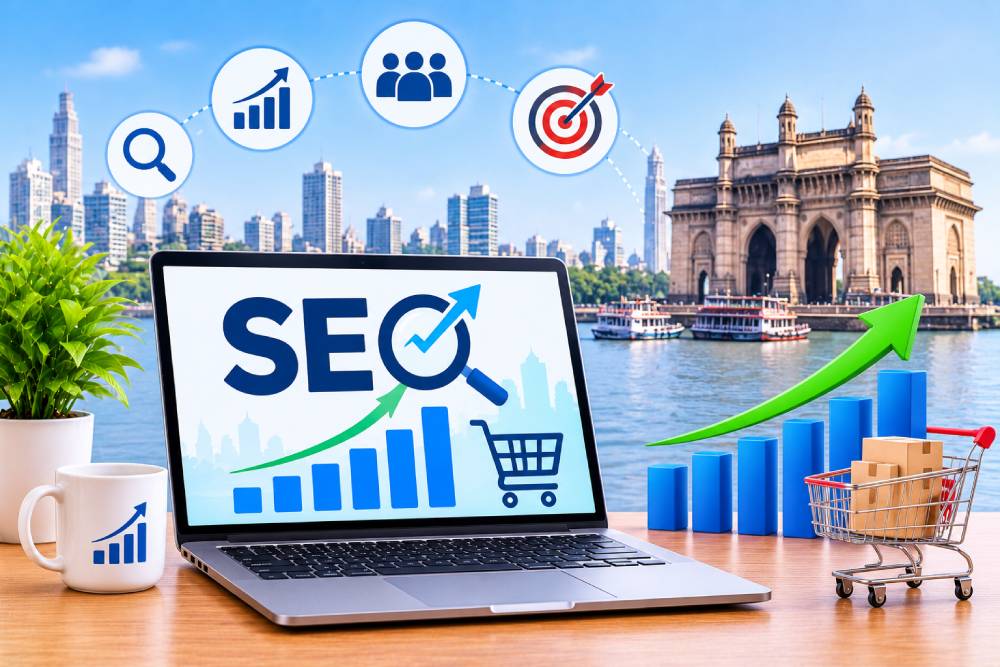
Running an ecommerce business in a competitive market like Mumbai requires more than offering quality products at attractive prices. Customers need to discover your products when they search online, compare available options, and decide which store they can trust. This is where search engine optimization (SEO) becomes important.
However, ecommerce SEO is different from optimizing a regular business website. An online store may contain hundreds or thousands of product pages, category pages, filters, images, and customer reviews. Each element can influence how search engines discover, understand, and display your website.
Choosing the Best SEO Company in Mumbai for Ecommerce Website Growth can help you develop a structured strategy to improve organic visibility, attract relevant visitors, and support long-term business growth. But how do you identify an agency that understands ecommerce rather than simply offering general SEO services?
This guide explains the important factors to evaluate before hiring an ecommerce SEO company in Mumbai, the services you should expect, and the questions worth asking before making a decision.
Why Ecommerce Businesses in Mumbai Need a Specialized SEO Strategy
Mumbai has a diverse business environment, with online retailers operating across industries such as fashion, electronics, beauty, home decor, food, and lifestyle products. Customers can compare multiple brands and stores before making a purchase.
In this competitive environment, relying entirely on paid advertising can become expensive over time. SEO offers another way to attract potential customers through relevant search queries.
A specialized ecommerce SEO strategy helps businesses:
- Improve the visibility of product and category pages.
- Reach customers searching for specific products.
- Build organic traffic without depending entirely on paid campaigns.
- Improve website navigation and user experience.
- Strengthen brand credibility through useful content and relevant search visibility.
- Identify technical issues that prevent search engines from discovering important pages.
For example, an online furniture store in Mumbai may want to appear for searches such as “wooden dining table online” or “modern sofa sets in Mumbai.” Ranking for relevant searches can introduce the store to users who are already interested in purchasing those products.
However, rankings alone do not guarantee sales. A successful SEO strategy must also consider product relevance, pricing, website experience, and the buying journey.
1. Look for Proven Experience in Ecommerce SEO
The first thing to evaluate when selecting an SEO company is its experience with ecommerce websites.
Optimizing a service-based website is not the same as managing a large online store. Ecommerce websites have additional requirements, including product-page optimization, category structures, duplicate URLs, product availability, and structured data.
A capable ecommerce SEO agency should understand how to:
- Optimize product and category pages.
- Manage websites with large numbers of URLs.
- Improve internal linking between related products and categories.
- Identify duplicate and low-value pages.
- Handle discontinued or out-of-stock products.
- Improve organic visibility for commercial search queries.
Ask the agency whether it has worked with ecommerce platforms such as Shopify, WooCommerce, Magento, or other online store solutions.
You should also request relevant examples of previous work. Look for clearly explained challenges, strategies, and measurable outcomes rather than relying only on impressive ranking screenshots.
An experienced agency should be able to explain what it actually did and which factors contributed to the reported results.
2. Check Its Approach to Ecommerce Keyword Research
Keyword research is one of the foundations of an effective ecommerce SEO campaign. However, targeting high-volume keywords without understanding user intent can attract visitors who are unlikely to purchase.
A professional SEO company should identify keywords based on the products you sell, your target audience, competition, and the different stages of the buying journey.
Ecommerce keywords generally fall into three broad categories:
Informational keywords: These searches indicate that users want to learn something before purchasing.
Examples:
- How to choose a comfortable office chair
- Benefits of stainless steel cookware
- How to select skincare products for dry skin
Commercial investigation keywords: These indicate that users are comparing products or evaluating available options.
Examples:
- Best wireless headphones under ₹3,000
- Top washing machines for small families
- Leather sofa vs fabric sofa
Transactional keywords: These searches often indicate a stronger intention to purchase.
Examples:
- Buy running shoes online
- Order wooden study table
- Affordable smart watches in Mumbai
The agency should map relevant keywords to appropriate pages instead of targeting every keyword on the homepage.
For example, a keyword related to wireless headphones should generally lead to a relevant product or category page rather than an unrelated general page.
3. Evaluate Its Product and Category Page Optimization Skills
Product and category pages are among the most important pages on an ecommerce website. They help search engines understand what you sell and give visitors the information they need to make purchasing decisions.
A good SEO company should know how to optimize these pages without making the content repetitive or unnatural.
Important product-page elements include:
- Unique and descriptive product titles.
- Useful product descriptions.
- Relevant headings and subheadings.
- Optimized product images and descriptive alt text.
- Clear product specifications.
- Customer reviews, where available.
- Appropriate internal links.
- Relevant product structured data.
Category pages also require careful optimization. Instead of displaying only a collection of products, important category pages can include useful introductory content, clear navigation, and relevant links to subcategories.
For example, an online fashion store could organize its website into categories such as men’s clothing, women’s clothing, footwear, and accessories. Each category should have a logical structure that helps both visitors and search engines understand the available products.
Avoid agencies that recommend copying manufacturer descriptions across hundreds of product pages. Original, useful descriptions can help communicate product features more effectively and improve the shopping experience.
4. Make Sure the Company Understands Technical SEO
Technical SEO is particularly important for ecommerce websites because their structures can become complicated as product collections grow.
A website may contain duplicate URLs, filter-generated pages, broken links, slow-loading pages, and indexing problems. If these issues are not managed properly, search engines may struggle to discover and understand important pages.
Before hiring an SEO company in Mumbai, check whether its technical SEO services include:
Website crawling and indexing: The agency should review whether important product and category pages can be discovered and indexed appropriately.
Duplicate URL management: Ecommerce filters, sorting options, and tracking parameters can generate multiple URLs with similar content. The agency should understand canonical tags and other appropriate URL management methods.
XML sitemap optimization: Important indexable pages should be represented accurately in relevant XML sitemaps.
Robots.txt review: The agency should understand how crawling restrictions affect different sections of the website.
Broken link identification: Broken internal links and unnecessary redirects should be identified and addressed.
Core Web Vitals: The company should evaluate loading performance, interactivity, and visual stability using relevant tools and real-world data where available.
Mobile optimization: Product pages, navigation, images, and checkout-related experiences should work properly on mobile devices.
Ask the agency to explain how it conducts a technical SEO audit and prioritizes issues. A good company should distinguish between critical problems and minor recommendations rather than presenting a long list without explaining their business impact.
5. Check Its Knowledge of Ecommerce Website Platforms
Different ecommerce platforms have different SEO capabilities and limitations. Your SEO partner should understand the platform your business uses.
For example:
Shopify: SEO work may involve collection structures, product URLs, duplicate content considerations, theme performance, metadata, and app-related technical issues.
WooCommerce: Optimization may include category structures, WordPress configuration, plugins, product schema, site speed, and URL management.
Magento: Larger Magento stores may require careful management of technical configurations, layered navigation, indexing, and website performance.
Custom ecommerce websites: These may require closer coordination between SEO specialists and developers to implement technical recommendations.
The right agency should not recommend unnecessary platform changes simply to begin an SEO campaign. Instead, it should first understand your existing website and identify realistic opportunities for improvement.
6. Review Its Content Marketing Strategy
Content marketing supports ecommerce SEO by answering customer questions, explaining product benefits, and helping users make informed purchasing decisions.
A professional SEO company should develop content based on actual search intent rather than publishing random blog posts simply to increase website content.
For example, a home decor ecommerce store could publish articles such as:
- How to Choose the Right Curtains for Your Living Room
- Modern Home Decor Ideas for Small Apartments
- How to Select the Best Lighting for Different Rooms
- Wooden Furniture Buying Guide for First-Time Buyers
These articles can attract informational traffic and naturally connect readers with relevant product or category pages.
However, content should provide genuine value. Avoid agencies that rely on mass-produced, repetitive articles or promise rankings simply by publishing a fixed number of blogs every month.
A useful content strategy should consider:
- Audience questions and purchasing concerns.
- Relevant informational and commercial keywords.
- Original explanations and practical advice.
- Natural internal linking opportunities.
- Regular content reviews and updates.
7. Understand Its Link-Building and Off-Page SEO Practices
Off-page SEO can support a website’s reputation and visibility, but link building should focus on relevance and quality rather than simply increasing backlink numbers.
A reliable ecommerce SEO company should explain how it approaches link acquisition and brand authority.
Potential activities may include:
- Relevant industry publications and editorial coverage.
- Genuine digital PR opportunities.
- Useful partnerships with related businesses.
- Original research and link-worthy resources.
- Relevant business and brand listings.
- Natural mentions from websites within the industry.
Be cautious if an agency promises hundreds or thousands of backlinks within a short period without explaining their sources.
Avoid strategies involving paid link schemes, automated link generation, irrelevant directories, or excessive exact-match anchor text. Such practices can create unnecessary risks and may violate Google’s spam policies.
Ask for transparency about the types of websites targeted, the methods used, and how the agency evaluates link quality.
8. Evaluate Its Understanding of Conversion-Focused SEO
Getting organic traffic is important, but traffic alone does not make an ecommerce business successful.
An online store needs visitors who are interested in its products and can easily find the information required to make a purchase.
A strong SEO company should consider how search visibility connects with the overall shopping experience.
For example, it should review:
- Whether product information is easy to understand.
- Whether product images are clear and useful.
- Whether category navigation is straightforward.
- Whether important product details are visible.
- Whether mobile visitors can use the website comfortably.
- Whether unnecessary steps create friction during shopping.
The SEO agency may also coordinate with your development or conversion optimization team to identify improvements.
However, it is important to understand the difference between SEO and conversion rate optimization. SEO helps attract relevant organic visitors, while conversion optimization focuses on helping those visitors complete desired actions.
Both can contribute to ecommerce growth.
9. Ask About Reporting, Analytics, and Performance Tracking
A professional SEO company should provide transparent reports explaining what work has been completed and how the website is performing.
Before hiring an agency, ask which tools it uses to monitor organic performance.
Common tools include:
- Google Search Console for search queries, impressions, clicks, and indexing information.
- Google Analytics 4 for website traffic and user behavior.
- SEO crawling tools for technical website analysis.
- Keyword research tools for search visibility and competitor research.
For an ecommerce business, reporting should go beyond keyword rankings.
Important performance indicators include:
| SEO Metric | Why It Matters |
|---|---|
| Organic clicks | Shows visits received from organic search |
| Organic impressions | Indicates how often pages appear in search results |
| Keyword visibility | Helps monitor search presence for relevant queries |
| Organic landing pages | Identifies pages attracting search visitors |
| Organic conversions | Tracks purchases or other valuable actions from organic traffic |
| Ecommerce revenue | Helps evaluate the business contribution of organic search |
| Technical health | Helps identify crawling, indexing, and website issues |
Ask whether the agency can explain how it attributes conversions and revenue to organic search. Ecommerce tracking needs to be configured correctly, and reporting should distinguish between direct results, assisted conversions, and other contributing channels where possible.
A good report should explain both progress and problems. It should not hide disappointing results behind attractive-looking charts.
10. Check Its Pricing and Service Transparency
SEO pricing varies depending on website size, competition, technical complexity, and the amount of work required.
An ecommerce website with 100 products may need a different level of support compared with a store containing thousands of products across multiple categories.
Before selecting an SEO company in Mumbai, understand exactly what its package includes.
Ask for details about:
- Initial SEO audit.
- Keyword research and mapping.
- Product and category page optimization.
- Technical SEO recommendations.
- Content planning and optimization.
- Link-building activities.
- Performance reporting.
- Communication and review meetings.
Do not select an agency simply because it offers the lowest price. Similarly, a higher price does not automatically mean better SEO services.
Compare the proposed strategy, deliverables, expertise, and level of transparency before making a decision.
Be particularly careful with guaranteed first-page rankings, guaranteed sales, or unrealistic traffic promises. Search performance depends on several factors, including competition, website quality, demand, and search engine changes.
11. Ask These Questions Before Hiring an SEO Company in Mumbai
Before signing an agreement, have a detailed discussion with the agency. The following questions can help you understand its approach.
1. Have you worked with ecommerce websites before?
Ask for relevant examples and an explanation of the challenges involved.
2. How will you approach keyword research for my products?
The agency should explain how it identifies search intent and maps keywords to product and category pages.
3. How will you handle duplicate product URLs and filtered pages?
This helps assess its understanding of ecommerce technical SEO.
4. What will your first 90 days of SEO work include?
Look for a realistic process involving discovery, auditing, prioritization, implementation, and monitoring.
5. How do you measure ecommerce SEO success?
The answer should include meaningful business metrics, not just rankings.
6. What link-building methods do you use?
Ask for transparency and avoid agencies that depend on manipulative practices.
7. How frequently will I receive performance reports?
Understand the reporting schedule and who will explain the results.
8. Will I retain access to my website and analytics accounts?
Your business should maintain ownership and appropriate administrative access to its website, analytics, and search-related accounts.
The quality of an agency’s answers can reveal whether it understands your business requirements or is simply trying to sell a standard SEO package.
12. Common Mistakes to Avoid When Choosing an Ecommerce SEO Agency
Even businesses that understand the importance of SEO can make poor decisions while selecting an agency.
Here are some common mistakes to avoid:
Choosing based only on price: Extremely cheap packages may offer limited work or rely on low-quality tactics. Evaluate the actual deliverables.
Expecting instant results: SEO is a long-term process. The time required depends on competition, website condition, resources, and the nature of the changes.
Ignoring technical SEO: Publishing content and building backlinks will not resolve serious crawling, indexing, or website performance problems.
Focusing only on rankings: Rankings do not always translate into relevant traffic, conversions, or revenue.
Accepting guaranteed results: No agency can legitimately guarantee specific Google rankings or a fixed amount of organic revenue.
Ignoring communication: An agency should be able to explain its strategy, progress, challenges, and next steps in understandable language.
Avoiding these mistakes can help you select a more suitable SEO partner and establish realistic expectations for your campaign.
Conclusion
Choosing the Best SEO Company in Mumbai for Ecommerce Website Growth requires more than comparing service packages or looking at keyword ranking claims. You need an agency that understands ecommerce platforms, product-page optimization, technical SEO, keyword intent, content strategy, and performance measurement.
Start by evaluating the company’s ecommerce experience, reviewing its approach to technical challenges, and understanding how it connects SEO activities with business objectives. Ask clear questions, request relevant examples, and make sure you retain control of your website and analytics accounts.
Most importantly, look for a transparent SEO partner that focuses on sustainable improvements instead of unrealistic promises. With the right strategy and consistent execution, ecommerce SEO can help your online store improve search visibility, reach relevant customers, and build a stronger foundation for long-term growth.
Frequently Asked Questions (FAQs)
1. What does an ecommerce SEO company in Mumbai do?
An ecommerce SEO company helps online stores improve their visibility in search engines. Its services may include keyword research, product-page optimization, category-page SEO, technical audits, content strategy, internal linking, and link building.
2. How do I choose the best SEO company in Mumbai for my ecommerce business?
Evaluate the company’s ecommerce experience, technical SEO knowledge, keyword research process, reporting methods, link-building practices, and pricing transparency. Ask for relevant case studies and understand its proposed strategy before signing an agreement.
3. How long does ecommerce SEO take to show results?
SEO does not follow a fixed timeline. Results depend on website condition, competition, industry, implementation speed, and the quality of the strategy. Some improvements may become visible earlier, while meaningful organic growth can require sustained work over several months.
4. Is ecommerce SEO different from regular website SEO?
Yes. Ecommerce SEO involves additional challenges such as product-page optimization, category structures, duplicate URLs, product availability, structured data, and large-scale website management.
5. Which SEO metrics should ecommerce businesses track?
Important metrics include organic clicks, search impressions, keyword visibility, organic landing-page performance, organic conversions, ecommerce revenue, and technical website health. These metrics should be interpreted together rather than individually.
6. Can SEO increase ecommerce sales?
SEO can help attract people searching for relevant products and improve their ability to discover your online store. However, actual sales also depend on product quality, pricing, trust, website experience, competition, and the checkout process.
7. Should a small ecommerce business hire an SEO agency?
A small ecommerce business can benefit from professional SEO support when it has clear growth goals and resources to implement recommendations. Before hiring an agency, evaluate the website’s needs, available budget, and expected deliverables.
8. Is local SEO important for ecommerce businesses in Mumbai?
Local SEO can be useful for ecommerce businesses that also serve local customers, offer store pickup, operate physical outlets, or provide location-specific delivery services. However, businesses selling across India may need a broader national SEO strategy alongside relevant local optimization.