
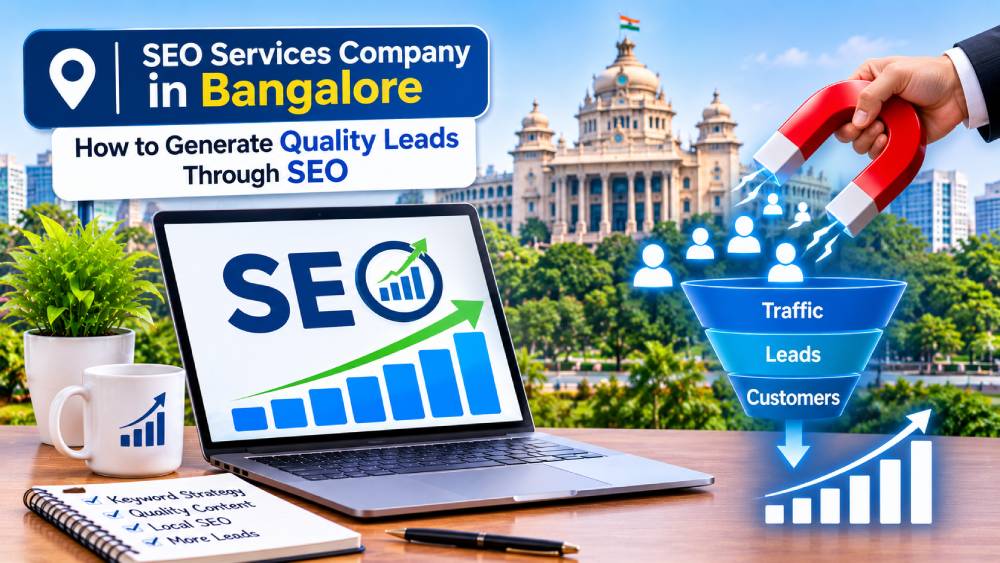
Generating quality leads is one of the most important objectives for businesses investing in digital marketing. Whether a company operates in technology, real estate, healthcare, education, ecommerce, or professional services, attracting potential customers who are genuinely interested in its offerings can support sustainable business growth.
However, getting website traffic is not the same as generating leads. A website may receive thousands of visitors but produce very few enquiries if its content does not match user intent, its service pages lack useful information, or visitors cannot easily contact the business.
Search Engine Optimisation (SEO) provides a long-term approach to attracting relevant visitors through organic search results. By targeting the right keywords, improving website performance, publishing helpful content, and optimising conversion paths, businesses can turn search visibility into meaningful business opportunities.
Working with an experienced SEO Services Company in Bangalore can help businesses develop a structured SEO strategy focused not just on rankings but also on attracting potential customers and generating qualified enquiries.
In this guide, we will explore how SEO generates quality leads, which strategies businesses should implement, and how to measure the results effectively.
What Is Lead Generation Through SEO?
SEO lead generation is the process of attracting potential customers through organic search results and encouraging them to take meaningful actions on a website.
These actions may include:
- Filling out a contact form.
- Requesting a product demonstration.
- Booking an appointment.
- Calling a business.
- Requesting a quotation.
- Signing up for a newsletter.
- Starting a WhatsApp conversation.
Unlike paid advertising, where businesses pay for ad placements, SEO focuses on improving a website’s visibility in unpaid search results.
For example, someone searching for “IT consulting services in Bangalore” may be actively looking for a company that can solve a specific business problem. A relevant service page that explains the company’s expertise, process, and contact options can help turn that search into an enquiry.
The objective is to attract visitors whose requirements match the products or services a business provides.
Why Quality Leads Matter More Than Website Traffic
Website traffic is useful for understanding online visibility, but it does not always reflect business performance.
Imagine two businesses:
- Business A receives 5,000 monthly visitors but generates only a few relevant enquiries.
- Business B receives 1,000 monthly visitors and attracts a higher proportion of people looking for its services.
Although Business A has more traffic, Business B may generate more valuable sales opportunities.
Quality leads matter because they help businesses:
- Connect with people who have relevant requirements.
- Improve the efficiency of sales follow-ups.
- Reduce time spent on irrelevant enquiries.
- Increase opportunities for conversions.
- Understand which services attract customer interest.
- Make better decisions about marketing investment.
A successful SEO strategy should therefore focus on relevant search visibility, user intent, and conversions rather than traffic numbers alone.
How an SEO Services Company in Bangalore Builds a Lead Generation Strategy
A strong SEO campaign begins with research and planning. Before optimising pages or publishing content, businesses need to understand their target customers, services, competition, and conversion objectives.
1. Understand the Target Audience
The first step is identifying the people most likely to purchase a business’s products or services.
Businesses should consider:
- Customer requirements and problems.
- Geographic location.
- Industry and professional background.
- Purchasing preferences.
- Budget considerations.
- Common questions before making a decision.
- Factors that influence trust and purchase decisions.
For example, a SaaS company in Bangalore may target startup founders, technology managers, and business decision-makers. A healthcare provider may need to reach patients searching for specific treatments or medical services.
Understanding the audience helps businesses create relevant content and select keywords that match actual customer needs.
2. Perform Keyword Research Based on Search Intent
Keyword research is one of the foundations of SEO lead generation. However, selecting keywords only by search volume can lead to poor results.
Businesses should understand the intent behind each search query.
There are four common types of search intent:
Informational intent: Users want to learn something.
Example: “What is enterprise SEO?”
Navigational intent: Users want to find a particular website or brand.
Example: “Company name official website.”
Commercial investigation: Users are comparing different services or providers.
Example: “Best SEO services company in Bangalore.”
Transactional intent: Users are closer to taking action.
Example: “Hire SEO experts in Bangalore.”
For lead generation, commercial and transactional keywords are particularly useful because they often indicate a stronger interest in purchasing a service.
However, informational keywords also have value. They help businesses reach potential customers earlier in their decision-making process.
A balanced keyword strategy should include both high-intent service keywords and relevant informational topics.
3. Optimise Service Pages for Conversions
Service pages are among the most important pages for SEO lead generation because they explain what a business offers.
A well-optimised service page should provide clear answers to important customer questions.
It should include:
- A descriptive page title.
- A clear H1 heading.
- An explanation of the service.
- Relevant benefits and use cases.
- The business’s working process.
- Genuine experience or credentials where available.
- Relevant FAQs.
- Clear contact information.
- A visible call to action.
For example, an SEO agency targeting Bangalore businesses should explain its SEO services, campaign approach, reporting methods, and the types of businesses it supports.
Avoid filling service pages with repeated keywords. Content should be natural, specific, useful, and written to help potential customers make informed decisions.
7 Effective SEO Strategies to Generate Quality Leads
1. Focus on Local SEO
Local SEO helps businesses improve their visibility for searches connected to specific geographic areas.
For companies serving customers in Bangalore, local search visibility can be especially valuable.
Important local SEO activities include:
Optimise Google Business Profile: Maintain accurate business information, business categories, contact details, working hours, and relevant photographs.
Use location-specific keywords: Include relevant geographic terms naturally in suitable service pages and content.
Create useful location pages: If a business serves multiple areas, create genuinely valuable pages explaining its services and relevance to those locations. Avoid producing nearly identical pages with only the location name changed.
Maintain consistent business information: Ensure that the business name, address, and phone number are accurate across important online listings.
Encourage genuine customer reviews: Ask customers to share honest feedback about their experiences. Do not purchase reviews or offer incentives in exchange for positive ratings.
Local SEO helps businesses connect with nearby customers who are actively searching for relevant services.
2. Create Helpful, High-Quality Content
Content marketing and SEO work together to attract potential customers.
Publishing useful articles allows businesses to answer questions, explain solutions, and demonstrate subject knowledge.
Examples of useful content include:
- Detailed service guides.
- Industry-specific SEO articles.
- How-to tutorials.
- Comparison guides.
- Frequently asked questions.
- Case studies supported by genuine evidence.
- Original research and practical insights.
For example, an IT company in Bangalore could publish an article about selecting cloud infrastructure for a growing business. Readers researching the topic may later explore the company’s related services.
Content should demonstrate genuine knowledge and provide value beyond repeating information already available elsewhere.
Google’s people-first content principles emphasise helpfulness, reliability, and content created primarily for users rather than search engines.
3. Improve Technical SEO
Technical SEO helps search engines access, crawl, understand, and index website pages.
Even useful content may struggle to perform effectively if important technical problems prevent search engines from discovering or processing it correctly.
Businesses should review:
- XML sitemap configuration.
- Robots.txt settings.
- Canonical tags.
- HTTPS implementation.
- Broken internal links.
- Redirect chains.
- Duplicate URLs.
- Mobile usability.
- Page loading performance.
- Structured data where appropriate.
For example, incorrect canonical tags can signal that a different URL should be treated as the preferred version of a page.
Technical SEO improvements should be implemented carefully and tested to avoid creating new crawling or indexing problems.
4. Build a Strong Internal Linking Structure
Internal links connect related pages within the same website.
They help visitors discover relevant information and provide search engines with additional context about website structure.
For example, a blog discussing technical SEO could link naturally to the company’s technical SEO service page. A guide about local SEO could connect to a relevant local SEO service page.
Good internal linking practices include:
- Use descriptive anchor text.
- Link to relevant pages.
- Connect related blog articles.
- Make important service pages easy to discover.
- Avoid excessive or unnatural linking.
- Fix broken internal links.
An organised internal linking structure can help guide visitors from informational content towards relevant services.
5. Improve Website Speed and Mobile Experience
Website performance affects how comfortably visitors can access and interact with content.
A slow or difficult-to-use website may discourage potential customers from exploring service pages or submitting enquiries.
Businesses should focus on:
- Compressing and resizing images.
- Reducing unnecessary scripts.
- Using suitable caching.
- Improving server response times.
- Maintaining responsive page layouts.
- Making forms easy to complete.
- Ensuring buttons and navigation work properly.
Google’s Core Web Vitals provide useful measures of loading performance, responsiveness, and visual stability.
The recommended thresholds at the 75th percentile are:
- Largest Contentful Paint (LCP): 2.5 seconds or less.
- Interaction to Next Paint (INP): 200 milliseconds or less.
- Cumulative Layout Shift (CLS): 0.1 or less.
Improving these areas supports a better user experience, although speed improvements alone do not guarantee higher rankings or more leads.
6. Earn Relevant, Trustworthy Backlinks
Backlinks are links from other websites pointing to a business’s website.
Relevant, editorially earned links can help search engines understand how a website is referenced across the web.
Businesses can work towards earning links through:
- Publishing original research.
- Creating useful industry resources.
- Contributing expert insights to relevant publications.
- Participating in genuine industry discussions.
- Building partnerships with relevant organisations.
- Publishing informative guest articles.
The focus should be on relevance and editorial value rather than collecting large numbers of links.
Avoid buying manipulative links, participating in link schemes, or publishing low-quality guest posts solely for SEO benefits.
7. Optimise Calls to Action and Conversion Paths
Attracting visitors is only one part of lead generation. Businesses also need to make it easy for interested users to take the next step.
A call to action (CTA) tells visitors what they can do next.
Examples include:
- Request a Free Consultation.
- Get a Custom Quote.
- Book a Demo.
- Contact Our Team.
- Discuss Your Project.
The CTA should match the purpose of the page and the visitor’s stage in the buying journey.
For example, someone reading an introductory SEO guide may prefer to explore related services before requesting a consultation. A visitor on a pricing or service page may be more prepared to submit an enquiry.
Keep forms simple and collect only the information necessary for an appropriate response.
How Different Industries Can Generate Leads Through SEO in Bangalore
SEO strategies should reflect the specific needs of each industry.
| Industry | Useful SEO approach |
|---|---|
| IT and SaaS | Target solution-based keywords, publish technical guides, and optimise product pages |
| Real estate | Optimise property pages, location content, and local search visibility |
| Healthcare | Create accurate service information and medically responsible educational content |
| Education | Target course-related searches, admission queries, and educational guides |
| Ecommerce | Improve product pages, category structure, and product discovery |
| Professional services | Optimise service pages, location terms, and expert-led content |
For example, an ecommerce business should focus on product discovery and purchase intent, while a B2B service provider may benefit more from detailed service pages, comparison guides, and consultation enquiries.
The best strategy depends on the audience, sales cycle, and business objectives.
How to Measure SEO Lead Generation Performance
SEO performance should be evaluated using metrics that connect search activity with business outcomes.
Some important measurements include:
| Metric | What It Measures |
|---|---|
| Organic clicks | Visitors arriving through unpaid search results |
| Organic impressions | How often website pages appear in search results |
| Keyword performance | Visibility for relevant search queries |
| Organic conversion rate | Percentage of organic visitors completing a desired action |
| Qualified leads | Enquiries matching the business’s target customer profile |
| Cost per qualified lead | SEO investment divided by qualified leads over a defined period |
| Lead-to-customer rate | Percentage of leads that become customers |
| Customer acquisition cost | Overall cost of acquiring a customer |
Useful tools include:
Google Search Console: Monitor search queries, clicks, impressions, indexing, and page performance.
Google Analytics 4: Measure website behaviour and configured conversion events.
Google Tag Manager: Manage tracking for forms, phone clicks, and WhatsApp button interactions.
CRM software: Track lead sources, follow-ups, qualification status, and sales outcomes.
One important distinction is that a button click is not necessarily a confirmed lead. Businesses should track completed forms, meaningful calls, and actual enquiries separately wherever possible.
Common SEO Lead Generation Mistakes to Avoid
Businesses sometimes invest in SEO without understanding why their campaigns are not generating relevant enquiries.
Common mistakes include:
- Targeting only high-volume keywords: High search volume does not always indicate purchasing intent.
- Ignoring search intent: Content should answer the actual question behind a search.
- Publishing thin content: Pages should provide meaningful information instead of repeating generic descriptions.
- Neglecting service pages: Informational blogs cannot replace clear, well-optimised service pages.
- Ignoring mobile users: Poor mobile usability can make it difficult for visitors to contact a business.
- Using misleading claims: Unsupported guarantees can damage trust and credibility.
- Ignoring conversion tracking: Without accurate tracking, it is difficult to identify which pages generate enquiries.
- Building irrelevant backlinks: Link quantity should not take priority over relevance and quality.
- Failing to follow up: Marketing generates opportunities, but businesses still need an effective sales process.
Avoiding these mistakes helps create a more sustainable SEO lead generation strategy.
How to Choose the Right SEO Services Company in Bangalore
Selecting an SEO partner is an important decision for businesses that want to improve organic visibility and generate relevant leads.
Before hiring an agency, consider these factors:
1. Understand its SEO process: Ask how it approaches keyword research, technical audits, content optimisation, and link acquisition.
2. Review industry experience: Look for relevant examples of work and verify any performance claims or case studies.
3. Check reporting methods: A reliable agency should explain organic traffic, keyword visibility, conversions, and lead quality.
4. Ask about conversion tracking: Understand how the agency measures form submissions, phone enquiries, and other important actions.
5. Discuss realistic expectations: SEO requires consistent work. Be cautious of guaranteed rankings or promises of instant results.
6. Evaluate communication: Choose an agency that explains its work clearly and provides regular updates.
7. Understand pricing: Ask what services are included, what work is performed, and whether additional costs apply.
The right SEO partner should understand that rankings are only one part of business growth. The broader objective is to attract relevant visitors and create meaningful opportunities for conversion.
Conclusion
Generating quality leads through SEO requires a combination of audience research, relevant keyword targeting, helpful content, technical optimisation, local search visibility, and effective conversion strategies.
For businesses operating in Bangalore, SEO can provide a valuable way to connect with potential customers who are actively searching for relevant products and services. However, sustainable results depend on consistent optimisation, accurate performance measurement, and a website experience that encourages visitors to take action.
An experienced SEO Services Company in Bangalore can help businesses develop and manage a structured SEO strategy that focuses on more than just rankings. By combining search visibility with useful content, strong service pages, and clear conversion paths, businesses can build a stronger foundation for long-term organic lead generation.
The key is to attract the right audience, answer their questions, demonstrate credibility, and make it easy for interested visitors to become genuine business enquiries.
Frequently Asked Questions (FAQs)
1. How does SEO generate quality leads?
SEO attracts visitors who are searching for relevant products, services, or information. By targeting suitable keywords and providing useful content, businesses can connect with potential customers and encourage them to submit enquiries.
2. How long does SEO take to generate leads?
The timeline depends on website condition, competition, keyword difficulty, content quality, and the resources invested. SEO generally requires consistent work, and meaningful results may take several months or longer.
3. Which SEO strategy is best for generating leads?
A combination of commercial keyword targeting, local SEO, optimised service pages, helpful content, technical SEO, and conversion optimisation can support lead generation. The right mix depends on the business and its target audience.
4. Is local SEO important for businesses in Bangalore?
Yes. Local SEO can help businesses improve visibility for relevant searches connected to Bangalore and the surrounding service areas. An accurate Google Business Profile and useful location-specific content can support local discovery.
5. Can SEO generate leads without paid advertising?
Yes. SEO focuses on unpaid search visibility and can attract relevant visitors without paying for each organic click. However, businesses still invest in content, technical improvements, tools, and SEO resources.
6. How can I track leads generated through SEO?
Businesses can use Google Analytics 4, Google Tag Manager, Google Search Console, and CRM software to monitor organic traffic, form submissions, calls, and lead quality.
7. Why should a business hire an SEO Services Company in Bangalore?
An SEO agency can help with keyword research, technical SEO, content strategy, local optimisation, website improvements, and performance tracking. Businesses should select an agency based on its process, transparency, and ability to align SEO work with business goals.