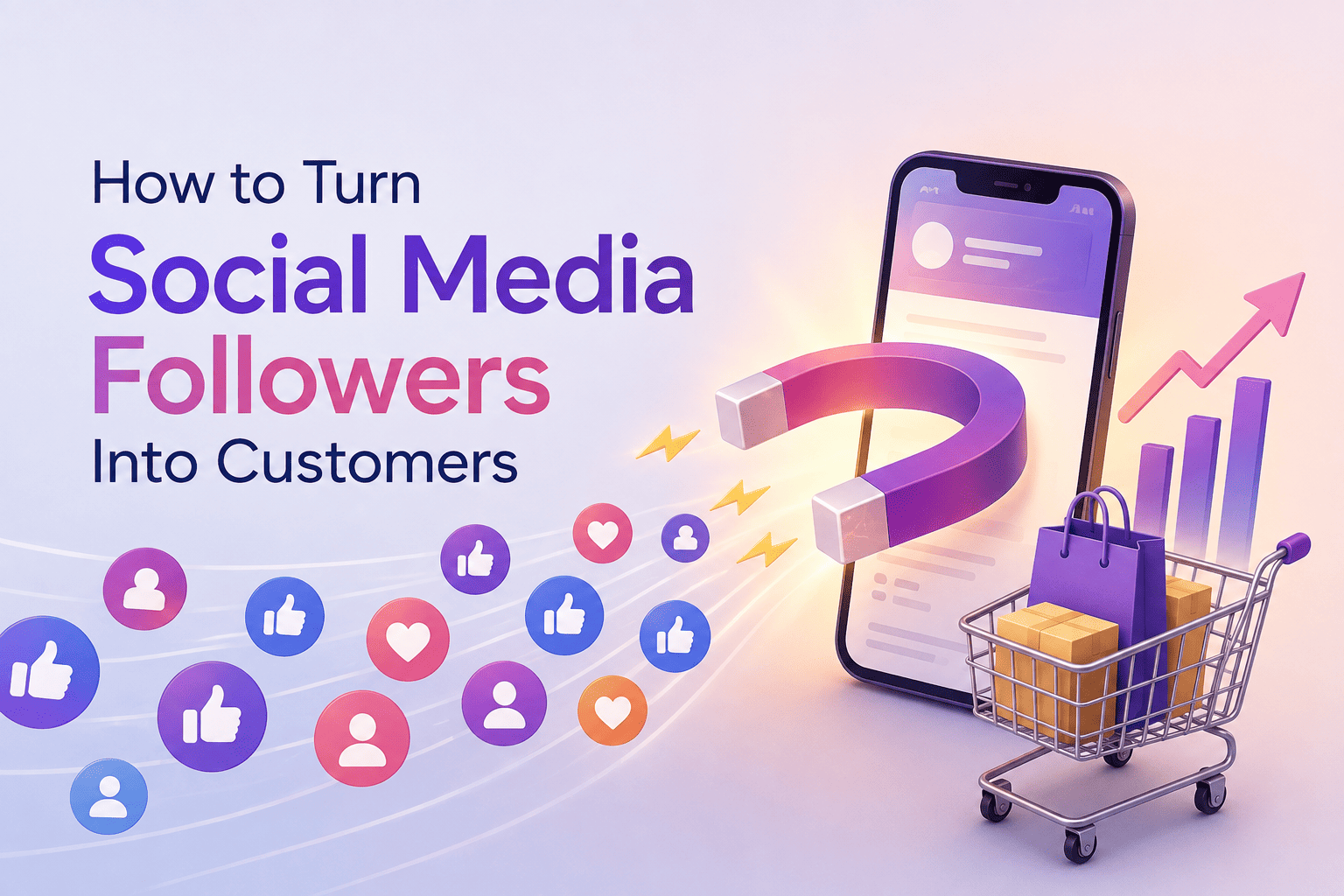
A large follower count feels good, but it doesn’t pay the bills on its own. Plenty of accounts with tens of thousands of followers struggle to convert even a small fraction of them into paying customers, while smaller, more focused accounts quietly outsell them. The gap usually comes down to strategy, not audience size. Followers are people who found you interesting enough to stick around; turning that interest into a sale just requires a deliberate path from attention to trust to purchase. Here is how to build that path.
1. Understand Why Someone Follows You but Doesn’t Buy
Most followers are not ready to buy the moment they hit follow. They followed because a post caught their eye, not because they had already decided to purchase. Treating every follower as a cold lead rather than a missed sale changes how you plan content, because the job of your account becomes moving people gradually from curious to convinced, not pushing every post as a sales pitch.
2. Fix Your Profile Before Fixing Your Content
Your bio, profile picture, and pinned content are doing sales work whether you’ve planned for it or not. A visitor who lands on your profile after seeing one good post should immediately understand what you sell, who it’s for, and what to do next. A clear one-line description of what you offer, a link that goes somewhere specific rather than a generic homepage, and a highlight or pinned post showcasing your product in action will quietly convert far more browsers than any single post.
3. Mix Value Content With Product Content
Accounts that only post promotions train followers to scroll past them, while accounts that only post value content never give followers a reason to buy. The accounts that convert well usually follow a rough rhythm: several posts that teach, entertain, or solve a small problem for every one post that directly promotes a product. This keeps followers engaged between purchases while still reminding them regularly that you sell something worth buying.
4. Use Social Proof Deliberately
People trust other customers more than they trust brands talking about themselves. Sharing testimonials, reposting user-generated content, showing behind-the-scenes production, or posting real customer results does more to move a hesitant follower toward a purchase than another polished product shot. If you don’t have much social proof yet, ask your first few customers directly for a short review or photo, since most are happy to help if you simply ask.
5. Make Your Call-to-Action Specific
“Check the link in bio” is vague enough that most followers won’t act on it. Specific calls-to-action perform better because they remove the guesswork: tell people exactly what happens next, such as which product the link leads to, what a DM will get them, or what a discount code unlocks. The clearer and smaller the next step you ask for, the more followers will actually take it.
6. Use Stories and DMs for Warmer Conversations
Feed posts reach a broad audience, but Stories and direct messages are where a lot of real buying conversations happen, especially for small and mid-sized brands. Polls, question stickers, and swipe-up links in Stories invite lower-pressure interaction, and replying personally to DMs about a product often turns interest into a sale faster than any feed post can, because it feels like a conversation with a person rather than a brand.
7. Create Urgency Without Overusing It
Limited-time offers, small-batch drops, or early-access windows for followers give people a reason to act now instead of bookmarking a post and forgetting about it. Urgency works because it counters the natural tendency to delay a purchase decision, but it only works if used sparingly. If every post claims something is about to sell out, followers stop believing it and the tactic loses its effect entirely.
8. Retarget Followers Who Show Interest but Don’t Buy
Someone who watches most of a product video, visits your bio link, or comments asking about price has shown real intent even if they didn’t purchase. Running a small retargeting ad to people who have engaged with your content, or simply following up in DMs with those who asked a specific question, catches a large share of near-misses that would otherwise be lost for good.
9. Track What Actually Converts, Not Just What Gets Likes
High-like posts and high-converting posts are often different posts, so relying on likes and follower growth alone can quietly steer your content strategy in the wrong direction. Track link clicks, DM inquiries, and actual sales tied back to specific posts or campaigns where possible, and lean into the content style that drives those numbers even if it isn’t your most-liked format.
A Simple Weekly Content Mix to Aim For
- 2 to 3 value or educational posts that build trust and keep followers engaged.
- 1 to 2 social proof posts featuring real customers, reviews, or results.
- 1 clear product or offer post with a specific call-to-action.
- Daily or near-daily Stories to keep the relationship warm between feed posts.
- A short follow-up plan for anyone who comments or DMs with buying intent.
Frequently Asked Questions
Why do I have a lot of followers but very few sales? Usually because content isn’t guiding followers toward a purchase decision. Followers need consistent trust-building content, visible social proof, and clear calls-to-action before most of them will buy, so a large but passive audience often just means the conversion path hasn’t been built yet.
How often should I post promotional content? A common and effective ratio is roughly one promotional post for every three to four value or engagement posts, so followers see enough non-salesy content to stay engaged without promotions feeling constant or ignorable.
Do I need a large following to convert followers into customers? No. Smaller, engaged audiences often convert better than large passive ones, since trust and relevance matter more than raw follower count when it comes to actual purchase decisions.
What’s the fastest way to build trust with new followers? Social proof, such as real customer reviews, testimonials, or user-generated content, tends to build trust faster than brand messaging alone, because people generally trust other customers more than they trust a brand talking about itself.
Should I use Stories or feed posts to drive sales? Both play a role: feed posts build broader awareness and trust over time, while Stories and DMs tend to drive warmer, more direct buying conversations, so using both together typically works better than relying on just one.
How do I know which content is actually driving sales? Track link clicks, DM inquiries, and sales linked back to specific posts or campaigns rather than relying on likes or follower growth alone, since the two often don’t line up with what’s actually converting.
Turning followers into customers isn’t about posting more; it’s about posting with a clearer path in mind. Fix your profile so it sells on its own, mix value with promotion, lean on real social proof, and give people a specific, easy next step. Do this consistently, and your existing followers, not just new ones, will start becoming your best source of sales.