Businesses today need more than just a website to attract customers and compete online. They need a strong digital presence that helps potential customers discover their products or services, understand their value, and take action. This is where digital marketing services in Noida can help businesses build visibility, reach relevant audiences, generate leads, and support long-term growth.
Noida has a diverse business environment that includes startups, local service providers, educational institutions, healthcare businesses, manufacturers, ecommerce companies, and established enterprises. Each business has different marketing objectives, customer expectations, and budgets. Choosing the right combination of digital marketing strategies is therefore essential for achieving meaningful results.
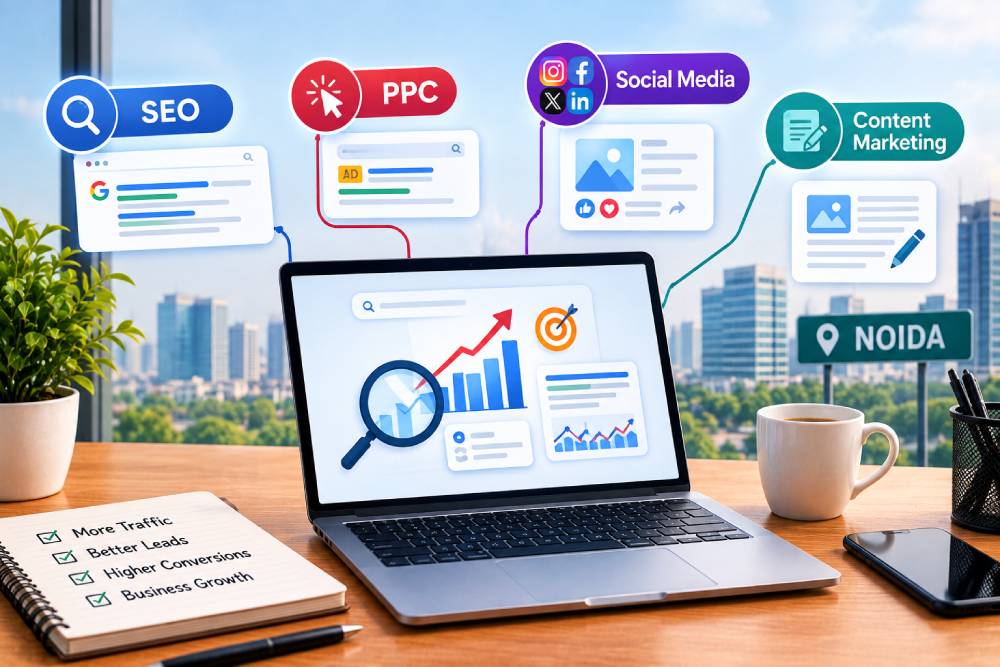
The most effective digital marketing approach often combines search engine optimization (SEO), pay-per-click advertising (PPC), social media marketing, and content marketing. Each channel serves a different purpose, but they can work together to strengthen brand awareness, attract qualified visitors, and support conversions.
This guide explains the major digital marketing services available to businesses in Noida, how they work, what to consider when choosing a provider, and how to evaluate marketing performance.
What Are Digital Marketing Services?
Digital marketing services involve promoting a business, product, or service through online channels. These channels help businesses connect with potential customers when they search for information, browse social platforms, watch videos, or compare different solutions.
Unlike traditional marketing methods, digital marketing allows businesses to measure many aspects of their campaigns, including website visits, advertising clicks, enquiries, conversions, and customer engagement.
Common digital marketing services include:
- Search engine optimization (SEO)
- Pay-per-click advertising (PPC)
- Social media marketing
- Content marketing
- Website design and conversion optimization
- Email marketing
- Local SEO
- Online reputation management
- Analytics and performance reporting
A business does not necessarily need every service at once. The appropriate mix depends on its industry, target audience, available resources, competition, and business goals.
For example, a local service provider may prioritize local SEO and Google Ads, while an ecommerce business may focus on product-page SEO, shopping campaigns, social media advertising, and conversion optimization.
Why Businesses Need Digital Marketing Services in Noida
Customers increasingly use online platforms to research businesses, compare products, read reviews, and evaluate service providers before making decisions. A business that is difficult to find online may miss opportunities to connect with these potential customers.
Professional digital marketing services can help businesses address several common challenges.
1. Improve Online Visibility
A business needs to appear where its potential customers are looking for relevant information. SEO can help improve visibility in organic search results, while paid advertising can provide opportunities to reach audiences through advertising platforms.
For a business serving customers in Noida, location-relevant website content and a properly maintained Google Business Profile can also support local discovery when appropriate.
2. Reach Relevant Audiences
Not every website visitor is a potential customer. Digital marketing strategies can focus on people whose search queries, interests, locations, or needs are relevant to a business’s offerings.
For example, a company providing accounting services may create content around business accounting questions, while a furniture retailer may target people searching for specific furniture products.
Audience relevance matters because attracting visitors who have no interest in a business’s services may increase traffic without improving enquiries or sales.
3. Generate Leads and Sales
Digital marketing can support business growth by guiding potential customers toward useful actions, such as submitting an enquiry form, calling a business, booking a consultation, or purchasing a product.
However, results depend on several factors, including campaign quality, competition, pricing, customer demand, website experience, and the quality of the offer.
4. Measure Marketing Performance
Analytics tools can help businesses understand how people discover and interact with their websites. Advertising dashboards and conversion tracking can provide additional information about campaign performance.
This information helps marketers identify which activities are contributing to business objectives and where improvements may be needed.
1. Search Engine Optimization (SEO)
Search engine optimization is the process of improving a website’s visibility in unpaid search results. It involves helping search engines discover, understand, and evaluate website content while making that content useful for visitors.
For businesses exploring digital marketing services in Noida, SEO can be valuable when potential customers regularly search online for the products, services, or information they provide.
Key Components of SEO
On-Page SEO
On-page SEO focuses on improving individual website pages. Common activities include:
- Writing descriptive page titles and meta descriptions.
- Organizing content with clear headings.
- Using relevant keywords naturally.
- Improving internal linking.
- Creating useful, original page content.
- Optimizing images and descriptive alternative text where appropriate.
For example, a company offering web design in Noida may create a dedicated service page that explains its services, process, relevant experience, and frequently asked questions.
The goal is to help visitors understand the offering while making the page easier for search engines to interpret.
Technical SEO
Technical SEO focuses on aspects of a website that affect crawling, indexing, and usability. These may include:
- Checking whether important pages can be crawled and indexed.
- Improving site structure and URL consistency.
- Identifying broken links and redirect problems.
- Reviewing mobile usability.
- Monitoring page performance and Core Web Vitals.
- Implementing appropriate structured data.
- Managing duplicate or conflicting page versions.
Technical SEO requirements vary by website. A technical audit should prioritize issues that genuinely affect search accessibility, user experience, or site performance rather than treating every audit warning as equally important.
Off-Page SEO
Off-page SEO includes activities that help establish a website’s reputation and visibility beyond its own pages.
Examples include earning relevant editorial backlinks, building legitimate industry relationships, gaining appropriate business mentions, and publishing genuinely useful resources that others may reference.
The focus should be on relevance, quality, and credibility. Buying links intended to manipulate rankings or publishing large amounts of low-value content solely to obtain backlinks can create risks under Google’s spam policies.
Local SEO
Local SEO helps eligible businesses improve their visibility in location-based searches.
Important activities may include:
- Maintaining an accurate Google Business Profile.
- Keeping business name, address, phone number, and hours current.
- Selecting relevant business categories.
- Adding genuine business photos.
- Responding professionally to customer reviews.
- Creating useful location-specific website content.
- Ensuring that location and service information is accurate.
Businesses should not create misleading locations or duplicate location pages with little useful information simply to target additional areas.
Benefits of SEO for Noida Businesses
SEO can help businesses attract relevant organic traffic, improve discoverability, and provide useful information to potential customers. It can also support brand credibility when pages clearly explain a company’s services and demonstrate relevant expertise.
SEO is generally a longer-term investment. Rankings and traffic are not guaranteed, and results depend on competition, website quality, search demand, and other factors.
2. Pay-Per-Click Advertising (PPC)
Pay-per-click advertising allows businesses to display paid advertisements on platforms such as Google Ads and pay according to the billing model of the campaign, often when someone clicks an ad.
Unlike SEO, which aims to earn visibility in organic search results, PPC provides access to paid placements when campaign settings, bidding, budgets, and platform eligibility allow.
PPC can be useful for businesses that want to test demand, promote a specific offer, or generate enquiries within a defined campaign period.
Common Types of PPC Campaigns
Google Search Ads
Search ads can appear when users search for terms relevant to an advertiser’s products or services.
For example, a business providing website development services may target relevant searches from people looking for a website developer in Noida.
Campaign success depends on factors such as keyword selection, search intent, ad relevance, landing-page quality, competition, and bidding.
Display Advertising
Display campaigns can show visual advertisements across eligible websites and apps. They may be used for brand awareness, audience reach, or remarketing where the platform and applicable privacy requirements permit.
Shopping Campaigns
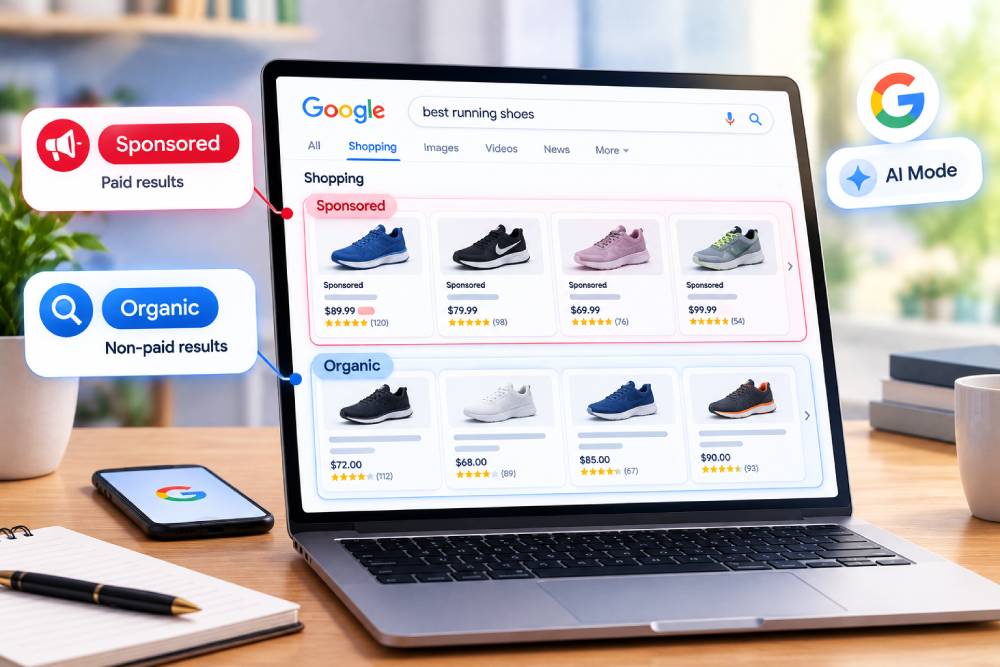
Eligible ecommerce businesses can use product advertising formats to promote products with information such as product titles, images, and prices. Product data quality and compliance with platform requirements are important.
Remarketing
Remarketing can help businesses reconnect with eligible audiences who have previously interacted with their website or content. Its availability and implementation depend on platform policies, consent requirements, and audience eligibility.
How to Improve PPC Campaign Performance
Businesses should define a clear objective before launching a paid campaign. The objective could be generating qualified leads, increasing sales, receiving phone calls, or promoting a particular service.
Useful PPC practices include:
- Researching keywords and user intent.
- Organizing campaigns around relevant services or products.
- Writing accurate and compelling ad copy.
- Sending visitors to relevant landing pages.
- Setting realistic budgets and bidding strategies.
- Configuring appropriate conversion tracking.
- Reviewing search terms and excluding irrelevant traffic where necessary.
- Testing landing-page elements and ad variations.
- Monitoring cost per lead, conversion rate, and lead quality.
A campaign that generates many clicks is not automatically successful. Businesses should assess whether those clicks result in meaningful actions and commercially relevant enquiries.
PPC can produce traffic relatively quickly after campaigns become eligible to serve, but it does not guarantee sales or profitable leads.
3. Social Media Marketing
Social media marketing helps businesses communicate with audiences through platforms such as Instagram, Facebook, LinkedIn, and other relevant networks.
It can support brand awareness, customer engagement, community building, product discovery, and lead generation. The best platform depends on the business’s audience and objectives rather than popularity alone.
Organic Social Media Marketing
Organic social media activity includes publishing posts, videos, educational content, company updates, product demonstrations, and customer stories.
For example:
- A fitness business may publish exercise guidance and service information.
- A B2B company may share industry insights and case studies.
- A restaurant may post menu updates and behind-the-scenes content.
- A software business may publish product tutorials and explain common customer problems.
Content should offer a clear reason for people to engage with the business. Repeated promotional messages without useful information may provide limited value to the audience.
Paid Social Media Advertising
Paid social campaigns allow businesses to promote content, reach selected audiences, and pursue objectives such as website traffic, lead generation, or purchases.
Campaigns should use accurate messaging, relevant creative assets, and suitable landing pages. Businesses should also ensure that their advertising follows the platform’s policies.
Best Practices for Social Media Marketing
An effective social media strategy generally includes:
- Defining the target audience.
- Selecting platforms based on audience relevance.
- Creating a realistic content calendar.
- Using consistent branding.
- Publishing content in suitable formats.
- Responding to relevant comments and messages.
- Testing paid campaigns when appropriate.
- Measuring meaningful engagement and conversions.
Social media success should not be measured by follower counts alone. Website visits, qualified enquiries, sales, saves, meaningful interactions, and audience retention may provide a more useful picture, depending on the campaign objective.
4. Content Marketing
Content marketing involves creating and distributing useful, relevant content to attract and engage a defined audience. It helps businesses answer customer questions, explain their offerings, demonstrate knowledge, and support decision-making.
Content marketing can work alongside SEO, PPC, email marketing, and social media.
Types of Content Marketing
Blog Posts and Guides
Blog articles can answer common questions, explain complex topics, compare solutions, and help readers understand products or services.
For example, a digital marketing company could publish a guide explaining how local businesses can improve their online visibility, evaluate SEO performance, or choose an appropriate advertising strategy.
Case Studies
Case studies can explain a genuine project, the challenge involved, the approach taken, and the results achieved. Claims should be supported by actual project information and presented with relevant context.
Businesses should never invent clients, testimonials, traffic growth, or revenue results to make a case study appear more impressive.
Videos and Tutorials
Videos can demonstrate how a product works, explain a process, answer frequently asked questions, or introduce a service. They can be shared on social platforms, relevant website pages, and other suitable channels.
Infographics and Visual Resources
Well-designed visual content can simplify complex information, summarize a process, or present useful comparisons. It should remain accurate and readable rather than relying on decoration alone.
How to Create an Effective Content Marketing Strategy
Start by identifying the questions customers ask before they buy. Keyword research, customer conversations, sales enquiries, and website search data can help reveal these information needs.
Next, organize topics around the customer journey:
- Awareness: The audience is learning about a problem.
- Consideration: The audience is comparing possible solutions.
- Decision: The audience is evaluating specific providers or products.
Create content that genuinely answers each type of question. Include relevant examples, clear explanations, and practical next steps.
Review performance using suitable metrics, such as organic impressions, relevant website visits, engagement, assisted conversions, and qualified leads. Not every article needs to generate an immediate sale; some content helps people understand a topic before they are ready to make a decision.
5. How SEO, PPC, Social Media, and Content Marketing Work Together
These digital marketing channels are most useful when they support a coordinated business strategy.
Consider a Noida-based company offering professional services.
- SEO helps its service pages and educational articles become discoverable through relevant organic searches.
- PPC helps it reach people searching for selected services through paid advertising.
- Social media marketing helps it share expertise, communicate updates, and engage with relevant audiences.
- Content marketing provides useful guides, comparisons, and resources that help potential customers evaluate their options.
A blog post could attract organic visitors, be shared on social media, and support a relevant paid campaign. Similarly, insights from PPC search-term reports may help identify topics for future SEO content.
However, every channel does not need an equal budget. Businesses should allocate resources according to their goals, available data, audience behaviour, and commercial priorities.
6. How to Choose the Best Digital Marketing Services in Noida
Selecting a digital marketing provider requires more than comparing prices or promises. Businesses should assess whether the provider understands their goals, explains its approach clearly, and can report performance transparently.
Consider these factors before making a decision.
Understand Your Business Goals
Define what you want digital marketing to achieve. Possible objectives include improving local visibility, increasing qualified leads, growing online sales, building brand awareness, or attracting relevant website traffic.
Clear objectives make it easier to choose appropriate services and measure progress.
Review Relevant Experience
Ask whether the provider has experience with businesses, audiences, or challenges similar to yours. Review genuine work samples, case studies, and explanations of the strategies used.
Past results can offer useful context, but they do not guarantee the same outcome for another business.
Evaluate the Proposed Strategy
A suitable proposal should explain which channels are recommended, why they fit your goals, what activities are included, and how performance will be measured.
Be cautious of vague proposals that promise rankings or sales without explaining the work involved.
Check Reporting and Communication
Ask how often reports will be shared and which metrics they will include. Reports should distinguish between activity and outcomes—for example, the number of articles published versus the qualified leads those articles helped generate.
You should also understand who will manage the campaigns, how frequently progress will be discussed, and how important changes will be approved.
Understand Pricing and Deliverables
The cost of digital marketing depends on the services required, campaign complexity, competition, content needs, advertising budget, and level of ongoing support.
Before signing an agreement, clarify the scope of work, payment terms, reporting arrangements, ownership of accounts and content, and any additional charges.
A low price is not necessarily the best value, and a higher price does not automatically mean better performance.
7. How Much Do Digital Marketing Services in Noida Cost?
There is no single price that applies to every business. Costs vary according to the services selected and the amount of work required.
For example, a local business needing basic SEO support may have different requirements from an ecommerce company managing hundreds of product pages and multiple paid advertising campaigns.
Common cost factors include:
- Number and complexity of website pages.
- Technical SEO requirements.
- Content creation and publishing frequency.
- Advertising campaign structure.
- Paid media budget.
- Number of social media platforms managed.
- Creative design and video production.
- Reporting and analytics requirements.
- Competition within the target market.
When comparing proposals, separate the agency’s service fees from the advertising spend paid to platforms. Ask for a clear list of deliverables and the measurement approach.
The most useful comparison is not simply which provider charges the least. It is which proposal offers the most appropriate work, transparency, and potential value for your business goals.
8. Common Digital Marketing Mistakes Businesses Should Avoid
Even a well-funded marketing campaign can underperform when its strategy is poorly aligned with customer needs.
Targeting irrelevant keywords: High search volume does not always indicate strong buying intent. Choose topics and keywords that match the services offered and the needs of the target audience.
Ignoring the landing page: Advertising may attract visitors, but confusing navigation, unclear offers, slow pages, or complicated forms can prevent conversions.
Expecting instant SEO results: SEO involves ongoing work, and rankings can change. Avoid providers that guarantee specific positions or fixed timelines without acknowledging uncertainty.
Publishing low-value content: Producing many similar articles without adding useful information can waste resources. Prioritize content that answers real questions and demonstrates relevant knowledge.
Buying manipulative backlinks: Large volumes of irrelevant or artificial links can introduce SEO risks. Focus on earning relevant references through useful content and legitimate business relationships.
Measuring vanity metrics alone: Impressions, clicks, and followers can be useful indicators, but they should be interpreted alongside qualified leads, conversions, revenue, and other business outcomes.
Failing to track conversions: Without reliable tracking, businesses may struggle to determine whether marketing activity contributes to their objectives. Tracking should be configured carefully, with appropriate consent and privacy practices.
9. How to Measure Digital Marketing Performance
Digital marketing measurement should connect channel activity with the business outcomes that matter.
The most relevant metrics depend on the campaign objective.
| Marketing Channel | Useful Metrics | What They Help Measure |
|---|---|---|
| SEO | Organic clicks, impressions, relevant landing-page visits, conversions | Search visibility and organic performance |
| PPC | Click-through rate, cost per conversion, conversion rate, qualified leads | Advertising efficiency and outcomes |
| Social media | Relevant engagement, referral visits, enquiries, conversions | Audience interaction and business impact |
| Content marketing | Organic traffic, engagement, assisted conversions, leads | Content usefulness and contribution to the customer journey |
| Website optimization | Form completion rate, conversion rate, user behaviour | How effectively the website supports desired actions |
Use a combination of analytics tools, advertising platform reports, and CRM data where available. Ensure that conversion definitions are consistent and that tracking limitations are understood.
Review performance regularly, but avoid making major decisions based on very small data samples. The goal is to identify meaningful patterns, test improvements, and allocate resources more effectively.
Frequently Asked Questions
1. Which digital marketing services are best for businesses in Noida?
The right services depend on your goals. SEO and local SEO may be suitable for businesses seeking long-term organic visibility, while PPC can support campaigns aimed at generating enquiries more quickly. Social media and content marketing can help with audience engagement, brand awareness, and customer education.
2. Is SEO better than PPC?
Neither is universally better. SEO focuses on organic visibility and can support long-term discovery, while PPC provides access to paid placements within campaign budgets and platform rules. Many businesses use both, depending on their objectives and resources.
3. How long does digital marketing take to show results?
The timeline varies by channel, competition, budget, website quality, and campaign objectives. Paid advertising may begin generating visits after a campaign becomes eligible to serve, while SEO often requires sustained work before meaningful improvements become visible. Neither channel guarantees a specific result.
4. Can small businesses benefit from digital marketing?
Yes. Small businesses can choose services that fit their goals and resources. A local service provider might begin with a well-structured website, local SEO, and a limited paid campaign rather than investing in every channel at once.
5. How should I evaluate a digital marketing agency in Noida?
Review its proposed strategy, relevant experience, service scope, reporting process, communication standards, and pricing transparency. Ask how success will be measured and avoid relying solely on rankings, testimonials, or promises of guaranteed results.
Conclusion
Choosing the right digital marketing services in Noida starts with understanding your business objectives, customers, and available resources. SEO can improve organic discoverability, PPC can provide paid advertising opportunities, social media marketing can build audience engagement, and content marketing can answer customer questions while supporting the decision-making process.
These channels can work together, but they should be selected according to your needs rather than used simply because they are available. A clear strategy, useful content, relevant targeting, transparent reporting, and ongoing evaluation provide a stronger foundation than chasing quick wins or relying on guaranteed results.
Before investing in any digital marketing service, define what success means for your business and agree on how it will be measured. With a practical plan and a willingness to improve based on evidence, businesses can build a more effective online presence and create better opportunities for sustainable growth.