
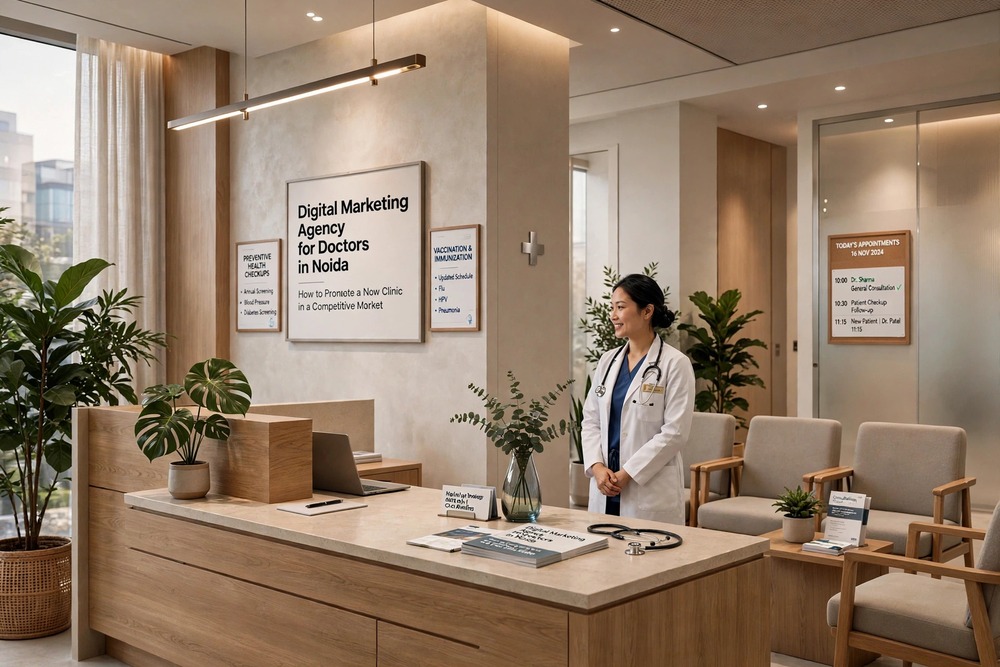
Opening a new clinic is an important step for any healthcare professional. However, providing quality medical services is only one part of establishing a successful practice. A newly launched clinic must also make people aware of its services, communicate its expertise and build trust among potential patients.
In a competitive healthcare market like Noida, patients have access to numerous clinics, hospitals, diagnostic centres and specialist healthcare providers. Before choosing a doctor, many people search online, compare available options, check clinic locations and read patient reviews. This makes digital visibility an important part of modern clinic promotion.
A professional Digital Marketing Agency for Doctors in Noida can help newly established clinics develop a structured online marketing strategy, reach relevant local audiences and improve their visibility across digital platforms. However, successful healthcare marketing requires more than running advertisements or publishing promotional posts. It involves accurate information, ethical communication, patient-focused content and a consistent online presence.
Whether a clinic specializes in dentistry, dermatology, orthopaedics, paediatrics, gynaecology or general medicine, the right digital marketing strategy can help it connect with people looking for relevant healthcare services.
This guide explains practical ways to promote a new clinic in Noida, improve local search visibility and establish a trustworthy healthcare brand.
Why Digital Marketing Is Important for Newly Established Clinics in Noida
Noida has a diverse population, residential communities, corporate offices and growing commercial areas. Patients may search for healthcare services based on their medical requirements, preferred location, accessibility and appointment availability.
For a newly established clinic, reaching these potential patients can be challenging, particularly when established healthcare providers already have strong local recognition.
Digital marketing helps clinics introduce their services and make important information accessible to people searching online.
Some key benefits include:
- Improving visibility in relevant local search results.
- Helping patients discover clinic locations and contact details.
- Communicating available medical specialties and services.
- Building credibility through accurate information.
- Generating appointment enquiries through suitable channels.
- Maintaining communication with existing patients.
- Creating awareness about preventive healthcare and general medical information.
The objective should not be to attract the highest possible number of visitors. Instead, clinics should focus on reaching relevant audiences and helping patients make informed decisions.
1. Build a Professional Website for Your Clinic
A clinic website is often one of the first places potential patients visit when researching a healthcare provider. It should clearly explain the clinic’s services, medical team, location and appointment process.
A professional website also gives clinics greater control over how they present their information online.
Include Essential Clinic Information
A new clinic website should contain the following sections:
Homepage: Introduce the clinic, its location, major specialties and available services.
About the Clinic: Explain the clinic’s background, approach to patient care and relevant professional information.
Doctor Profiles: Include accurate qualifications, recognized credentials, specialties and professional experience.
Services Pages: Create separate pages for important specialties and treatments offered by the clinic.
Contact Page: Display the clinic’s address, phone number, working hours and appointment information.
Frequently Asked Questions: Answer common questions about appointments, consultations, available services and clinic facilities.
Focus on Mobile-Friendly Design
Many patients use smartphones to search for nearby doctors and clinics. Therefore, a website should work smoothly across different screen sizes.
Important elements include:
- Readable text and clear navigation.
- Clickable phone numbers.
- Easy-to-use appointment forms.
- Properly displayed doctor profiles.
- Fast-loading images.
- Accessible contact information.
Add Clear Appointment Options
Patients should not have to search through multiple pages to understand how to contact the clinic.
Include clear calls to action such as:
- Book an Appointment.
- Call the Clinic.
- Contact Our Team.
- View Available Services.
The appointment process should request only the information necessary to manage enquiries. Sensitive medical details should be collected through appropriate secure channels rather than ordinary marketing forms.
2. Optimize Google Business Profile for Local Visibility
Local search is particularly important for clinics because patients often look for healthcare providers near their homes or workplaces.
Google Business Profile allows eligible healthcare businesses to manage information displayed across Google Search and Maps.
A complete and accurate profile can help people discover essential clinic details.
Complete the Business Profile
Make sure the profile contains:
- Correct clinic name.
- Accurate address.
- Contact number.
- Website link.
- Working hours.
- Relevant business category.
- Available services.
- Appropriate photographs.
Choose categories that accurately represent the clinic. Avoid adding unrelated categories simply to appear in more searches.
Use Accurate Clinic Photographs
Upload genuine photographs of the clinic, reception area, consultation rooms and exterior where appropriate.
Images should represent the actual facility and should not mislead patients about available equipment, services or infrastructure.
Maintain Updated Information
Update business hours, contact information and temporary closures whenever changes occur.
Incorrect information can create inconvenience for patients and damage trust.
Encourage Genuine Patient Reviews
Reviews can influence how people evaluate a healthcare provider.
Clinics may invite patients to share honest feedback, but they should never pressure patients, offer incentives for positive ratings or publish fabricated testimonials.
Respond professionally to feedback without disclosing private patient information.
3. Implement Local SEO to Reach Patients in Nearby Areas
Local SEO helps clinics improve their visibility when people search for relevant medical services in a particular geographical area.
For example, a person may search for a dentist in Sector 18, a dermatologist in Sector 50 or a general physician near their residential location.
A clinic should create an SEO strategy based on its actual location and the services it provides.
Conduct Location-Based Keyword Research
Identify search terms that combine medical specialties with relevant locations.
Examples include:
- Dentist in Noida.
- Dermatologist in Sector 18 Noida.
- Orthopaedic clinic in Noida.
- Gynaecologist in Noida.
- Paediatrician near Sector 50 Noida.
- General physician in Noida.
These are examples of keyword patterns, not claims about search volume or ranking difficulty. Actual keyword selection should be based on research and the clinic’s service availability.
Create Relevant Service Pages
Instead of placing every medical service on one page, create dedicated pages for major specialties where appropriate.
For example, a multispecialty clinic may have separate pages for:
- Dental consultations.
- Skin and dermatology services.
- Orthopaedic consultations.
- General physician services.
- Women’s healthcare.
- Paediatric consultations.
Each page should explain the relevant service accurately and provide useful information to patients.
Maintain Consistent Business Information
The clinic’s name, address and phone number should remain accurate across its website, Google Business Profile and relevant business directories.
Consistency makes it easier for patients to identify the correct clinic and contact it.
4. Use Content Marketing to Educate and Build Patient Trust
Healthcare content marketing should focus on providing reliable information rather than making exaggerated promotional claims.
Patients frequently search online to understand symptoms, treatment options, preventive care and when they should consult a qualified healthcare professional.
Clinics can use informative content to answer these questions while demonstrating their commitment to patient education.
Publish Helpful Healthcare Blog Articles
A clinic can create articles related to its medical specialties.
For example:
- General health check-ups: What Patients Should Know.
- Common Dental Problems and When to Visit a Dentist.
- Basic Skin Care Habits Recommended by Dermatologists.
- Understanding Common Causes of Joint Pain.
- Preventive Healthcare Tips for Families.
- When Should Parents Consult a Paediatrician?
Articles should be reviewed by appropriately qualified healthcare professionals before publication.
Create Doctor-Reviewed Content
Healthcare is a sensitive subject, so accuracy is essential.
A good medical article should include:
- Reliable and relevant medical information.
- Clear explanations of terminology.
- Appropriate references to authoritative sources.
- A qualified medical reviewer where relevant.
- A publication or review date.
- A reminder to seek professional advice when necessary.
Avoid presenting general information as an individual diagnosis or treatment recommendation.
Answer Common Patient Questions
Useful FAQs can address practical concerns such as appointment procedures, consultation availability, clinic timings and preparation requirements.
This improves the information available to visitors and may reduce repetitive administrative enquiries.
5. Leverage Social Media Marketing for Clinic Promotion
Social media platforms can help newly established clinics introduce their doctors, explain available services and share educational information.
However, healthcare businesses should maintain a professional tone and avoid content that could mislead patients.
Instagram Marketing
Instagram can be useful for sharing short educational content, clinic updates and introductory information.
Content ideas include:
- Introduction to the clinic and its doctors.
- General preventive healthcare tips.
- Frequently asked questions.
- Clinic facility photographs.
- Appointment information.
- Short educational videos reviewed by medical professionals.
Facebook Marketing
Facebook can support local community awareness and communication.
Clinics can share service updates, working hours, health awareness information and relevant announcements.
YouTube Marketing
YouTube can be used for detailed educational videos.
For example, doctors may explain general health topics, preventive measures or common misconceptions within their professional area.
Medical videos should be accurate, appropriately qualified and reviewed before publication.
Maintain a Consistent Posting Schedule
A clinic does not need to publish several posts every day.
A manageable schedule with useful, accurate and relevant content is generally more sustainable than frequent posts created only to maintain activity.
6. Use Google Ads to Generate Relevant Appointment Enquiries
Search engine advertising can help a newly established clinic reach people who are actively looking for particular healthcare services.
For example, a clinic may run a campaign targeting relevant searches for dental consultations or dermatology services in its service area.
Select Relevant Keywords
Campaign keywords should reflect the clinic’s actual services and location.
Avoid targeting unrelated medical conditions or services that the clinic does not provide.
Create Dedicated Landing Pages
An advertisement should direct users to a relevant page rather than always sending them to the homepage.
A landing page for a dental clinic, for example, should provide relevant information about dental services, doctor credentials, location and appointment options.
Use Clear and Accurate Ad Copy
Healthcare advertisements should communicate genuine services and avoid unsupported claims.
Avoid statements such as:
- Guaranteed treatment results.
- 100% cure for every patient.
- Best doctor without verifiable evidence.
- Permanent results for every condition.
Use clear descriptions of available services and consultation options instead.
Track Campaign Performance
Monitor useful metrics such as:
- Number of appointment enquiries.
- Cost per enquiry.
- Relevant phone calls.
- Form submissions.
- Qualified enquiries.
- Appointment completion, where appropriately tracked.
Advertising platforms have specific healthcare-related policies and restrictions. Clinics should review current policies before launching campaigns.
7. Build a Strong Online Reputation
A clinic’s online reputation can influence how potential patients evaluate its services.
People may consider reviews, doctor credentials, website information and the clinic’s communication before deciding whether to contact it.
Encourage Honest Feedback
After a patient interaction, clinics can provide a neutral opportunity for patients to share feedback.
Reviews should reflect genuine experiences. Never purchase reviews, create fake accounts or selectively pressure patients to post positive comments.
Respond to Feedback Professionally
When responding to negative feedback:
- Maintain a respectful tone.
- Avoid arguments or defensive language.
- Do not confirm that someone is a patient.
- Never reveal diagnosis or treatment details.
- Offer an appropriate private communication channel.
Patient confidentiality should remain a priority in all public communications.
Display Verified Professional Information
Doctor profiles should contain accurate qualifications, recognized credentials and relevant experience.
Clinics should not publish unverified awards, exaggerated achievements or misleading claims about medical expertise.
8. Develop Email and Patient Communication Strategies
Email marketing and digital communication can help clinics maintain appropriate relationships with people who have voluntarily subscribed or provided the necessary permission.
Possible communication activities include:
- Clinic announcements.
- Changes in working hours.
- General health awareness newsletters.
- Appointment confirmations.
- Administrative reminders.
- Information about available services.
Communication should be relevant and respectful.
Avoid sending unsolicited promotional messages or using patient medical information for marketing without an appropriate lawful basis and consent where required.
Sensitive health information should be protected through suitable systems and access controls.
9. Use Website Analytics to Measure Marketing Performance
Digital marketing should be evaluated through meaningful outcomes rather than website traffic alone.
A clinic may receive many website visits but relatively few relevant appointment enquiries. Analytics can help identify where visitors are losing interest.
Useful tools include Google Analytics 4 and Google Search Console.
Important Metrics to Monitor
Organic clicks: Shows how many visits come from unpaid search results.
Search impressions: Indicates how frequently clinic pages appear in Google Search.
Website engagement: Helps understand how visitors interact with website content.
Appointment enquiries: Measures relevant contact form submissions or calls.
Cost per enquiry: Shows the advertising expense associated with generating an enquiry.
Landing page performance: Helps identify which service pages generate meaningful interactions.
Local search visibility: Helps monitor how the clinic appears for relevant local queries.
Clinics should configure analytics and conversion tracking carefully. Avoid sending personally identifiable patient information or sensitive health information to analytics and advertising platforms.
10. Follow Ethical Healthcare Marketing Practices
Healthcare marketing requires particular care because misleading information can affect patient decisions and public trust.
Doctors and clinics should ensure that their promotional activities comply with applicable professional regulations, advertising requirements, privacy obligations and platform policies.
Important practices include:
- Use accurate descriptions of medical services.
- Avoid guaranteed treatment or cure claims.
- Do not publish misleading comparisons with other doctors.
- Protect patient identities and medical records.
- Obtain appropriate consent before using patient photographs or testimonials.
- Avoid fabricated reviews and endorsements.
- Ensure medical content is reviewed by qualified professionals.
- Review applicable National Medical Commission and state medical council guidance.
Clinics should obtain appropriate professional or legal advice when planning advertising campaigns, promotional offers or patient testimonial activities.
Ethical communication is not just a compliance requirement. It is also important for maintaining public confidence in healthcare services.
11. How a Digital Marketing Agency for Doctors in Noida Can Help
Promoting a new clinic requires coordination across multiple digital channels. Many healthcare professionals prefer to focus on patient care rather than managing website optimization, advertising campaigns and content publishing themselves.
A specialized Digital Marketing Agency for Doctors in Noida can support clinic promotion through services such as:
Healthcare SEO: Improving the visibility of relevant clinic and specialty pages in search results.
Local SEO: Helping patients discover accurate clinic information through local search platforms.
Website Development: Creating professional, mobile-friendly websites with clear appointment options.
Google Ads Management: Planning and managing suitable search advertising campaigns.
Social Media Marketing: Developing educational and informative content for relevant platforms.
Content Marketing: Publishing accurate healthcare articles and patient education resources.
Online Reputation Management: Monitoring reviews and supporting professional responses.
Performance Reporting: Measuring website activity, relevant enquiries and campaign performance.
Before choosing an agency, clinics should review its healthcare marketing experience, reporting process, understanding of medical advertising requirements and approach to patient privacy.
A reliable agency should provide a clear strategy and realistic expectations instead of promising guaranteed rankings or a fixed number of patients.
12. A Practical 90-Day Digital Marketing Plan for a New Clinic
A phased approach can help a newly established clinic build its online presence without trying to implement every marketing activity at once.
First 30 Days: Establish the Foundation
- Build or optimize the clinic website.
- Create accurate doctor and service profiles.
- Set up Google Business Profile where eligible.
- Conduct local keyword research.
- Configure suitable analytics.
- Establish relevant social media profiles.
- Review clinic branding and contact information.
Days 31–60: Improve Local Visibility
- Publish useful healthcare content.
- Optimize important service pages.
- Add genuine clinic photographs.
- Build relevant local citations.
- Start a consistent social media schedule.
- Review opportunities for suitable paid search campaigns.
- Establish a process for collecting genuine patient feedback.
Days 61–90: Evaluate and Optimize
- Review organic search performance.
- Evaluate appointment enquiries.
- Identify high-performing service pages.
- Improve underperforming landing pages.
- Review advertising costs and lead quality.
- Update website content where necessary.
- Plan the next phase of marketing activities.
The timeline is a practical starting framework, not a guarantee of rankings or patient acquisition. Results depend on competition, budget, location, services and implementation quality.
Common Digital Marketing Mistakes New Clinics Should Avoid
New clinics can lose valuable opportunities when they overlook basic marketing and communication practices.
Some common mistakes include:
- Launching a website without complete clinic information.
- Ignoring Google Business Profile optimization.
- Targeting broad keywords without local relevance.
- Publishing medical content without professional review.
- Using exaggerated healthcare advertising claims.
- Ignoring mobile website usability.
- Buying fake patient reviews.
- Running advertisements without tracking enquiries.
- Neglecting patient privacy in social media content.
- Expecting immediate results from SEO.
A consistent strategy, accurate information and regular performance reviews can help clinics avoid these problems.
Frequently Asked Questions (FAQs)
1. How can a new clinic attract patients in Noida?
A new clinic can improve its online visibility through local SEO, an informative website, Google Business Profile, educational content, suitable advertising and genuine patient feedback. The strategy should focus on the clinic’s actual specialties and service locations.
2. Why is local SEO important for doctors in Noida?
Local SEO helps people discover relevant healthcare providers when searching for medical services in nearby areas. Accurate business information, relevant service pages and a complete Google Business Profile can support local visibility.
3. Should a new clinic invest in Google Ads?
Google Ads can help clinics reach people searching for relevant services. However, campaigns should follow healthcare advertising policies, use accurate claims and direct visitors to relevant landing pages.
4. How long does healthcare SEO take to show results?
SEO is a long-term process. The time required depends on website quality, competition, local demand, content relevance and technical implementation. Clinics should monitor progress regularly rather than expect immediate rankings.
5. What type of content should doctors publish online?
Doctors can publish educational articles, general preventive healthcare information, frequently asked questions and explanations of available services. Medical content should be accurate and reviewed by appropriately qualified professionals.
6. Can social media help promote a new clinic?
Yes. Social media can help clinics introduce their doctors, share educational information, communicate updates and build familiarity with local audiences. Content should remain professional and protect patient privacy.
7. How do clinics measure digital marketing success?
Clinics can monitor organic search traffic, local search visibility, website enquiries, relevant phone calls, advertising costs and appointment-related conversions. Measurement should respect patient confidentiality and applicable data protection requirements.
Conclusion
Promoting a new clinic in a competitive market like Noida requires more than traditional advertising. Patients increasingly use online platforms to discover healthcare providers, understand available services and evaluate professional credibility.
A strong digital marketing strategy combines a professional website, local SEO, useful healthcare content, social media communication, suitable advertising and responsible reputation management.
Working with a specialized Digital Marketing Agency for Doctors in Noida can help newly established clinics plan these activities, improve online visibility and measure their marketing performance more effectively.
Ultimately, successful clinic promotion depends on accurate information, ethical communication and a patient-focused approach. By building trust and maintaining a consistent online presence, a new clinic can establish a stronger foundation for long-term growth.