Why the highest-authority backlinks come from genuine media coverage, not link-building outreach
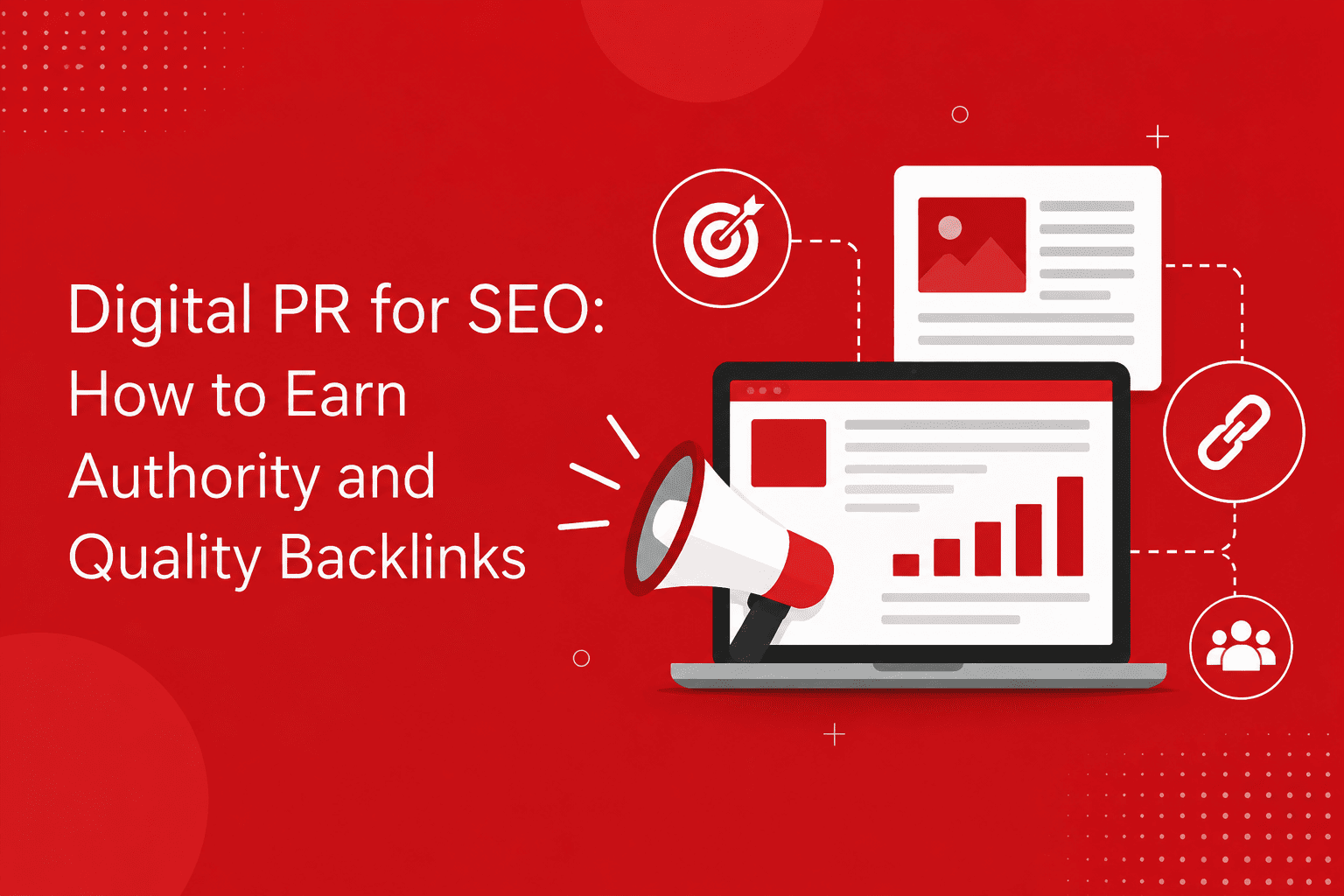
The strongest backlinks a website can earn rarely come from asking for them directly. They come from being genuinely newsworthy enough that a journalist, editor or industry publication chooses to write about you and links back as a natural part of that coverage. This is the core idea behind digital PR: rather than pitching a link, you create something genuinely worth covering, an original data study, a timely expert perspective, a compelling story, and let the resulting media coverage generate the backlink as a byproduct of real journalism rather than a negotiated placement.
Done well, digital PR produces exactly the kind of high-authority, genuinely earned backlinks that traditional link building struggles to replicate, since a link from a major news outlet or respected industry publication carries a trust signal no directory listing or guest post can match. Here is how digital PR actually works, and how to run a campaign that produces real results rather than just press releases nobody reads.
Why Digital PR Produces a Fundamentally Different Class of Backlink
A backlink earned through digital PR sits on a page that exists for editorial reasons, a journalist decided the story was worth telling, not because a fee was paid or a favour exchanged. Search engines weigh this kind of genuinely earned, editorially independent link far more heavily than a purchased placement or a low-effort directory submission, since the entire premise of digital PR is producing something a publication wants to cover on its own merit.
The Core Digital PR Tactics That Actually Work
1. Original Data Studies and Surveys
Commissioning or conducting original research, a survey of a specific audience, an analysis of publicly available data revealing a genuinely interesting trend, gives journalists something concrete and citable to write about. A well-executed data study is often the single most reliable digital PR asset, since it produces a specific, quotable statistic that a journalist can build an entire story around, generating coverage and backlinks across multiple publications from one piece of research.
2. Newsjacking Relevant Current Events
Offering a genuinely useful expert perspective on a breaking news story or trending topic, quickly and with real substance, can earn coverage in real time as journalists look for expert commentary to round out a developing story. This requires monitoring relevant news closely and being able to respond within hours rather than days, since the window for this kind of coverage closes quickly.
3. Expert Commentary Through Journalist Query Platforms
Services connecting journalists actively seeking expert sources with people who can provide genuine, specific commentary offer a direct, structured path to earning coverage on established media sites. The key to success here is responding quickly with a specific, substantive quote rather than generic marketing language, since journalists are looking for genuinely useful expert insight, not a pitch.
4. Genuinely Newsworthy Campaigns and Stunts
A creative campaign built around a specific cultural moment, a genuinely unusual product angle, or a compelling human story can earn broad media coverage well beyond what a standard content piece would achieve, provided it is executed with real creativity and genuine news value rather than existing purely as a thinly disguised advertisement.
5. Building Relationships With Relevant Journalists Over Time
Rather than a one-off pitch to an unfamiliar reporter, building an ongoing relationship with journalists who regularly cover your industry means your future data studies and expert commentary reach someone already primed to consider covering them, considerably improving pickup rates compared to cold outreach every time.
How a Digital PR Campaign Actually Comes Together
A typical campaign starts with identifying a genuinely interesting angle, ideally backed by real data or a clear news hook, then packaging it into a clear, compelling pitch with a strong headline statistic or story a journalist can immediately see the value in. This is followed by targeted outreach to specifically relevant journalists and publications, rather than a mass blast to an unfiltered media list, since a handful of genuinely well-targeted pitches consistently outperforms hundreds of generic ones.
Measuring Whether Digital PR Is Actually Working
Track the number and quality of publications securing coverage, the actual authority of the linking domains rather than just the raw count, and any measurable increase in referral traffic or branded search following a successful campaign. A single placement in a genuinely high-authority, relevant publication is often worth more than dozens of lower-tier pickups, so resist the temptation to measure success purely by total mention count.
Common Mistakes That Undermine a Digital PR Campaign
Pitching a story that is fundamentally promotional rather than genuinely newsworthy is the most common failure point, since journalists can spot a thinly disguised advertisement immediately and will simply ignore it. Sending generic, unpersonalised pitches to a broad media list, rather than targeted outreach to specifically relevant journalists, also consistently underperforms, regardless of how strong the underlying story actually is.
Getting Started
Digital PR rewards genuine substance over volume: one well-executed data study pitched to the right five journalists will consistently outperform a generic press release blasted to five hundred. Start by identifying a genuinely interesting angle your business is uniquely positioned to speak to, whether that is original data, a specific expertise, or a timely perspective on a current event, and build the outreach around real journalist relevance rather than a broad, impersonal media list.
Frequently Asked Questions
How is digital PR different from traditional link building?
Traditional link building often involves directly requesting or negotiating a link placement. Digital PR earns links as a natural byproduct of genuine media coverage, where a journalist chooses to cover a story and links back because it serves their own content, not because a link was specifically requested.
Does digital PR require a large budget?
Not necessarily. A well-designed, low-cost survey or a genuinely useful piece of original analysis can produce meaningful coverage without an expensive research budget, provided the resulting angle is genuinely interesting and well-pitched.
How long does it take to see results from a digital PR campaign?
A successful pitch can generate coverage within days to a few weeks, though building the relationships and reputation that improve pickup rates over time is a longer, ongoing process rather than a single campaign.
Can a small business realistically use digital PR, or is it only for large brands?
Small businesses can absolutely use digital PR effectively, particularly around a specific, narrow expertise or a genuinely interesting local angle, since journalists are often looking for a fresh, specific voice rather than only quoting large, familiar brands.