What the current data shows, and what it actually means for a working SEO strategy
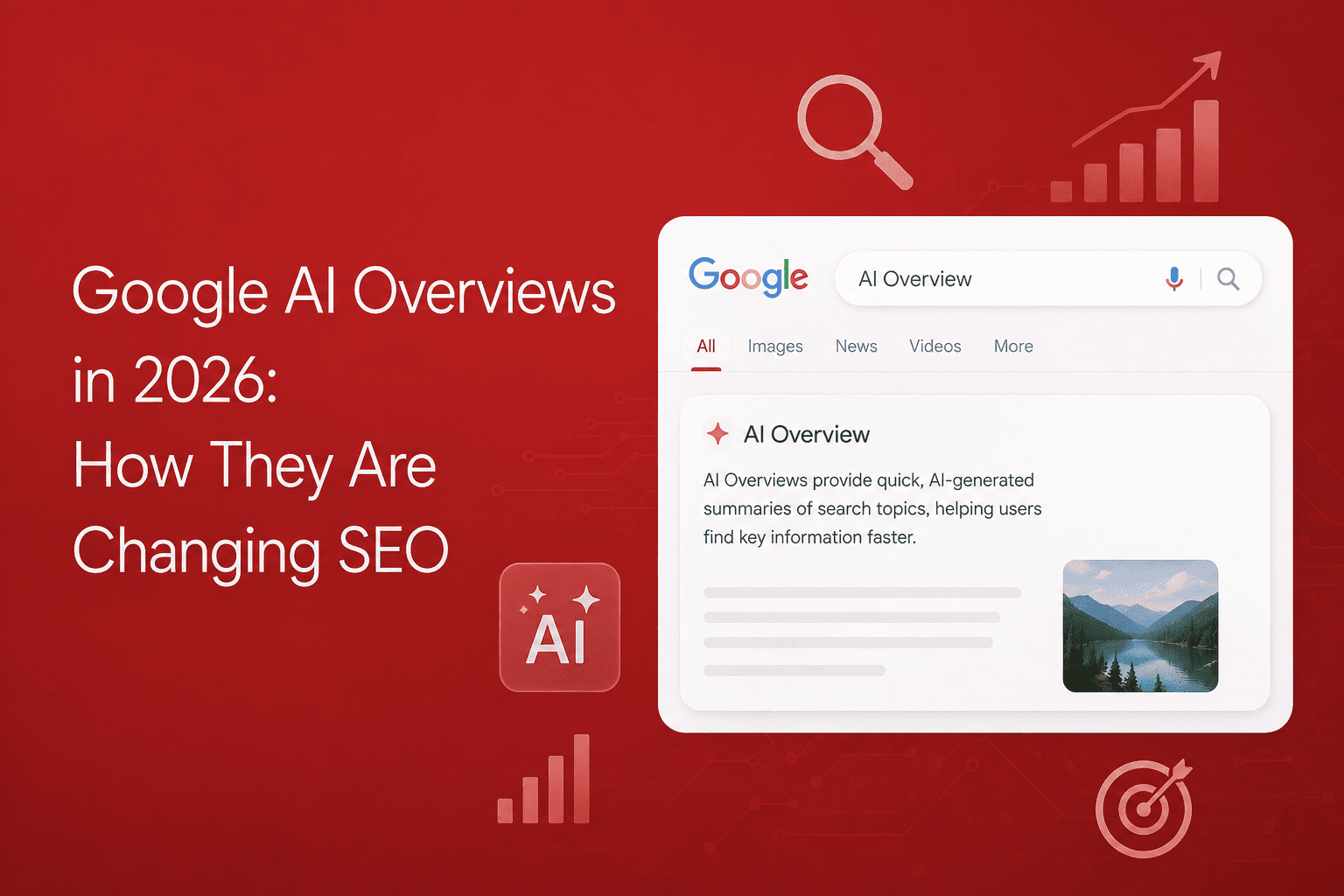
Search a question on Google today and there is a strong chance you never scroll to the organic results at all. A synthesized, AI-generated answer sits above them, pulling from multiple sources and, for a large share of queries, giving you everything you needed without a single click. This is Google AI Overviews, and by 2026 it is no longer a rollout in progress. It is the default shape of search.
According to Ahrefs data cited across multiple 2026 industry analyses, AI Overviews now appear on roughly 48 percent of all search queries, up from around 34.5 percent as recently as December 2025. Coverage is even higher for informational and how-to queries, where some analyses put AI Overview appearance above 70 percent. For SEO teams, the question has moved past whether this matters. It is now entirely about how to adapt.
What the 2026 Data Actually Shows
The clearest signal is the drop in organic click-through rate on queries where an AI Overview appears. SISTRIX data from March 2026 found that position-one organic CTR on affected queries fell from roughly 27 percent to as low as 11 percent. Other large-scale studies place the CTR decline anywhere between 15 and 46 percent depending on query type and industry, with some citing declines as steep as 58 percent on the most heavily affected informational searches.
The impact is far from uniform across industries. E-commerce searches remain largely untouched, with only around 4 percent of product queries triggering an AI Overview at all, since Google appears to recognise that completing a purchase still requires an actual click through to a retailer. B2B and technical queries sit at the opposite extreme, with some analyses reporting declines as steep as 70 percent for informational B2B content that previously relied on organic search for a meaningful share of its traffic.
The Traffic That Remains Is Different, Not Just Smaller
The single most important nuance in the 2026 data is that traffic loss and value loss are not the same thing. Visitors who do click through from an AI Overview or a citation within one arrive further along in their research, having already had a baseline question answered, and multiple studies report meaningfully higher conversion rates from this traffic compared to a standard organic click. One widely cited 2026 analysis put the conversion rate for AI Overview-referred visitors at roughly 23 times that of a typical organic search visitor, a reflection of just how much more qualified this reduced volume of traffic tends to be.
This reframes the real strategic question. It is not simply how do we recover lost clicks, but how do we earn a citation inside the answer itself, since that citation is now functioning as a trust signal and a driver of branded search in its own right, even among users who never click through at all.
How Citation Patterns Have Matured Since Launch
Early AI Overview results, dating back to the 2024 rollout, were notably volatile, with cited sources rotating frequently and few clear patterns to build a strategy around. By 2026, that volatility has settled considerably. Sources that demonstrate consistent, sustained topical authority on a subject now earn noticeably more stable citation placement over time, rewarding ongoing content investment in a specific area rather than a single well-optimised page published once and left alone.
It is also increasingly common for AI Overviews to synthesise from three to five separate sources for a single answer, rather than leaning on one dominant page the way early versions often did. This means the bar has shifted from being the single best page to being one of a small number of genuinely authoritative sources Google’s models are confident citing together.
How SEO Strategy Needs to Adapt
Treat AI Visibility as a Distinct, Trackable Metric
Ranking position and AI citation frequency are now two separate things worth tracking side by side, not one implying the other. Organisations reporting the fastest recovery in 2026 studies are the ones treating AI Overview and AI Mode visibility as a dedicated tracking discipline, alongside traditional rank tracking, rather than an afterthought.
Structure Content Around Direct, Extractable Answers
AI Overviews consistently favour pages that clearly define concepts, answer a specific question directly, and explain a process in clean, structured steps, over pages built primarily around keyword density. This is also why pages ranking outside the traditional top ten, even as far as positions eleven through twenty, are still regularly cited inside AI Overviews when their structure and clarity are strong enough.
Invest in Original Data and Genuine Expertise
Content that only restates what is already well established elsewhere online gives an AI system little reason to cite it specifically. Original research, named data points, and genuinely first-hand expertise remain some of the most reliable ways to earn a citation rather than simply being absorbed anonymously into a synthesised answer.
Implement Structured Data as a Baseline, Not an Extra
Schema markup and clean structured data continue to help AI systems parse and trust a page’s content accurately, and this has become a baseline expectation in 2026 rather than an advanced technique reserved for large enterprise sites.
What This Means for Different Types of Businesses
E-commerce and transactional businesses are, for now, relatively insulated from the direct traffic impact, since AI Overviews rarely intervene where an actual purchase decision requires visiting the retailer’s own site. Informational, B2B and technical content businesses face the sharpest disruption and the clearest need to adapt quickly, since their traffic has traditionally depended heavily on exactly the kind of query AI Overviews now answer directly. Businesses with strong, demonstrable topical authority in a specific niche are seeing what several 2026 analyses describe as a genuine halo effect, gaining citation visibility and branded search growth even as raw click volume declines.
Getting Started
The businesses managing this shift well in 2026 are not the ones chasing every algorithm change individually. They are the ones building genuinely authoritative, clearly structured content in a defined subject area, tracking AI citation alongside traditional rankings, and accepting that a smaller, more qualified stream of traffic is not automatically a worse outcome than a larger, less intentional one.
Frequently Asked Questions
Do AI Overviews mean SEO is no longer worth investing in?
No. Strong SEO fundamentals, including structured data, topical authority and clear content, are exactly what earns visibility inside AI Overviews as well as traditional rankings. The two are converging rather than one replacing the other.
Which industries are least affected by AI Overviews?
E-commerce and other clearly transactional searches remain the least affected, since these queries generally require an actual site visit to complete a purchase, unlike informational queries an AI Overview can often answer directly.
How can I check if my content is being cited in AI Overviews?
Search Console impression and click data can indicate this indirectly, particularly a rise in impressions alongside a decline in clicks, and several SEO platforms have added dedicated AI Overview citation tracking as this has become a standard part of reporting in 2026.
Is Generative Engine Optimization a completely separate discipline from traditional SEO?
According to Google’s own 2026 guidance, no. Strong foundational SEO combined with genuinely original, expert content is what earns visibility across both traditional search results and AI-generated answers, rather than requiring an entirely separate strategy.