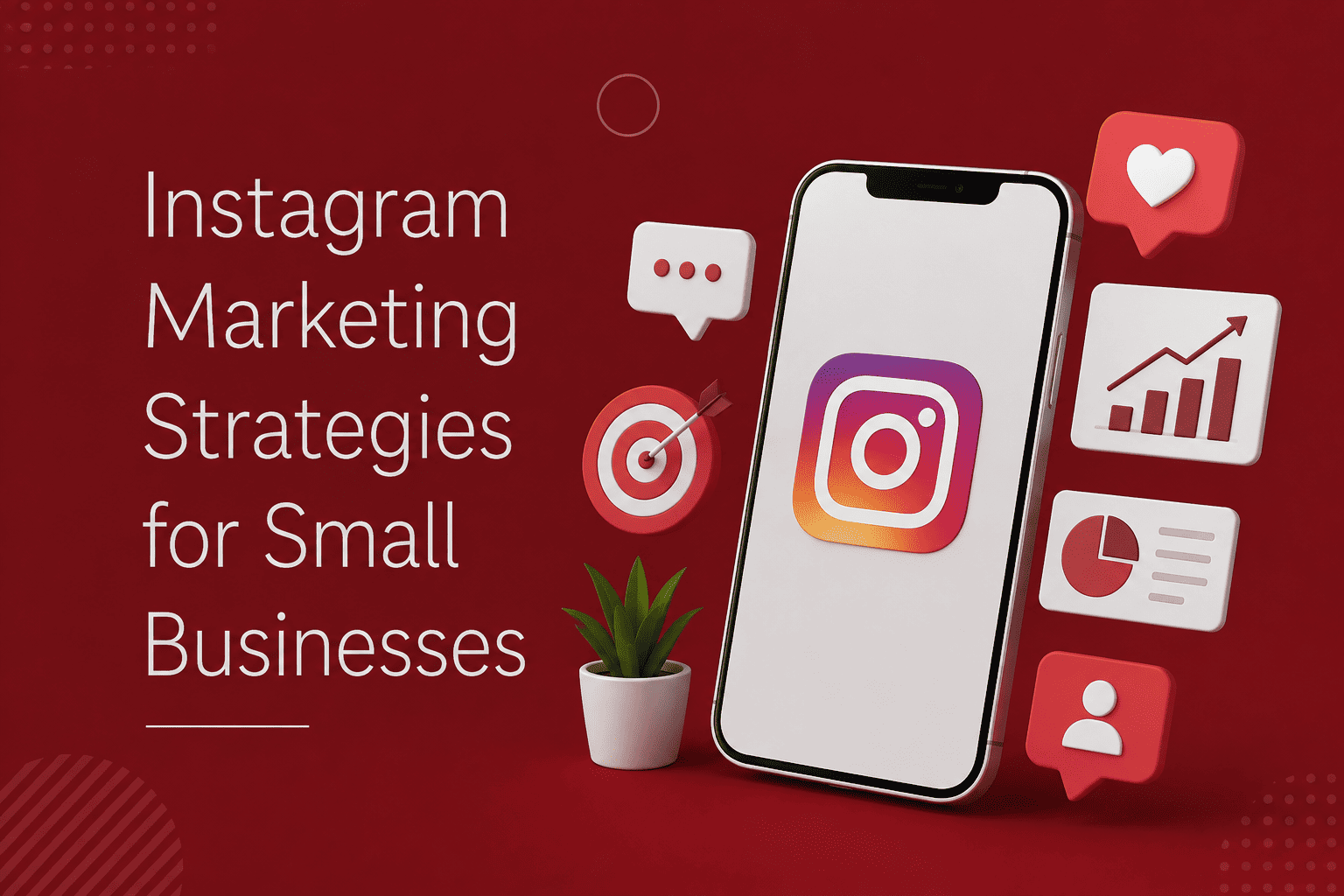
A practical playbook for turning followers into customers on a small budget
Most small businesses treat Instagram as a digital noticeboard: post a product photo, add a caption, move on. The account grows a little, likes trickle in, and every few months someone asks why none of it is translating into actual sales. The truth is that Instagram rewards a strategy, not just consistency. Posting daily with no plan behind it produces followers who scroll past; posting with intent produces customers.
The good news for small businesses is that Instagram does not require a large budget to work well. It requires a clear sense of who you are talking to, what you want them to do next, and which formats the platform is currently pushing to new audiences. Here is a practical strategy any small business can run without an agency-sized budget.
Why Instagram Still Matters for Small Businesses
Instagram remains one of the few platforms where a small, local or niche business can reach a genuinely new audience for free, purely on the strength of its content. Unlike a website, which only reaches people already searching for you, Instagram’s discovery features, Reels and Explore page can put a small brand in front of people who have never heard of it.
It is also where buying decisions increasingly start. A customer discovering a bakery, a boutique or a home services business will often check the Instagram profile before the website, looking for recent posts, real photos and signs that the business is active and trustworthy. An outdated or inconsistent profile quietly costs sales you never see.
Seven Instagram Marketing Strategies That Actually Work
1. Treat Reels as Your Primary Growth Engine
Instagram continues to push Reels to non-followers far more than static posts, which makes video the most reliable way for a small business to reach new people. This does not require production quality. A phone-shot video showing a process, a behind-the-scenes moment or a quick tip will usually outperform a polished graphic, because it feels native to the platform rather than like an ad.
2. Optimise the Profile Like a Landing Page
Many small businesses never think of their bio, highlights and pinned posts as a sales page, but that is exactly how visitors treat them. A clear one-line description of what you sell, a working link, and highlights organised around common questions (pricing, location, reviews) do more to convert a new visitor than the next ten posts combined.
3. Post Around Customer Questions, Not Just Products
A product photo tells people what you sell. Content answering a real question a customer has asked — how a product is made, how to use it, why it costs what it costs — builds the trust that actually moves someone to buy. Keep a running list of questions customers ask in person or in DMs; it is the easiest content calendar a small business can build.
4. Use Stories for the Relationship, Not the Pitch
Stories disappear in 24 hours and are seen mostly by people who already follow you, which makes them the wrong place for a hard sell and the right place for day-to-day connection: polls, behind-the-scenes moments, quick updates. Businesses that use Stories well tend to see their existing followers become repeat customers, because the relationship stays warm between purchases.
5. Reply to Every Comment and DM Like It’s a Customer at the Counter
Instagram’s algorithm favours accounts with genuine engagement, and a fast, personal reply to a comment or DM does double duty: it signals to the platform that the account is active, and it often converts a curious commenter directly into a sale. For a small business, this is one of the highest-leverage, lowest-cost activities on the platform.
6. Run Small, Targeted Ad Boosts Instead of Broad Campaigns
A small budget spent broadly barely moves the needle. The same budget spent boosting a post that is already performing organically, aimed narrowly at a local area or a specific interest group, tends to produce far better results. Let organic engagement tell you which content deserves ad spend before you commit budget to it.
7. Collaborate with Micro-Influencers and Local Accounts
A small business does not need a celebrity endorsement. A genuine collaboration with a local micro-influencer or a complementary small business — a joint giveaway, a feature, a swap of Stories — reaches a highly relevant audience at a fraction of the cost of a large influencer partnership, and often converts better because the audience trusts the recommendation.
Building a Realistic Content Rhythm
Small businesses rarely fail on Instagram because they post too little; they fail because they try to do everything at once and burn out within a month. A sustainable rhythm of two to three Reels and a few Stories a week, built around a running list of real customer questions, will outperform an ambitious daily plan that quietly stops after three weeks.
Getting Started
If your Instagram account has followers but not sales, the fix rarely starts with posting more. It starts with a profile that actually explains what you sell, content built around real customer questions instead of just products, and a consistent habit of replying to everyone who engages. Everything else in this playbook builds on that foundation.
Frequently Asked Questions
How often should a small business post on Instagram?
Two to three Reels a week, alongside a few Stories, is a realistic and effective rhythm for most small businesses. Consistency over months matters more than posting daily for a few weeks and then stopping.
Do small businesses need a big budget for Instagram ads?
No. A small, well-targeted boost behind a post that is already performing organically often outperforms a larger, broadly targeted campaign. Let organic results guide where ad spend goes.
What is the biggest mistake small businesses make on Instagram?
Treating the account as a product catalogue instead of a place to answer real customer questions and build trust. Profiles that only post products tend to attract followers who never convert into buyers.
How should a small business measure Instagram marketing success?
Beyond likes and follower count, track profile visits, link clicks, DM enquiries and how many of those actually convert into sales. A channel that only reports vanity metrics is not being measured honestly.