A practical playbook for turning LinkedIn activity into qualified pipeline
Most B2B marketers already know LinkedIn is where their buyers spend time. Very few are turning that presence into pipeline. A post gets a few hundred views, a handful of likes come in from the same twenty people, and nobody on the sales floor can point to a deal that started there. The platform is not the problem. The strategy behind it usually is.
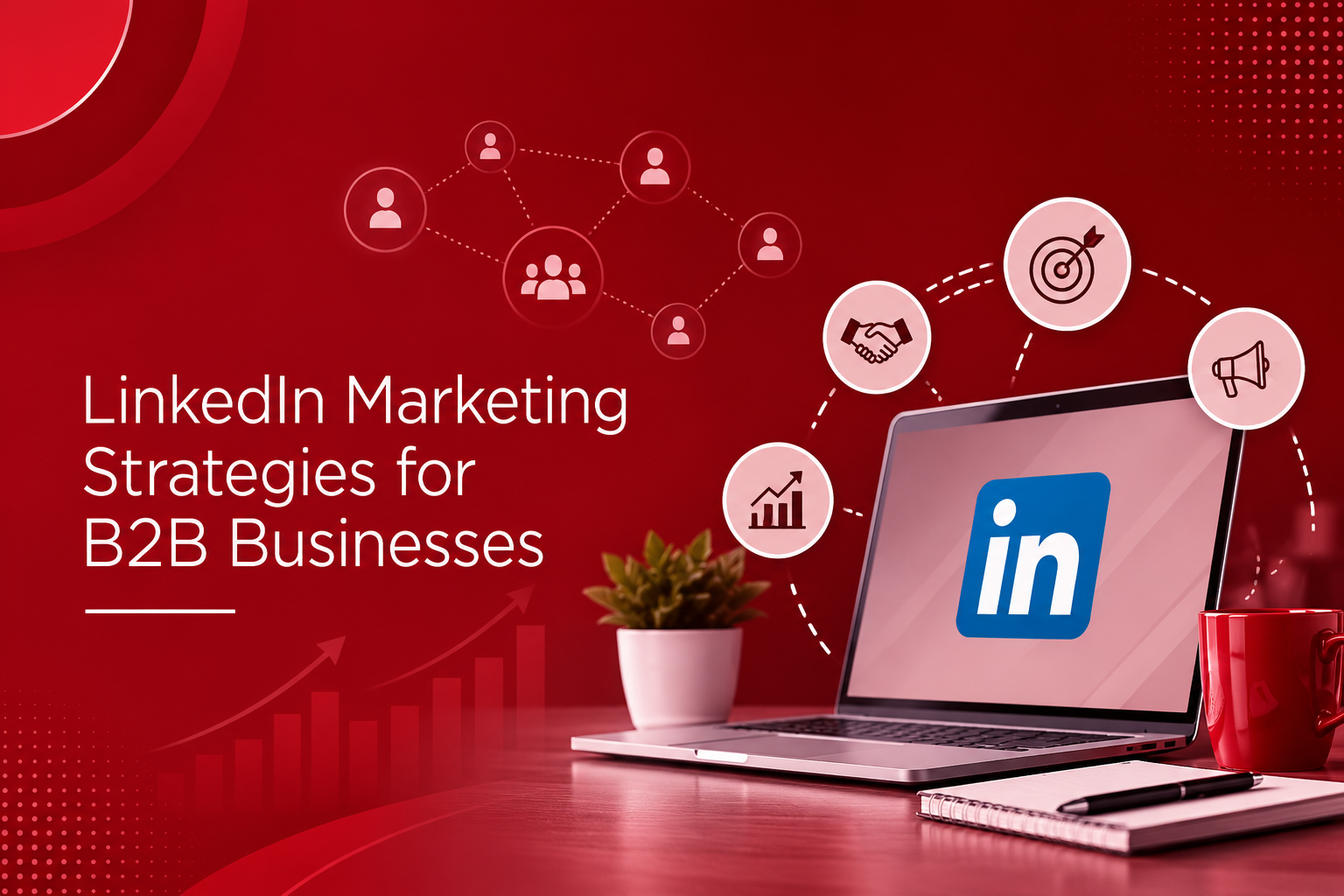
LinkedIn should be treated the same way any paid or organic channel is treated: as a system with an audience, a message and a measurable outcome, not a place to post company updates and hope. Below is a practical playbook any B2B business can run.
Why LinkedIn Works Differently for B2B
A B2B purchase is rarely made by one person in one sitting. A buying committee researches quietly, shares links internally, and only reaches out once they already have a shortlist in mind. LinkedIn sits inside that research phase in a way Instagram or Facebook never will for a B2B brand, because the audience is filtered by design: job title, industry, seniority and company size are built into the platform itself.
That precision is also why generic content underperforms. A post written for “everyone in procurement” reads as written for no one. The brands winning on LinkedIn today are the ones that write for a named role, at a named stage of a buying decision, and let the algorithm and the targeting do the narrowing.
Seven LinkedIn Marketing Strategies That Actually Move Pipeline
1. Turn the Company Page into a Distribution Hub, Not a Broadcast Channel
Company pages get a fraction of the reach personal profiles do, because LinkedIn’s algorithm is built around people, not logos. Use the page for what it is good at: housing case studies, job openings and product updates that a prospect checks once they are already interested. Do not rely on it to start conversations.
2. Build Out Founder and Employee Thought Leadership
A senior leader’s personal post on a genuine industry problem consistently outperforms the same message from the company page, often by a wide margin. This is not vanity content. It works because a name and a face carry more trust in a B2B research cycle than a brand handle does. Pick two or three people, give them a simple content cadence, and let their voice carry the message.
3. Lead with the Buyer’s Problem, Not Your Product
The same principle that improves lead quality in paid campaigns applies directly here: content that opens on the reader’s actual situation earns attention; content that opens on company credentials does not. A post titled around a specific operational headache a buyer is living with will consistently outperform one titled around an award or a feature launch.
4. Use LinkedIn Ads to Target Roles, Not Just Industries
LinkedIn‘s ad targeting lets you combine job function, seniority and company size in one audience, which is exactly the level of precision a long B2B sales cycle needs. Sponsored Content and Message Ads both work well; the mistake most brands make is targeting too broadly and then blaming the platform for a high cost per lead. Narrow the audience, and let the creative do the qualifying.
5. Publish Original Data and Named Numbers
Generic advice gets scrolled past. A post that states an actual result, a real ratio or a specific timeline gets saved, commented on and shared internally within a buying committee, because it gives a colleague something concrete to forward. This is also the content most likely to get picked up and cited by AI answer engines when a prospect is researching a category rather than a brand.
6. Turn Sales Navigator into a Warm-Outreach Engine, Not a Cold-Blast Tool
Sales Navigator is most effective when it is used to identify people who have already engaged with your content, viewed your profile or interacted with a post, and then reached with a message that references that context. Outreach that opens with a generic pitch to a stranger converts far below outreach that opens with a genuine, specific reason for the message.
7. Run LinkedIn and Your Other Channels on One Scorecard
LinkedIn rarely closes a deal by itself. It builds the familiarity that makes a later search, a website visit or a sales call convert faster. Brands that measure LinkedIn in isolation tend to defund it too early, because the channel’s real contribution shows up in shorter sales cycles and higher close rates elsewhere, not in last-click conversions.
What This Means for Your Content Calendar
If your current LinkedIn plan is a rotating mix of festival greetings, team photos and reshared articles, none of the seven points above will help until that changes. Start with one problem your ideal buyer is dealing with this quarter, assign it to one person’s voice, and build two or three posts around it before moving to the next. Depth on a narrow set of topics builds authority faster than breadth across many.
Getting Started
If your LinkedIn activity looks busy but your sales team cannot trace a single lead back to it, the fix rarely starts with posting more. It starts with picking a narrower audience, a sharper problem to speak to, and one or two consistent voices to carry the message. Everything else in this playbook builds on that foundation.
Frequently Asked Questions
How often should a B2B brand post on LinkedIn?
Consistency matters more than volume. Two to three well-considered posts a week from a mix of the company page and a few employee voices will outperform daily posting that has no clear angle behind it.
Is LinkedIn advertising worth it for smaller B2B brands?
Yes, provided the targeting is narrow. LinkedIn’s cost per click runs higher than most platforms, which makes broad targeting expensive fast. A tightly defined audience of the right job titles at the right company size keeps the spend efficient even on a modest budget.
What is the biggest mistake B2B brands make on LinkedIn?
Treating the page like a press release feed. Company announcements have a place, but they rarely start a conversation. Content built around a buyer’s real problem, published under a real person’s name, consistently performs better.
How should a B2B business measure LinkedIn marketing success?
Beyond likes and impressions, track profile visits from target roles, inbound messages, content-attributed website traffic and, most importantly, how LinkedIn-sourced prospects perform once they reach the sales team. A channel that only reports engagement metrics is not being measured honestly.