
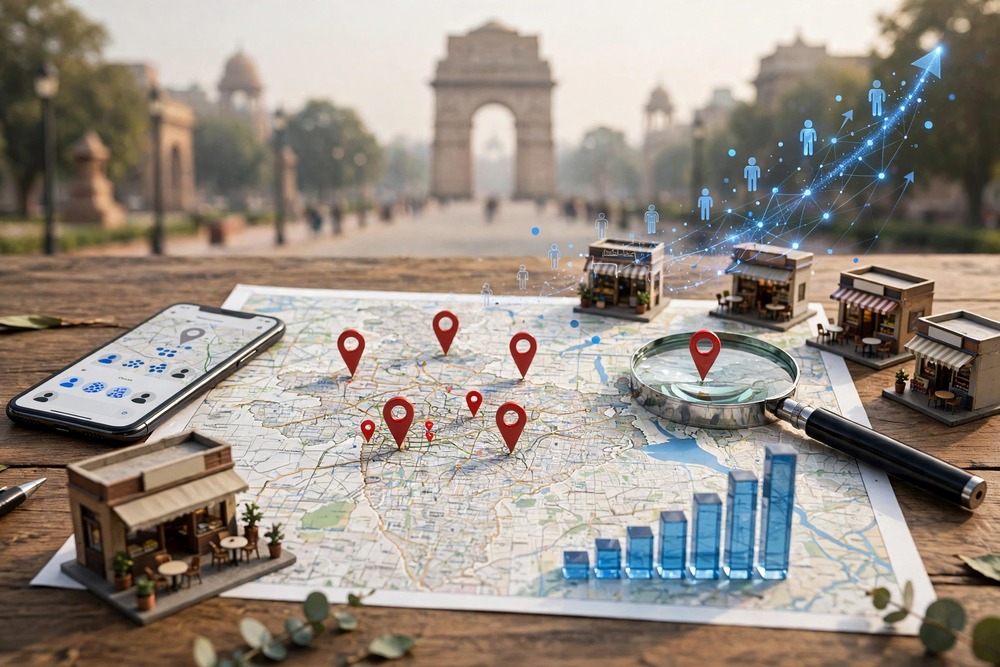
For businesses operating in Delhi, attracting customers from nearby areas can be an important part of sustainable growth. Whether a company provides healthcare services, home repairs, legal assistance, education, real estate solutions, or professional consulting, potential customers often search online before choosing a local service provider. They may look for businesses near their location, compare customer reviews, check contact details, and visit websites before making a decision.
However, simply having a website or a Google Business Profile does not guarantee a consistent flow of enquiries. Businesses need a structured strategy to improve their visibility, reach relevant audiences, and encourage potential customers to take action.
This is where Local SEO Services in Delhi become valuable. Local search engine optimization helps businesses improve their presence in geographically relevant search results, making it easier for nearby customers to discover their products and services.
An effective local SEO strategy combines Google Business Profile optimization, location-based keyword research, website improvements, customer reviews, local content, and performance tracking. These activities can help businesses attract relevant visitors and convert local search interest into calls, enquiries, appointment requests, and other valuable leads.
In this guide, we will explore how businesses in Delhi can use local SEO to generate more leads, improve online visibility, and build stronger relationships with potential customers.
What Are Local SEO Services?
Local SEO refers to the process of improving a business’s online visibility for searches associated with a particular geographical area.
For example, someone looking for a dentist may search for “dentist near me” or “best dental clinic in South Delhi.” Similarly, a homeowner might search for “plumber in Dwarka” or “interior designer in Delhi.”
Search engines use different signals to determine which businesses and pages are relevant to these searches.
Local SEO services generally include:
- Google Business Profile optimization
- Local keyword research
- Location-specific website optimization
- Local business citations
- Customer review management
- Local link-building activities
- Technical SEO improvements
- Local content creation
- Performance monitoring and reporting
The primary objective is to connect businesses with people who are actively searching for relevant products or services in their service areas.
Why Local SEO Is Important for Businesses in Delhi
Delhi has a diverse business environment, with companies competing across industries and neighbourhoods. Customers can often find multiple service providers offering similar solutions, making online visibility and credibility important considerations.
Local SEO helps businesses become more discoverable when potential customers search for relevant services.
Here are some important benefits.
1. Reach Customers Searching for Local Services
Local search allows businesses to connect with people who have a specific geographical requirement.
For example, a person searching for a physiotherapy clinic in Lajpat Nagar is more likely to be interested in providers serving that area than a clinic located far away.
By targeting relevant local keywords and maintaining accurate business information, companies can improve their chances of appearing for suitable searches.
2. Generate More Relevant Enquiries
Not all website visitors are equally valuable. A business may receive traffic from people who are not located within its service area or are not interested in its offerings.
Local SEO focuses on geographical relevance and service-related search intent.
This can help businesses attract potential customers who are more likely to enquire, request a quotation, book an appointment, or visit a location.
3. Build Customer Trust
Customers often review business information before making contact.
A complete Google Business Profile, genuine customer reviews, accurate contact details, and useful website content can help establish credibility.
Businesses should provide consistent and truthful information rather than relying on exaggerated claims or misleading promotional messages.
4. Support Long-Term Organic Visibility
Paid advertising can generate visibility while campaigns are active. Local SEO, on the other hand, focuses on improving organic search presence over time.
Although SEO requires continuous effort and does not guarantee rankings, a well-maintained local search strategy can support long-term discovery.
1. Optimize Your Google Business Profile
Google Business Profile is one of the most important tools for eligible local businesses. It allows businesses to manage how their information appears across Google Search and Google Maps.
An accurate and complete profile helps potential customers understand what a business offers and how to contact it.
Complete All Important Business Information
Start by checking that your business profile contains accurate details, including:
- Business name
- Primary and relevant secondary categories
- Business address, where eligible
- Service areas, where applicable
- Contact number
- Website URL
- Business hours
- Services or product information
- Business description
Choose categories that accurately represent the primary business activity. Avoid adding unrelated categories simply to target more keywords.
Add High-Quality Business Photographs
Relevant photographs can help customers understand the business before contacting it.
Depending on the business type, upload genuine images of:
- Office or storefront
- Reception area
- Team members, with permission
- Products
- Completed projects
- Facilities and equipment
Keep images current and representative of the actual business.
Publish Useful Google Business Profile Updates
Businesses can use profile updates to share relevant information, such as new services, seasonal announcements, events, offers, and important business updates.
For example, a dental clinic in Delhi may share information about available appointment options or a new service.
Updates should be accurate, useful, and consistent with Google’s content policies.
Maintain Accurate Operating Hours
Incorrect opening hours can frustrate potential customers and result in missed enquiries.
Update regular operating hours, holiday schedules, and temporary closures whenever necessary.
An optimized profile should make it easy for customers to understand the business and take the next step.
2. Target the Right Local SEO Keywords
Keyword research helps businesses understand what potential customers search for when looking for nearby services.
A strong local SEO strategy should focus on keywords that reflect both the service offered and the geographical area served.
Use Service-Based Keywords
Start by identifying the main services offered by the business.
For example, a digital marketing company may target:
- SEO services in Delhi
- Digital marketing agency in Delhi
- Local SEO company in Delhi
- Website development services in Delhi
A healthcare business may focus on service-related searches such as dental clinics, physiotherapy, or diagnostic services combined with relevant locations.
Include Relevant Delhi Locations
Delhi includes several localities and neighbourhoods with different customer needs.
Depending on the actual service area, businesses may research keywords related to:
- South Delhi
- Dwarka
- Rohini
- Janakpuri
- Lajpat Nagar
- Karol Bagh
- Connaught Place
- Saket
- Pitampura
- Shahdara
Do not create location pages for areas the business does not genuinely serve. Location targeting should reflect actual business operations.
Understand Search Intent
A person searching for “what is local SEO” may be researching a topic, while someone searching for “local SEO agency in Delhi” may be comparing service providers.
These searches have different intentions.
Organize keywords according to their purpose:
- Informational: Users want to learn about a service or problem.
- Commercial: Users are comparing available businesses or solutions.
- Transactional: Users are ready to contact, book, or purchase.
Prioritize keywords that match the business’s services and lead-generation objectives.
3. Create Location-Specific Landing Pages
A location-specific landing page helps businesses explain how they serve customers in a particular geographical area.
For example, a company serving several parts of Delhi may create dedicated pages for relevant service areas when each page offers genuinely useful and distinct information.
A good local landing page should include:
A Clear Page Title and Heading
Use a descriptive heading that communicates the service and location.
For example:
“Professional Plumbing Services in Dwarka, Delhi”
The page title should accurately describe the content and match the actual services offered.
Detailed Service Information
Explain what the business provides, who can benefit from the service, and how customers can get started.
Avoid publishing generic content that simply repeats the same keywords across multiple pages.
Genuine Local Relevance
Include useful information about the service area’s coverage, delivery availability, appointment arrangements, or local operating details where relevant.
Do not invent office locations, customer testimonials, or local project experience.
Clear Calls to Action
Make it easy for visitors to contact the business.
Useful calls to action include:
- Call Now
- Request a Quote
- Book an Appointment
- Contact Our Team
- Schedule a Consultation
Ensure that forms work correctly and phone numbers are clickable on mobile devices.
4. Optimize Your Website for Local Search
A website plays an important role in supporting local SEO. Google Business Profile visibility and organic website rankings are separate but related opportunities for local discovery.
Your website should clearly communicate what your business does, where it operates, and how customers can access its services.
Important website optimization practices include:
Add Local Keywords Naturally
Use relevant service and location phrases in appropriate places, such as:
- Page titles
- Main headings
- Introduction
- Service descriptions
- Meta descriptions
- Image alt text, where relevant
- Internal links
Avoid repeating the same keyword excessively. Content should remain readable and useful for visitors.
Create Dedicated Service Pages
If your business offers multiple services, create separate pages explaining each major service.
For example, a local marketing agency may have dedicated pages for SEO, PPC advertising, social media marketing, and website development.
This helps visitors understand the available services and allows search engines to interpret the website structure more clearly.
Improve Website Speed and Mobile Experience
Many local searches happen on mobile devices. A slow or difficult-to-use website may prevent visitors from contacting the business.
Focus on:
- Responsive design
- Fast-loading pages
- Readable fonts
- Easy navigation
- Clickable phone numbers
- Simple enquiry forms
- Properly optimized images
Use Google PageSpeed Insights to identify performance issues and prioritize improvements.
Add Relevant Structured Data
Structured data helps search engines interpret certain information about a webpage.
Depending on the business, relevant schema types may include LocalBusiness, Organization, Service, and other supported types.
Use accurate information that matches visible website content. Structured data does not guarantee rich results or improved rankings.
5. Build Trust Through Genuine Customer Reviews
Customer reviews influence how people evaluate local businesses.
Before contacting a service provider, potential customers may read feedback to understand service quality, communication, reliability, and previous customer experiences.
A consistent review management process can support local reputation building.
Encourage Customers to Share Honest Feedback
After completing a service or transaction, invite customers to share their genuine experiences.
Businesses can send a review link through appropriate communication channels, provided the request follows platform policies.
Do not offer incentives in exchange for positive reviews or pressure customers to provide favourable ratings.
Respond to Positive Reviews
Thank customers for sharing their experiences. A professional response demonstrates that the business values feedback.
Address Negative Reviews Professionally
Negative feedback should be handled calmly and constructively.
A useful response should acknowledge the concern, avoid disclosing private customer information, and provide an appropriate way to resolve the issue.
Monitor Review Trends
Review feedback can reveal recurring service problems, customer expectations, and areas that need improvement.
For example, repeated complaints about delayed communication may indicate that the business needs to improve its enquiry-handling process.
6. Build Local Citations and Consistent Business Listings
Local citations are online mentions of business information, such as its name, address, and phone number.
These listings may appear on relevant directories, industry platforms, local business websites, and other trusted resources.
Accurate business information helps customers identify and contact the right company.
Maintain Consistent Business Details
Check that the business name, address, phone number, and website information are accurate across important platforms.
Inconsistent information can confuse potential customers and create unnecessary management problems.
Choose Relevant Business Directories
Prioritize trustworthy platforms that are relevant to the business category and geographical area.
Depending on the industry, useful listing opportunities may include:
- Established business directories
- Industry-specific directories
- Professional association websites
- Local business networks
- Relevant chamber of commerce listings
Avoid submitting business details to hundreds of low-quality directories simply to increase the number of citations.
The objective should be accuracy, relevance, and genuine business visibility.
7. Create Helpful Local Content
Content marketing can support local SEO by answering questions that potential customers commonly ask.
Instead of publishing articles only to insert location keywords, create useful content related to customer problems, services, and local requirements.
For example:
A real estate company in Delhi could publish articles about factors to consider before buying property in different neighbourhoods.
A healthcare provider could publish general educational information about common health concerns, with appropriate medical review.
A home repair company could create practical maintenance guides and explain when professional assistance may be necessary.
Useful local content ideas include:
- Service selection guides
- Frequently asked questions
- Local buying guides
- Industry-related educational articles
- Project explanations, where supported by genuine experience
- Customer problem-solving guides
When relevant, connect these articles to the appropriate service pages through natural internal links.
8. Use Local Link Building to Improve Online Authority
Links from relevant and reputable websites can help search engines discover pages and understand relationships between websites.
Local link building focuses on earning relevant links from organizations, publications, and websites connected to the business or its industry.
Some practical approaches include:
Participate in Local Business Communities
Businesses can participate in legitimate business associations, networking events, and professional communities.
Where appropriate, these organizations may provide opportunities for genuine website mentions or business profiles.
Publish Useful Industry Content
Create informative resources that other websites may find useful enough to reference.
Examples include detailed guides, original research, practical checklists, or industry explanations supported by reliable information.
Build Relevant Partnerships
Businesses may collaborate with complementary local organizations where there is a genuine business relationship.
For example, an interior design company may work with a furniture retailer on an educational project.
Avoid paid link schemes, automated backlink packages, and irrelevant link exchanges. Link-building activities should focus on relevance and genuine value rather than manipulating search rankings.
9. Improve Lead Generation with Conversion Optimization
Ranking in local search results is only one part of generating leads. Once visitors reach your website or business profile, they need a clear and convenient way to contact you.
Conversion rate optimization focuses on improving the percentage of visitors who complete a desired action.
Add Clear Contact Information
Display essential contact details prominently.
These may include:
- Business phone number
- Email address
- Office address, where applicable
- Business hours
- Service coverage
- Contact form
Make contact information easy to find on both desktop and mobile devices.
Create Simple Enquiry Forms
Long forms may discourage visitors from contacting a business.
Ask for only the information needed to respond effectively, such as name, contact details, service requirement, and a short message.
Use clear labels and ensure forms provide confirmation after successful submission.
Add Relevant Calls to Action
Different visitors may prefer different contact methods.
Depending on the business, useful options may include:
- Request a Free Consultation
- Get a Quote
- Book a Service
- Call Our Office
- Send an Enquiry
Only advertise services or offers that the business actually provides.
Build Trust with Useful Information
Display genuine testimonials, relevant credentials, service details, policies, and project examples where available.
Avoid unsupported guarantees such as “Number One in Delhi” or “Guaranteed Google Ranking.”
10. Use Google Ads Alongside Local SEO
Local SEO and paid advertising can complement each other.
SEO focuses on building organic visibility, while Google Ads can help businesses appear in paid placements for relevant searches.
For example, a business offering emergency repair services may use paid search campaigns to reach people searching for immediate assistance in its service area.
A combined strategy may include:
- Local SEO for long-term organic visibility
- Search advertising for relevant service queries
- Location targeting where supported
- Dedicated landing pages
- Conversion tracking
- Call and enquiry measurement
Businesses should monitor advertising costs, lead quality, and conversion rates. More enquiries do not automatically mean better business performance if the leads are irrelevant or too expensive to convert.
11. Track Local SEO Performance and Lead Quality
Local SEO requires ongoing monitoring to understand which activities are contributing to business objectives.
Instead of measuring success only through keyword rankings, evaluate how local visibility translates into meaningful customer actions.
Important performance indicators include:
| Metric | What it measures |
|---|---|
| Local search visibility | How the business appears for relevant local searches |
| Google Business Profile interactions | Calls, website clicks, and other available profile actions |
| Organic website traffic | Visitors arriving through unpaid search results |
| Local keyword performance | Visibility for service and location-related queries |
| Enquiry form submissions | Leads generated through website forms |
| Phone enquiries | Calls received from potential customers |
| Lead quality | Relevance of enquiries to the services offered |
| Conversion rate | Percentage of visitors completing a desired action |
Google Search Console can help monitor search queries, impressions, clicks, and indexing.
Google Analytics 4 can help track website engagement and configured conversion events.
Google Business Profile performance data can provide information about customer interactions with the profile.
Businesses should also maintain a lead tracking process to understand which enquiries become appointments, sales, or customers.
12. Common Local SEO Mistakes Businesses Should Avoid
Even businesses investing in local SEO may struggle when important optimization practices are overlooked.
Some common mistakes include:
1. Incorrect Google Business Profile information: Outdated contact details and operating hours can create confusion for customers.
2. Keyword stuffing: Repeating location keywords unnaturally can reduce content quality and create a poor reading experience.
3. Duplicate location pages: Publishing nearly identical pages for multiple neighbourhoods without meaningful local information provides little value.
4. Ignoring customer reviews: Failing to monitor feedback can lead to missed opportunities to build trust and improve services.
5. Using irrelevant directories: Low-quality listings can waste time without delivering meaningful business value.
6. Neglecting mobile optimization: A difficult mobile experience can prevent potential customers from contacting the business.
7. Buying backlinks: Manipulative link schemes can expose websites to search engine spam risks.
8. Focusing only on rankings: A high-ranking keyword is not necessarily valuable if it does not attract relevant customers or generate meaningful enquiries.
Avoiding these mistakes helps businesses build a more sustainable local search strategy.
13. How Professional Local SEO Services in Delhi Can Help Businesses
Managing local SEO requires consistent attention to website optimization, business information, content, reputation, and performance measurement.
A professional SEO agency can help businesses coordinate these activities according to their industry, location, and business objectives.
Typical local SEO services may include:
- Local keyword research
- Google Business Profile optimization
- Local landing page development
- On-page SEO
- Technical SEO audits
- Local citation management
- Customer review strategy
- Local content development
- Relevant link-building activities
- Analytics and performance reporting
Before selecting an agency, businesses should evaluate its approach to local search, reporting transparency, communication, and understanding of their industry.
Ask how the agency plans to measure enquiries and lead quality rather than focusing exclusively on rankings or website traffic.
A reliable SEO partner should explain the strategy, set realistic expectations, and avoid guaranteeing specific rankings or a fixed number of leads.
Frequently Asked Questions (FAQs)
1. What are Local SEO Services in Delhi?
Local SEO Services in Delhi involve optimizing a business’s online presence to improve visibility for relevant searches associated with Delhi and its surrounding service areas. These services may include Google Business Profile optimization, local keyword research, website improvements, citations, reviews, and local content.
2. How can local SEO help generate more business leads?
Local SEO can help businesses become more visible when nearby customers search for relevant services. By improving search visibility, providing accurate business information, and creating useful landing pages, companies can encourage more calls, enquiries, and appointment requests.
3. Is Google Business Profile important for local SEO?
Yes. An eligible and well-maintained Google Business Profile helps customers find important business information through Google Search and Maps. Accurate details, appropriate categories, genuine reviews, and updated operating hours can improve the customer experience.
4. How long does local SEO take to show results?
There is no fixed timeline. Results depend on competition, website condition, business category, geographical coverage, existing online visibility, and the consistency of optimization activities. Local SEO should be treated as an ongoing process rather than a one-time task.
5. What is the difference between local SEO and traditional SEO?
Traditional SEO generally focuses on improving a website’s visibility across relevant search queries without necessarily targeting a specific location. Local SEO places additional emphasis on geographical relevance, business information, local search intent, and visibility in location-related results.
6. Do small businesses in Delhi need local SEO?
Local SEO can be valuable for small businesses that depend on customers from specific neighbourhoods or service areas. It helps them compete for relevant local searches and communicate their offerings to potential customers.
7. How important are customer reviews for local search?
Reviews can influence customer confidence and are among the factors Google considers in local ranking systems. Businesses should encourage genuine feedback, respond professionally, and address customer concerns.
8. Can local SEO generate leads without paid advertising?
Yes. Local SEO can attract organic visitors and potential customers without paying for each click. However, it requires ongoing optimization and does not guarantee a specific number of leads or rankings.
9. Should a business create separate landing pages for every Delhi locality?
Only when the business genuinely serves those areas and can provide useful, location-specific information. Creating numerous duplicate pages with only the locality name changed is not a sustainable content strategy.
10. How can I choose the right local SEO agency in Delhi?
Look for an agency with a clear local SEO strategy, relevant industry understanding, transparent reporting, and realistic expectations. Ask about its approach to Google Business Profile optimization, website improvements, lead tracking, and ongoing performance evaluation.
Conclusion
Local search provides an important opportunity for businesses that want to connect with customers in Delhi. However, generating leads requires more than simply appearing in search results. Businesses need accurate business information, relevant website content, strong local landing pages, genuine customer reviews, and convenient contact options.
By investing in effective Local SEO Services in Delhi, businesses can improve their local search presence, attract more relevant visitors, and create better opportunities for customer enquiries.
The most effective strategy combines Google Business Profile optimization, local keyword research, website SEO, content marketing, reputation management, and conversion optimization. Regular performance tracking also helps businesses understand which activities are producing valuable leads.
Local SEO is a continuous process that requires patience, consistency, and a customer-focused approach. Businesses that prioritize accurate information, useful content, and a reliable online experience can build stronger local visibility and work towards sustainable growth.