Every business active on social media eventually faces the same question: should you invest in organic content, paid ads, or both? Organic social media marketing builds trust and community over time without direct spend, while paid social media marketing delivers fast, targeted results backed by a budget. Neither approach is universally ‘better’—the right choice depends on your goals, timeline, and resources. This guide breaks down how each strategy works, their strengths and limitations, and how combining both can drive sustainable business growth.
What Is Organic Social Media Marketing?
Organic social media marketing refers to unpaid content you post on platforms like Instagram, Facebook, LinkedIn, and X to build an audience naturally. This includes regular posts, stories, reels, community engagement, and influencer collaborations that aren’t boosted with ad spend. Growth here relies on consistency, quality content, and genuine audience interaction rather than budget.
What Is Paid Social Media Marketing?
Paid social media marketing involves running sponsored ads or boosted posts to reach a specific, targeted audience beyond your existing followers. Platforms allow businesses to target users by demographics, interests, behavior, and location, making it possible to reach potential customers who haven’t discovered the brand organically. This includes formats like sponsored posts, carousel ads, video ads, and retargeting campaigns.
Organic Social Media: Key Advantages
- Cost-effective: No direct ad spend is required, making it accessible for small businesses and startups.
- Builds authentic trust: Followers engage with content because they choose to, which often leads to stronger brand loyalty.
- Long-term value: Well-performing organic content can continue generating engagement and visibility long after it’s posted.
- Strengthens community: Comments, shares, and direct interactions help build a loyal, engaged audience over time.
- Improves brand voice: Regular organic posting helps refine tone, storytelling, and audience understanding.
Organic Social Media: Key Limitations
- Slow growth: Building a meaningful following organically can take months or even years.
- Limited reach: Algorithm changes on platforms like Instagram and Facebook have significantly reduced organic reach in recent years.
- Time-intensive: Consistent content creation, editing, and community management require ongoing effort.
- Unpredictable results: Performance can vary widely from post to post, making outcomes harder to forecast.
Paid Social Media: Key Advantages
- Fast, measurable results: Campaigns can start driving traffic, leads, or sales almost immediately after launch.
- Precise targeting: Ads can be shown to specific audiences based on interests, behavior, location, and even past website visits.
- Scalable: Budgets can be increased or decreased based on performance, offering flexibility for businesses of any size.
- Retargeting capability: Paid ads can re-engage users who previously interacted with your brand but didn’t convert.
- Clear ROI tracking: Platforms provide detailed analytics on spend, reach, clicks, and conversions.
Paid Social Media: Key Limitations
- Ongoing cost: Reach and results typically stop as soon as the ad budget runs out.
- Requires expertise: Effective campaigns need skill in targeting, creative testing, and budget optimization.
- Ad fatigue: Audiences can grow tired of repeated ads, reducing effectiveness over time.
- Trust perception: Some users are inherently skeptical of paid content compared to organic recommendations.
Organic vs Paid: A Side-by-Side Comparison
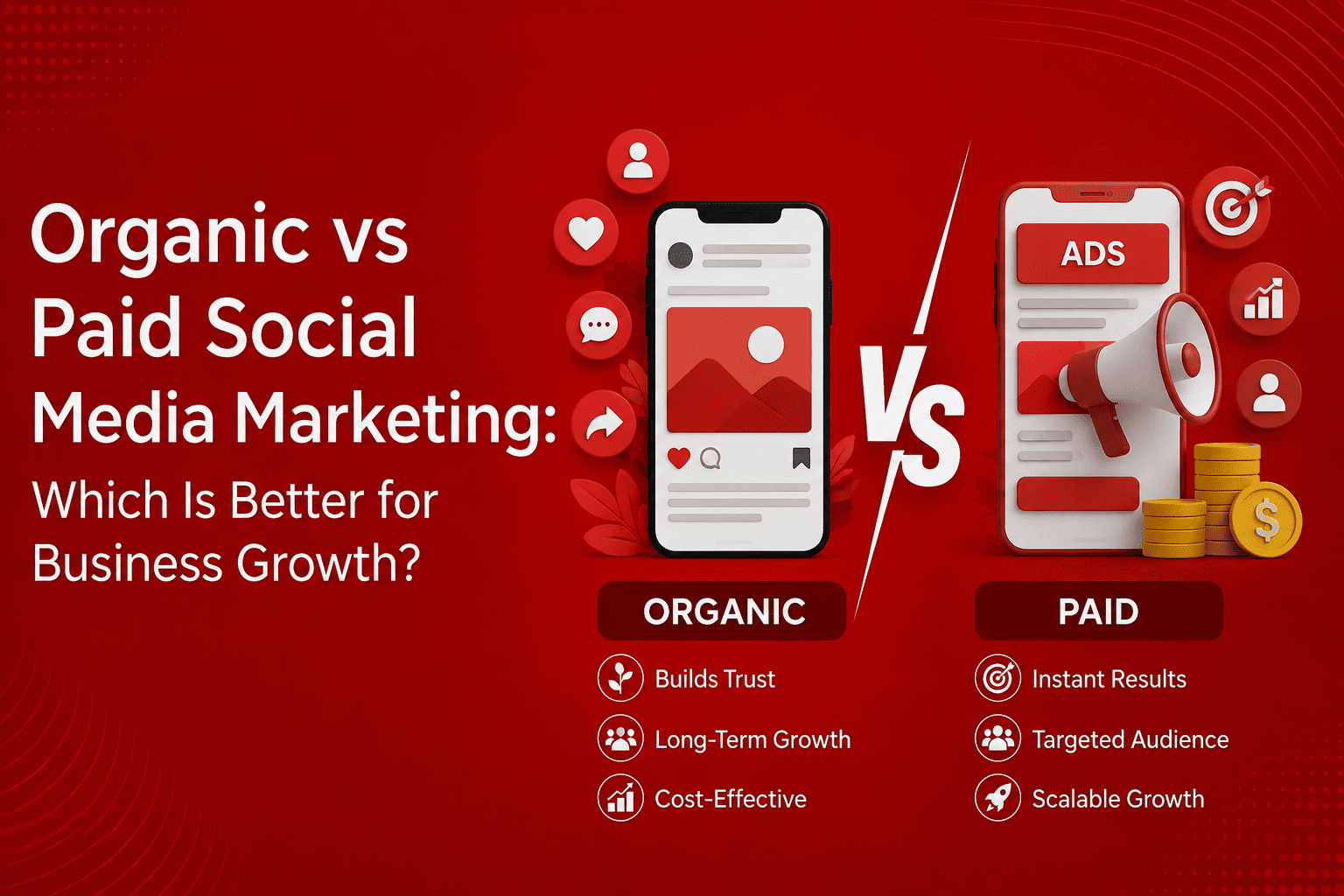
- Cost: Organic is free to post but time-intensive; paid requires ongoing budget.
- Speed of results: Organic builds slowly; paid can generate results within days.
- Reach: Organic reach is limited by algorithms; paid reach is scalable and targeted.
- Trust building: Organic tends to build deeper long-term trust; paid is better for quick visibility.
- Best for: Organic suits brand building and community; paid suits lead generation and sales campaigns.
Which One Is Better for Business Growth?
For most businesses, the answer isn’t choosing one over the other—it’s finding the right balance. Startups and small businesses with limited budgets often benefit from starting organically to build an authentic brand voice, then introducing paid campaigns once they understand what content resonates with their audience. Established businesses looking for faster growth or entering new markets typically see stronger results by combining both: using organic content to nurture community and trust, while paid ads drive targeted traffic, leads, and conversions.
A common and effective approach is the 80/20 or 70/30 split, where the majority of effort goes into organic content creation and community building, with a smaller, focused budget allocated to boosting high-performing posts or running targeted campaigns around key business goals like product launches or sales events.
How to Build a Balanced Strategy
- Start with organic content to understand your audience and refine your brand voice.
- Identify top-performing organic posts and boost them with paid promotion for extended reach.
- Use paid ads for time-sensitive goals like product launches, sales, or lead generation campaigns.
- Retarget website visitors and engaged followers with paid ads to improve conversion rates.
- Track performance across both channels and reallocate budget toward what delivers the best ROI.
Conclusion
Organic and paid social media marketing each play a distinct role in business growth—organic builds trust and long-term brand equity, while paid delivers speed, scale, and precise targeting. Rather than viewing them as competing strategies, the most successful businesses treat them as complementary tools. By using organic content to build genuine audience relationships and paid campaigns to accelerate reach and conversions, businesses can create a well-rounded social media strategy that supports sustainable growth.
Frequently Asked Questions (FAQs)
1. Is organic or paid social media better for small businesses?
Small businesses often benefit from starting with organic content to build trust affordably, then adding paid ads once they identify what content performs best with their audience.
2. How much budget should I allocate to paid social media?
There’s no fixed rule, but many businesses start with 20-30% of their marketing budget on paid social and adjust based on measured ROI and campaign performance.
3. Can organic social media alone grow a business?
Yes, especially over the long term, but growth is typically slower due to limited algorithmic reach compared to paid promotion.
4. Do paid ads stop working once the budget ends?
Yes, paid reach and traffic generally stop once the campaign budget is exhausted, unlike organic content which can continue generating engagement over time.
5. Which platforms are best for organic vs paid marketing?
Instagram and LinkedIn tend to perform well organically for community building, while Facebook and Instagram ads are popular for paid campaigns due to their detailed targeting options.
6. How do I measure ROI for social media marketing?
Track metrics like engagement rate and follower growth for organic efforts, and cost-per-click, conversion rate, and return on ad spend for paid campaigns.