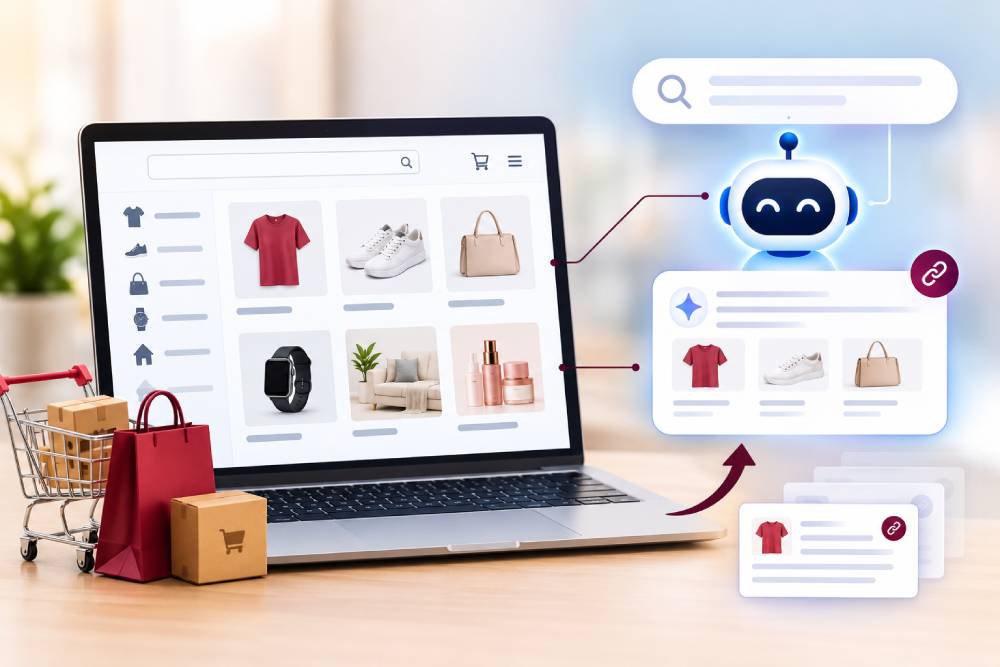

Ecommerce has transformed the way businesses sell products and connect with customers. From small startups to established retail brands, companies are increasingly investing in online stores to reach wider audiences, simplify purchasing, and create convenient shopping experiences. However, building a successful ecommerce website requires more than simply uploading products and adding a payment option. Businesses need a reliable platform, thoughtful design, smooth navigation, secure checkout, and a strategy for attracting potential customers.
This is where a Shopify website development company can help. Shopify is a widely used ecommerce platform that enables businesses to build and manage online stores without developing every component from scratch. Professional Shopify developers can help businesses create customized storefronts, configure essential features, improve the shopping experience, and prepare their websites for growth.
Whether you are launching a new online business or upgrading an existing ecommerce website, understanding Shopify development services can help you make better decisions.
In this guide, we will explore what a Shopify website development company does, the services it offers, the essential features of a successful Shopify store, and how to choose the right development partner for your business.
What Is a Shopify Website Development Company?
A Shopify website development company specializes in designing, developing, customizing, and maintaining ecommerce websites using the Shopify platform.
These companies help businesses turn their product ideas and commercial goals into functional online stores. Their work may include storefront design, theme customization, product catalog setup, payment configuration, shipping settings, third-party integrations, performance improvements, and ongoing technical support.
The exact scope of work depends on the business’s requirements and the development company’s expertise.
For example, a small business selling handmade products may need a simple Shopify store with a professional theme, product pages, and standard payment options. A growing retail brand may require advanced filtering, custom product functionality, inventory integrations, and connections with external business systems.
A professional development partner should understand both the technical requirements and the business objectives behind the website.
Why Do Businesses Choose Shopify for Ecommerce Website Development?
Choosing an ecommerce platform is an important decision because it affects website management, scalability, functionality, and long-term operating costs.
Shopify offers several features that make it suitable for different types of online businesses.
1. User-Friendly Store Management
Shopify provides an administrative interface that allows store owners to manage products, orders, inventory, customer information, and various store settings.
This can reduce the need for developers to handle everyday tasks such as updating product descriptions or changing prices.
2. Customizable Store Design
Businesses can use Shopify themes to establish the appearance of their storefronts. Themes can be customized to reflect a brand’s colors, typography, product categories, and visual identity.
For businesses with more specific requirements, developers can create additional customizations or build tailored storefront experiences.
3. Ecommerce Functionality
Shopify supports essential ecommerce activities, including product management, checkout, order processing, discount configuration, and integrations with supported payment and shipping services.
The availability of individual payment methods and features depends on the merchant’s country, plan, configuration, and selected providers.
4. Mobile-Friendly Shopping Experiences
A significant share of ecommerce browsing takes place on mobile devices. Shopify themes generally support responsive layouts, while developers can further test and improve mobile navigation, product displays, buttons, and checkout usability.
A mobile-friendly store helps customers browse products and complete purchases more conveniently.
5. Integration Options
Shopify supports apps and integrations that can extend store functionality. Depending on business requirements, these may support email marketing, customer reviews, inventory management, analytics, customer support, and shipping operations.
Businesses should evaluate integrations carefully because additional apps can increase subscription costs, affect performance, and introduce maintenance requirements.
Services Offered by a Shopify Website Development Company
A Shopify development company may provide a range of services, from initial store setup to advanced customization and ongoing support.
1. Shopify Store Setup
Store setup involves configuring the basic components required to operate an online business.
Typical tasks include:
- Creating and configuring the Shopify store.
- Connecting a domain name.
- Setting up product categories and collections.
- Adding product information, prices, and images.
- Configuring shipping and tax settings.
- Connecting supported payment providers.
- Setting up essential store policies and navigation.
A well-organized setup gives business owners a practical foundation for managing their ecommerce operations.
2. Custom Shopify Website Design
Website design influences how customers perceive a brand and interact with its products. A cluttered layout, confusing navigation, or inconsistent visual presentation can make shopping more difficult.
A development company can create a design that reflects the brand’s identity while prioritizing usability.
Important design considerations include clear product categories, readable typography, consistent colors, visible calls to action, useful product filters, and straightforward checkout navigation.
The objective is not simply to create an attractive website. The design should help customers find products, understand their benefits, and complete relevant actions.
3. Shopify Theme Customization
Businesses often begin with an existing Shopify theme and customize it according to their needs.
Theme customization may include modifying page layouts, improving product displays, adding promotional sections, refining navigation, and creating custom content blocks.
This approach can be more practical than building every feature from the ground up. However, the right choice depends on the required functionality, design flexibility, maintenance needs, and available budget.
4. Shopify Store Migration
Businesses operating on another ecommerce platform may want to move their stores to Shopify.
Migration can involve transferring product information, customer records, order data, collections, images, and relevant website content, subject to the source platform’s capabilities and applicable data requirements.
A careful migration plan should also account for URL changes, redirects, analytics, payment configuration, and SEO preservation.
For existing websites, incorrect redirects or missing important pages can affect user experience and organic search visibility. Developers should test migrated content and confirm that critical URLs work correctly before and after launch.
5. Third-Party App and API Integration
Some businesses require features beyond their standard storefront setup.
Depending on the requirements, developers may integrate supported applications and external systems for inventory, accounting, customer relationship management, email marketing, shipping, or customer service.
Custom integrations should be evaluated for reliability, security, compatibility, ongoing maintenance, and cost.
6. Shopify Website Maintenance
Launching a store is only the beginning. Ecommerce websites need ongoing monitoring and updates as products, business requirements, and platform capabilities change.
Maintenance services may include:
- Fixing technical issues.
- Reviewing broken links and page errors.
- Testing important store functions.
- Monitoring website performance.
- Reviewing app compatibility.
- Updating content and product information.
- Checking checkout and payment workflows.
- Maintaining backups or recovery procedures where supported and appropriate.
Businesses should clarify what is included in a maintenance agreement and which changes may incur additional charges.
Essential Features of a Successful Shopify Website
A successful Shopify store should provide a reliable shopping experience while supporting the business’s commercial objectives.
Responsive Website Design
The storefront should adapt to mobile phones, tablets, laptops, and desktop screens. Product images, navigation menus, forms, and buttons should remain usable at different screen sizes.
Testing on actual devices can reveal issues that are difficult to identify through desktop previews alone.
Clear Product Pages
Product pages help customers understand what they are buying. Each important product page should include accurate descriptions, clear images, relevant specifications, pricing, availability, and delivery information where applicable.
For products that require additional explanation, comparison charts, sizing guides, demonstration videos, or frequently asked questions may help customers make informed decisions.
Simple Navigation and Product Filtering
Customers should be able to locate products without unnecessary effort.
Organize collections logically and use descriptive navigation labels. Where the catalog is large, useful filters such as price, size, color, material, or product type can make browsing more efficient.
Secure and Convenient Checkout
Checkout is a critical part of the purchase journey. Unnecessary steps, unexpected costs, or unclear delivery information can discourage customers from completing an order.
Use supported payment options, display relevant costs clearly, and test the checkout process regularly. Security, privacy, and payment compliance requirements should be addressed according to the business’s operations and applicable regulations.
Trust-Building Elements
Customers may hesitate to purchase from an unfamiliar store. Accurate contact details, transparent shipping and return policies, clear product information, and genuine customer reviews can help establish trust.
Avoid fabricated testimonials, misleading discount claims, and unsupported product promises.
Analytics and Conversion Tracking
Analytics help store owners understand how visitors discover products and where they encounter difficulties.
Depending on the setup, tracking may include product views, add-to-cart events, checkout progression, completed purchases, and marketing campaign performance.
Tracking should be configured and tested correctly, with appropriate privacy and consent measures where required.
Shopify Website Development and SEO: Why They Work Together
A well-designed Shopify store needs discoverability as well as functionality. Search engine optimization helps search engines understand a website and can improve its eligibility to appear for relevant queries.
A Shopify website development company with SEO knowledge can help build search-friendly website structures and avoid preventable technical problems.
1. Search-Friendly URL Structure
Use clear and descriptive URLs where the platform permits customization. Shopify has standard URL patterns for products, collections, pages, and blog posts, so developers should work within the platform’s structure rather than promise complete URL flexibility.
Avoid unnecessary URL changes after launch because they can create broken links and require redirects.
2. Optimized Page Titles and Meta Descriptions
Product and collection pages should have descriptive titles that accurately communicate their content. Meta descriptions should summarize the page and provide a compelling reason for users to visit.
For example, a collection selling running shoes could use a title that describes the product category and the intended audience rather than a vague title such as “Products.”
Titles and descriptions should be unique where appropriate, relevant to the page, and written for people rather than stuffed with keywords.
3. Product and Collection Content
Useful product descriptions help shoppers understand features, specifications, benefits, and limitations. Collection pages can also provide relevant introductory content when it genuinely helps users navigate or compare products.
Avoid copying manufacturer descriptions across every product without adding value. Original, accurate information can make product pages more useful and distinctive.
4. Image Optimization
Product images are essential to ecommerce, but unnecessarily large image files can slow down pages.
Use appropriately sized images, modern formats where suitable, descriptive filenames, and meaningful alternative text for informative images. Alt text should explain the image’s relevant content rather than repeat keywords unnaturally.
5. Internal Linking
Internal links help visitors move between related products, collections, buying guides, and support pages.
For example, a blog post about choosing running shoes may link to relevant shoe collections. Links should be useful and contextually appropriate, making the next step clear to the reader.
6. Technical SEO and Indexing
Review important technical elements, including canonical URLs, XML sitemaps, robots directives, redirects, page status codes, and indexation.
Shopify automatically manages some technical elements, but store owners still need to check for issues introduced by themes, apps, duplicate URLs, and website changes.
Google Search Console can help monitor indexing and search performance. Not every page is guaranteed to be indexed, and technical compliance alone does not guarantee rankings.
How to Choose the Right Shopify Website Development Company
Selecting a development partner requires more than comparing quotations. Businesses should assess whether the company can deliver the required functionality, communicate clearly, and support the website after launch.
Review Its Portfolio
Examine previous projects and, where possible, test the websites on mobile and desktop devices.
Look for relevant ecommerce experience, clear navigation, useful product pages, and consistent design quality. A portfolio should demonstrate the company’s actual work rather than relying only on attractive screenshots.
Evaluate Technical Experience
Ask about the team’s experience with Shopify themes, custom development, integrations, migration, performance optimization, and troubleshooting.
The right level of expertise depends on the project’s complexity. A straightforward store setup may not require the same capabilities as a complex store with custom business workflows.
Understand the Scope of Work
Request a written proposal that identifies deliverables, project milestones, responsibilities, dependencies, and exclusions.
Clarify whether the quotation includes design, product uploads, app configuration, payment setup, SEO basics, analytics, testing, and post-launch support.
Discuss Budget and Ongoing Costs
The total cost of a Shopify project may include platform subscription fees, domain registration, theme purchases, paid apps, development charges, payment processing fees, and maintenance.
Ask for an estimate of recurring expenses as well as the initial development cost. Avoid choosing a provider based solely on the lowest quotation if important requirements are excluded.
Confirm Ownership and Access
The business should retain appropriate ownership and administrative access to its store, domain, content, and relevant accounts.
Before signing an agreement, clarify who will control the store, how source code or custom work will be handed over where applicable, and how access will be transferred if the relationship ends.
Ask About Testing and Support
A reliable project plan should include testing before launch and a clear process for resolving defects afterward.
Ask how the team will test mobile layouts, product variants, forms, checkout, payment configuration, shipping settings, analytics, and redirects where relevant.
How Much Does Shopify Website Development Cost?
Shopify development costs vary according to the store’s complexity, design requirements, product catalog, integrations, and the experience of the service provider.
A basic store using an existing theme may cost substantially less than a customized ecommerce website requiring advanced functionality or a migration from another platform.
When planning a budget, consider these cost categories:
- Shopify subscription and platform-related fees.
- Domain registration.
- Theme or design costs.
- Development and customization.
- Paid apps and integrations.
- Product photography and content creation.
- SEO, analytics, and marketing.
- Ongoing maintenance and support.
Ask potential providers to separate one-time development charges from recurring expenses. Also confirm whether taxes, app subscriptions, revisions, and future enhancements are included.
A clear budget helps businesses prioritize the features that matter most to their customers instead of spending on unnecessary functionality.
Common Shopify Website Development Mistakes to Avoid
Even a technically functional online store can struggle if its design or setup does not meet customer expectations.
Choosing a theme without considering business needs: A theme should support the catalog, navigation, and product presentation required by the business.
Installing too many apps: Excessive or poorly configured apps can increase costs, create conflicts, and affect performance.
Ignoring mobile usability: Difficult navigation and poorly displayed product information can frustrate mobile shoppers.
Publishing incomplete product information: Missing specifications, unclear delivery details, and weak images can make purchasing decisions harder.
Neglecting SEO during development: Missing titles, broken redirects, confusing internal links, or incorrect indexing directives can create avoidable search problems.
Skipping pre-launch testing: Unchecked forms, payment settings, shipping rules, and tracking can disrupt the customer journey.
Ignoring post-launch maintenance: Store functionality, integrations, and business requirements change over time, so ongoing review is important.
Avoiding these mistakes helps create a more dependable foundation for long-term ecommerce growth.
Conclusion
Choosing the right Shopify website development company can help businesses build an online store that combines professional design, reliable functionality, search-friendly foundations, and a convenient shopping experience.
From initial setup and theme customization to migration, integrations, technical SEO, and maintenance, development decisions should reflect the business’s goals and customers’ needs.
Before selecting a provider, review its portfolio, clarify the scope of work, understand recurring costs, confirm ownership, and ask how testing and support will be handled.
A successful Shopify store is not defined only by how it looks at launch. Its long-term value depends on how effectively it helps customers discover products, understand their options, complete purchases, and return for future shopping.
By combining careful development with useful content, sound SEO practices, reliable analytics, and continuous improvement, businesses can build an ecommerce website that is better prepared to grow with their needs.