Search is evolving beyond traditional lists of blue links. Users can now ask questions and receive AI-generated answers that summarize information from multiple sources. Search experiences such as Google AI Overviews and conversational AI tools have changed how people discover information, evaluate recommendations, and explore products or services.
This shift has increased interest in Generative Engine Optimization (GEO), a content and visibility approach focused on helping a website’s information become useful, understandable, and potentially referenceable in AI-generated responses.
Traditional search engine optimization (SEO) remains important, but businesses and content creators are increasingly exploring how their content can be discovered and represented in generative search experiences. GEO does not replace SEO. Instead, it builds on many of the same foundations, including helpful content, technical accessibility, clear structure, credibility, and relevant information.
This ultimate guide explains what Generative Engine Optimization is, how it differs from traditional SEO, and which practical strategies website owners can use to improve their visibility across evolving search experiences.
What Is Generative Engine Optimization (GEO)?
Generative Engine Optimization (GEO) is the practice of improving digital content so that AI-powered search and answer systems can understand, retrieve, interpret, and potentially reference it when generating responses to users’ questions.
Traditional search engines generally present a list of relevant pages. Generative systems may instead produce a synthesized answer using information gathered from one or more sources. Depending on the platform and query, these answers may include citations, links, product recommendations, or additional suggested questions.
For example, a user might search for “How can a small business improve local visibility?” A traditional search engine may display articles about local SEO. An AI-powered search experience may provide a summarized explanation of important steps and link to selected sources.
GEO focuses on making content genuinely useful for these information needs. This includes answering specific questions, providing accurate explanations, demonstrating relevant expertise, and presenting information in a structure that machines and people can understand.
However, there is no universal GEO checklist that guarantees a website will appear in an AI-generated answer. Different platforms use different retrieval systems, models, ranking processes, and citation mechanisms.
How Does GEO Work?
Generative AI search systems may combine language models with information retrieval, search indexes, ranking systems, and other data sources. The exact process differs by platform.
A simplified workflow may include the following stages:
1. Understanding the User’s Question
AI systems interpret a user’s query to understand its meaning, context, and likely intent. A question may be informational, commercial, navigational, or transactional.
For example, “best running shoes for beginners” suggests that the user wants product comparisons and purchasing guidance rather than a general definition of running shoes.
Content that addresses the underlying intent is more useful than content that merely repeats the search phrase.
2. Retrieving Relevant Information
Some AI-powered search experiences retrieve information from web indexes or other available sources. Their systems may identify pages that appear relevant to the user’s question.
For website owners, this makes discoverability important. Pages should be accessible to the relevant crawlers, indexable where appropriate, and supported by sound technical SEO.
3. Evaluating and Synthesizing Information
Depending on the system, retrieved information may be assessed for relevance and used to construct a response. The generated answer may combine facts, explanations, examples, and perspectives from different sources.
Clear writing, accurate information, and specific supporting evidence can help make content useful during this process. Nevertheless, no particular writing format guarantees that a generative system will select or cite a page.
4. Presenting an Answer and Possible Sources
Some platforms display source citations or links alongside AI-generated responses. Others may present answers differently.
Being mentioned or cited can potentially introduce a website to users who might not otherwise click a traditional search result. However, inclusion depends on the platform, query, and response-generation process, and it cannot be guaranteed through optimization alone.
GEO vs. Traditional SEO: What Is the Difference?
GEO and SEO share many principles, but their immediate visibility objectives can differ.
| Aspect | Traditional SEO | Generative Engine Optimization |
|---|---|---|
| Primary objective | Improve visibility in search results | Improve the likelihood of useful representation in AI-generated answers |
| Common visibility format | Organic listings, snippets, images, and other search features | AI-generated summaries, citations, mentions, and links where supported |
| Content priorities | Relevance, helpfulness, usability, and search intent | The same foundations, with particular attention to clear answers and extractable evidence |
| Technical foundation | Crawling, indexing, internal links, and page experience | Strong technical SEO remains important for web-based retrieval systems |
| Measurement | Rankings, impressions, clicks, conversions, and organic traffic | Traditional metrics plus carefully designed checks of AI visibility and referral traffic |
| Control over results | No guaranteed ranking | No guaranteed mention or citation |
The key distinction is not that SEO and GEO require completely different content. Both benefit from relevant, reliable, accessible information.
A well-optimized website can still be overlooked by an AI system, and a page that appears in an AI-generated answer may not necessarily rank first in traditional search results. The two forms of visibility should therefore be monitored separately where practical.
Why Is Generative Engine Optimization Important?
GEO matters because users are increasingly encountering information through AI-assisted interfaces. These experiences can change how users discover websites, compare options, and decide which sources to trust.
1. Search Behavior Is Expanding
Some users prefer asking complete questions instead of entering short keywords. They may ask follow-up questions, request comparisons, or seek recommendations based on several requirements.
Content that addresses these detailed questions can serve a broader range of information needs.
2. Brand and Website Discovery May Change
An AI-generated response may mention a company, product, publication, or resource without requiring the user to visit every source. Being cited or accurately represented may help users discover a website or recognize its expertise.
However, visibility is not the same as a conversion. Users may read an AI answer without visiting the cited page, so website owners should evaluate outcomes rather than assuming every mention creates traffic or revenue.
3. Content Quality Becomes Even More Important
Generic articles that repeat common advice without offering meaningful detail may provide little additional value. Useful explanations, original examples, verifiable data, and clear answers give readers stronger reasons to trust and engage with a page.
These qualities also support conventional SEO and help establish a more credible website.
4. Businesses Can Address Complex Questions
AI-assisted search often handles questions involving multiple factors. A detailed guide that explains alternatives, limitations, costs, risks, and decision criteria can be useful to people researching a topic.
The objective should be to solve the reader’s problem comprehensively rather than create pages solely to attract AI-generated mentions.
10 Practical Strategies to Improve GEO
1. Create Helpful, People-First Content
Start with the user’s actual problem. Identify the questions readers ask before, during, and after researching a topic.
For example, an article about choosing website hosting could explain:
- The differences between shared, VPS, and cloud hosting.
- Which factors influence hosting performance.
- How storage, bandwidth, and backups work.
- What beginners should compare before purchasing.
- Common limitations and mistakes.
This approach provides meaningful information instead of simply repeating a keyword throughout the article.
Google’s guidance on creating helpful, reliable, people-first content is a useful foundation for this work.
2. Answer Important Questions Clearly
Provide a direct answer near the beginning of a relevant section, followed by supporting details and examples.
For example:
What is Generative Engine Optimization?
Generative Engine Optimization is the practice of improving content so AI-powered search and answer systems can understand and potentially use it when responding to relevant questions.
The article can then explain how GEO works, what influences visibility, and which limitations readers should understand.
Direct answers improve usability. They may also make important information easier for systems to identify, but they do not guarantee selection in an AI response.
3. Organize Content With Descriptive Headings
A logical heading structure helps readers navigate complex subjects and understand how ideas relate to one another.
Use an H1 for the main page title and H2 and H3 headings for meaningful sections and subsections. Write headings that accurately describe the content beneath them.
For a GEO guide, useful headings might include:
- What Is Generative Engine Optimization?
- How Does GEO Differ From SEO?
- How Can Websites Improve AI Search Visibility?
- How Should GEO Performance Be Measured?
Avoid creating numerous nearly identical headings just to target variations of a keyword. Structure should improve comprehension, not inflate the article.
4. Demonstrate Experience, Expertise, Authoritativeness, and Trustworthiness
Google’s concept of E-E-A-T stands for Experience, Expertise, Authoritativeness, and Trustworthiness. It is a framework for thinking about content quality, with trust being especially important.
Although E-E-A-T is not a single direct ranking factor that guarantees visibility, its principles help guide the creation of reliable content.
Practical ways to demonstrate these qualities include:
- Sharing genuine first-hand experience where relevant.
- Explaining methods and assumptions behind recommendations.
- Using reliable sources for factual claims.
- Including relevant author information and editorial details.
- Correcting outdated or inaccurate information.
- Distinguishing established facts from estimates or opinions.
- Explaining limitations instead of making exaggerated promises.
Do not invent case studies, customer experiences, credentials, or statistics to make an article appear more authoritative.
5. Include Original Insights and Supporting Evidence
An article becomes more valuable when it contributes something beyond commonly repeated information.
Depending on the subject, original contributions may include a small experiment, a documented process, a comparison table, a practical example, or an analysis of publicly available data.
For instance, an article about page speed could explain how different page elements affect loading performance and present the results of a clearly documented test.
When using statistics, identify the source and relevant date. Explain the context so readers can interpret the findings correctly.
Original information can strengthen credibility and give other publishers or writers a reason to reference the page. It still does not guarantee that an AI system will cite it.
6. Strengthen Technical SEO
Content cannot provide its full value if the relevant page cannot be accessed or indexed by a search engine that an AI experience relies on.
Review these technical foundations:
- Crawlability: Ensure important pages are not unintentionally blocked by robots.txt.
- Indexability: Check for incorrect
noindexdirectives and other indexing restrictions. - Canonicalization: Use appropriate canonical tags to help consolidate duplicate or similar URLs.
- Internal linking: Connect related pages so readers and crawlers can discover them.
- Mobile usability: Ensure content and navigation work well on mobile devices.
- Performance: Improve loading speed and address significant usability problems.
- HTTP status codes: Fix unintended errors on important pages.
- XML sitemaps: Maintain an accurate sitemap containing the URLs you want search engines to discover.
Use Google Search Console to monitor indexing, inspect important URLs, and investigate technical issues.
Technical SEO is a foundation, not a guarantee. A page being indexed does not mean it will appear in every AI-generated answer.
7. Use Structured Data Correctly
Structured data helps search engines interpret certain information about a page or entity. Depending on the content, relevant Schema.org types may include Article, Product, Organization, Person, or BreadcrumbList.
For example, appropriate Article structured data can help identify a page’s headline, author, and publication information.
Follow the relevant search engine’s documentation and ensure structured data accurately reflects visible page content. Validate implementation with available testing tools and correct errors.
Do not add irrelevant schema types, fabricate reviews, or mark up information that users cannot see.
Important: Structured data is not a special GEO switch. Adding schema does not guarantee inclusion in AI Overviews or other generative responses.
8. Build Credibility Through Relevant References and Mentions
A website’s credibility can be supported by genuine recognition, useful references, and relevant editorial links from other sources.
Focus on earning links and mentions through activities such as:
- Publishing original research or useful resources.
- Contributing expert commentary where appropriate.
- Creating practical guides that other publishers may reference.
- Building relationships within a relevant industry.
- Correcting factual errors and maintaining dependable information.
Avoid purchasing links intended to manipulate rankings, generating large volumes of low-quality guest posts, or creating artificial mentions across unrelated websites.
The goal is to build a credible presence, not to manufacture a specific number of backlinks or brand mentions for AI systems.
9. Keep Important Information Accurate and Updated
Outdated content can mislead readers, especially in fast-changing areas such as software, digital marketing, finance, and technology.
Review important pages periodically. Check dates, statistics, product details, references, instructions, and claims that may have changed.
Update a page when there is meaningful new information. A new publication date without substantive improvements does not make content more useful.
Where appropriate, distinguish between the original publication date and the date of a substantial update. Make sure the content reflects the latest information that can be reliably verified.
10. Cover Related Questions Without Creating Unnecessary Pages
A strong topic resource often addresses several closely related questions in one well-organized article.
For example, a GEO guide might cover definitions, differences from SEO, technical requirements, content structure, measurement, and common misconceptions.
Supporting articles can explore genuinely distinct topics in greater depth and link to the main guide where useful.
Avoid publishing dozens of thin pages that differ only by minor keyword variations. This can create duplication, weaken the overall user experience, and waste editorial resources.
How to Measure GEO Performance
Measuring GEO requires a combination of established website metrics and carefully designed observations of AI-generated answers. No single measurement currently provides a complete picture of visibility across every AI platform.
1. Monitor Organic Search Performance
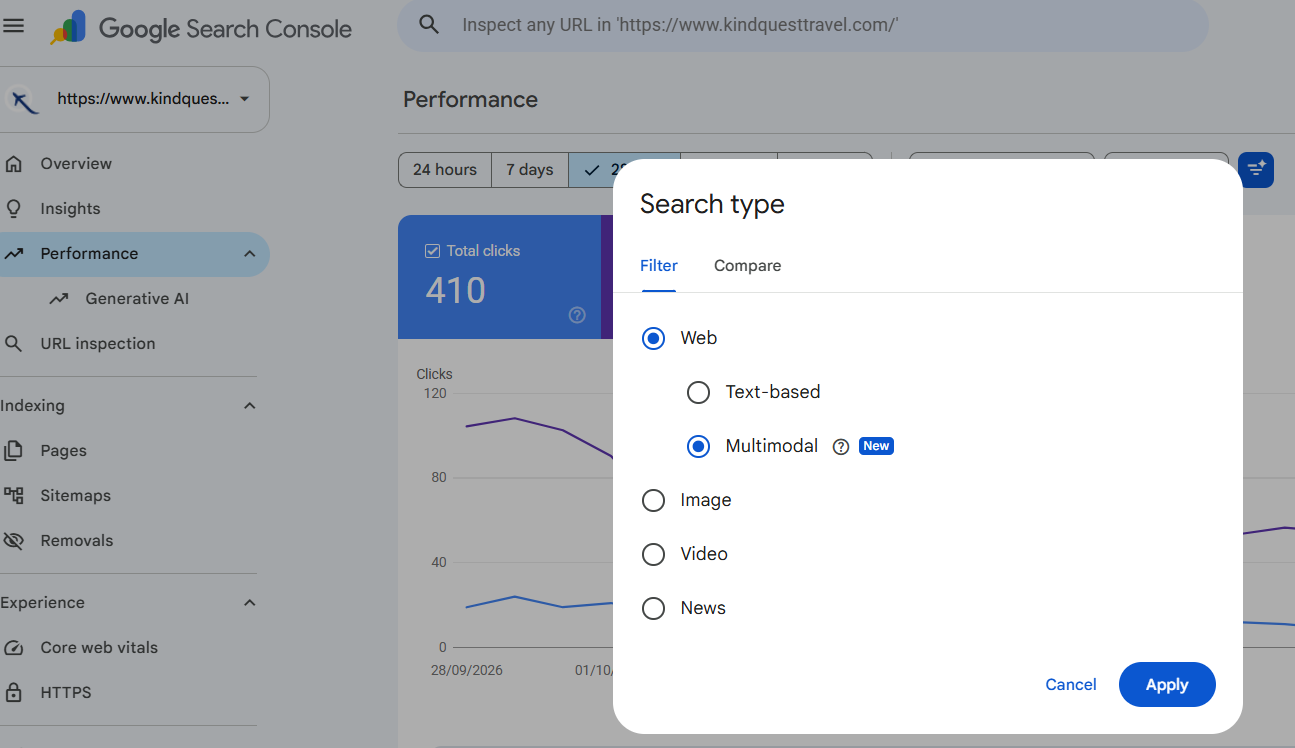
Google Search Console can help you review:
- Search impressions.
- Organic clicks.
- Click-through rate.
- Average position.
- Search queries and landing pages.
These metrics remain useful for evaluating the performance of content in Google Search. However, they should not automatically be treated as direct measurements of every AI-generated impression or citation.
2. Review Website Referral Traffic
Use an analytics platform such as Google Analytics to examine traffic arriving from identifiable AI-related referral sources.
Review landing pages, engagement, conversions, and the quality of visits where data is available.
Some AI-assisted visits may not be clearly attributed to their original source. Direct traffic and referral reports therefore provide an incomplete view of total AI-related discovery.
3. Track Mentions and Citations Manually
Create a consistent set of representative questions related to your website’s subject.
For example:
- What is GEO and how does it work?
- How does GEO differ from traditional SEO?
- What technical factors should website owners check for AI search?
- How can small businesses create more helpful content?
Test these questions on relevant platforms at regular intervals. Record whether your site is cited, which page appears, how it is described, and which competing sources are referenced.
Keep the wording, platform, date, and location settings consistent where possible. AI responses can change between sessions, so one observation should not be treated as conclusive evidence.
4. Monitor Conversions and Business Outcomes
Visibility is only one part of performance. Evaluate whether your content supports meaningful outcomes, such as newsletter subscriptions, enquiries, product purchases, or qualified leads.
Compare these outcomes with traffic sources and landing pages where reliable attribution is available.
A page with fewer visits may still be valuable if it attracts highly relevant visitors. Conversely, an AI mention does not necessarily create measurable business value.
5. Use a Practical Reporting Framework
A monthly GEO report can include the following:
| Metric | What it helps assess |
|---|---|
| Organic impressions and clicks | Traditional search visibility |
| AI referral sessions | Identifiable visits from AI-related sources |
| Observed citations and mentions | Visibility across a defined set of AI queries |
| Landing-page engagement | How visitors interact with the content |
| Conversions | Whether visits contribute to business goals |
| Content updates and technical fixes | Work completed to improve quality and accessibility |
Establish a baseline before making major changes. Review trends over time instead of attributing every increase or decrease to a single GEO activity.
Common GEO Mistakes to Avoid
Treating GEO as a Replacement for SEO
Generative search still relies on various information retrieval methods, and many AI-assisted search experiences use web content. Abandoning technical SEO, useful content, or indexing checks can undermine discoverability.
Writing Only for AI Systems
Content filled with unnatural phrasing, repetitive questions, or excessive keyword variations can frustrate readers. Write for people first and use clear structure to make the information easier to understand.
Assuming Schema Guarantees AI Citations
Structured data can clarify content, but it does not force a system to select, summarize, or cite a page.
Publishing Unsupported Statistics
Unverified numbers and exaggerated claims weaken credibility. Cite reliable sources and explain uncertainty whenever appropriate.
Measuring Success Only by Mentions
A citation may indicate visibility, but it does not necessarily produce traffic, engagement, or sales. Include meaningful business outcomes in the measurement process.
Using Mass-Produced, Low-Value Content
Publishing large quantities of similar articles without original value is not a sustainable GEO strategy. Focus on accuracy, depth, originality, and satisfying user intent.
A Practical 90-Day GEO Implementation Plan
Website owners can begin with a structured three-month process.
Days 1–30: Audit and Establish a Baseline
- Identify the most important pages and topics.
- Review crawling, indexing, internal links, and canonical tags.
- Check whether important content answers user questions clearly.
- Verify factual claims, sources, authorship, and update dates.
- Record existing organic traffic and relevant referral metrics.
- Create a baseline list of representative AI-search questions.
Days 31–60: Improve Content and Technical Quality
- Rewrite unclear or outdated sections.
- Add direct answers, meaningful examples, and supporting evidence.
- Improve headings, internal links, and page navigation.
- Implement relevant structured data where appropriate.
- Fix technical issues affecting important pages.
- Strengthen original insights and remove unnecessary repetition.
Days 61–90: Measure, Refine, and Expand
- Review organic search performance and identifiable AI referrals.
- Repeat the baseline AI-query checks using the same method.
- Identify which pages appear to provide the greatest user value.
- Update content where new evidence or information is available.
- Improve underperforming pages based on observed user needs.
- Prepare a monthly report covering visibility, engagement, conversions, and completed improvements.
This process creates a repeatable improvement cycle. It does not guarantee AI citations within 90 days, but it helps build a more useful, technically sound, and measurable website.
Frequently Asked Questions About GEO
1. What does GEO stand for in digital marketing?
GEO stands for Generative Engine Optimization. It describes efforts to improve how content can be understood and potentially represented in AI-generated search responses.
2. Is GEO different from SEO?
Yes, in its primary visibility objective. SEO focuses on improving performance in search engines, while GEO focuses on visibility within generative answers and related AI search experiences. Their foundations overlap significantly, including helpful content, technical accessibility, relevance, and credibility.
3. Does GEO replace traditional SEO?
No. Traditional SEO remains important for crawling, indexing, organic search visibility, and website usability. GEO is best approached as an additional consideration within a broader search and content strategy.
4. How can a website appear in Google AI Overviews?
There is no guaranteed method. Google recommends following its established Search guidance for AI features, including making pages accessible for Search, creating helpful content, and following applicable technical and content policies. Eligibility and inclusion depend on Google’s systems and the specific query.
5. Is structured data necessary for GEO?
Not universally. Relevant structured data can help search engines interpret certain information, but it is not a requirement that guarantees AI visibility. Implement it when it accurately describes the page and serves a supported purpose.
6. How long does GEO take to show results?
There is no fixed timeline. Changes in crawling, indexing, content quality, competition, platform behavior, and user demand can affect outcomes. Monitor a consistent set of metrics over time rather than relying on a promised number of days.
7. Can small websites benefit from GEO?
Yes. Small websites can focus on specific subjects, answer real user questions, provide first-hand expertise, and publish accurate, well-supported information. However, visibility depends on relevance and the systems involved, not simply the size of a website.
8. How can GEO performance be tracked?
Combine Google Search Console data, analytics referral reports, conversion tracking, and consistent manual checks of representative AI queries. These methods provide useful signals, but they do not capture every AI-generated answer or mention.
Conclusion
Generative Engine Optimization is an emerging area of search visibility that reflects how people increasingly discover information through AI-powered interfaces. Its central challenge is to make useful information accessible, understandable, credible, and relevant to the questions people ask.
The strongest starting point is not a shortcut or a special AI ranking trick. It is a solid SEO foundation combined with people-first content, clear explanations, reliable evidence, appropriate technical implementation, and ongoing measurement.
Website owners should continue improving traditional organic search performance while evaluating how their content appears across relevant generative experiences. By focusing on genuine usefulness and measurable outcomes, businesses and publishers can build a sustainable approach to search visibility as these technologies evolve.