Google Search Console has seen one of its busiest stretches of updates in years. Between new AI-focused reports, expanded property types, and smarter performance tools, 2026 has brought real changes to how website owners and SEO professionals track and improve search visibility. Here’s a breakdown of the most important updates and what they mean for your site.
1. New AI Performance Reports
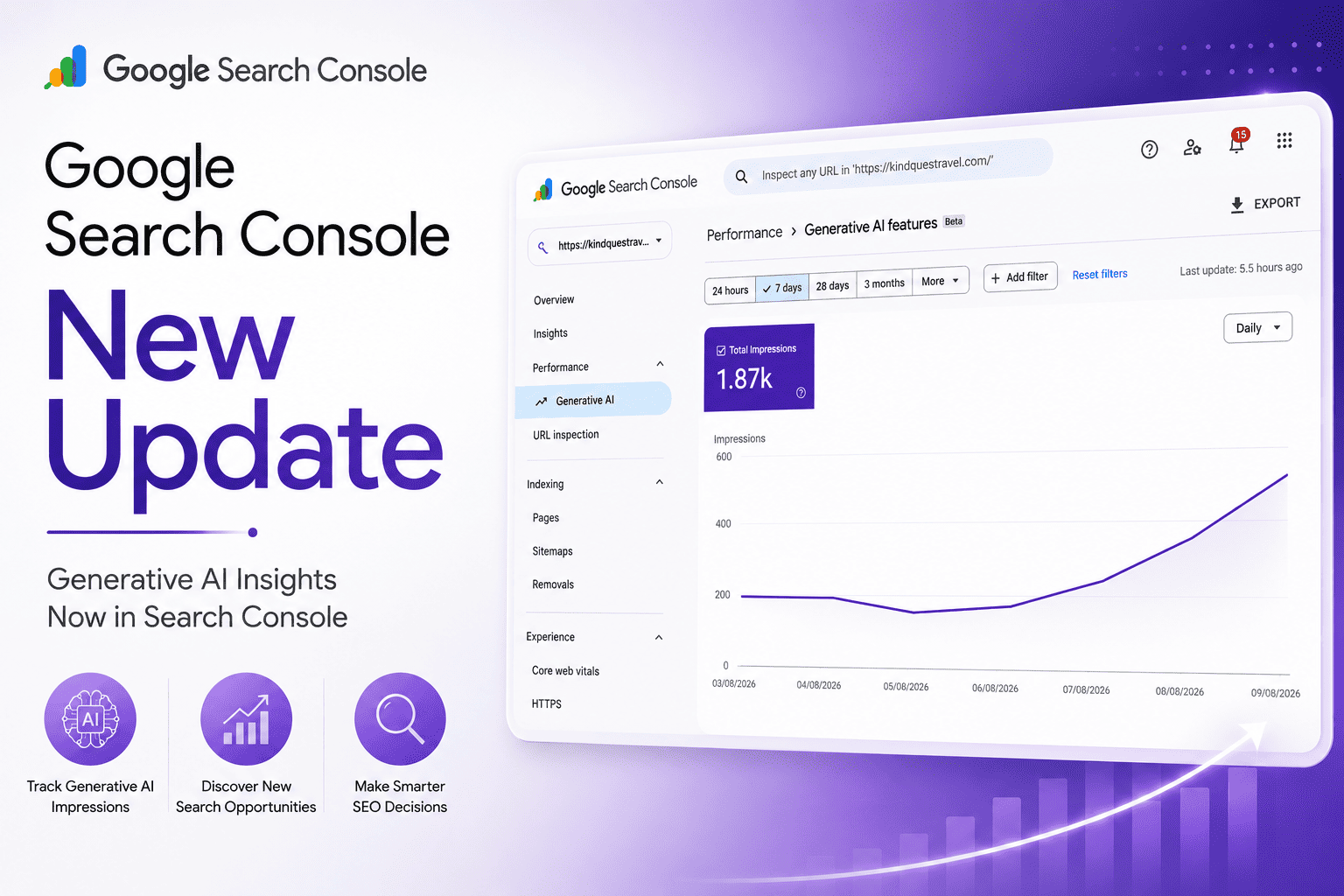
Google launched dedicated Generative AI performance reports in Search Console in June 2026. These reports let site owners see impressions and performance data specifically for AI Overviews and AI Mode, giving much clearer visibility into how content is surfaced through Google’s AI-driven search experiences rather than only traditional blue-link results.
2. Platform Properties for Social and Video Content
One of the biggest structural changes is the introduction of Platform Properties. Creators and publishers can now add supported platforms like Instagram, TikTok, X, and YouTube as separate properties inside Search Console. This extends Search Console beyond websites, giving a clearer picture of how content on these platforms is discovered through Google Search, Discover, and News.
3. Branded vs. Non-Branded Query Filters
A branded queries filter rolled out to all eligible sites by April 2026. This makes it much easier to separate traffic driven by brand recognition from traffic earned through non-branded, topical search visibility — a useful distinction for measuring true organic growth versus brand-driven clicks.
4. Custom Annotations in Performance Reports
Search Console now allows users to add short annotations directly onto performance charts. This means you can mark exactly when a content push, site migration, or SEO strategy change happened, making it far easier to connect traffic fluctuations to real actions instead of guessing what caused a spike or drop.
5. Weekly and Monthly Data Aggregation
Alongside annotations, Search Console introduced weekly and monthly aggregation views for performance data. Daily data is still useful for catching short-term issues, but the broader views help smooth out weekend fluctuations and reveal more meaningful long-term trends when comparing time periods.
6. AI-Powered Report Configuration
An AI-powered configuration tool for the Performance report has also reached general availability. This feature helps users set up and customize reports faster, reducing the manual filtering and segmenting work that used to be needed to get to useful insights.
Why These Updates Matter
These changes arrived alongside major core algorithm updates in 2026, including the March and May broad core updates, both of which caused significant ranking volatility. Google Search Console’s expanded reporting gives site owners more context to understand not just whether rankings changed, but why — and how much of their visibility now comes through AI-driven search surfaces rather than traditional results.
Key takeaways for SEO teams:
- Monitor AI Overview and AI Mode impressions separately from traditional search performance.
- Use branded vs. non-branded filters to get an honest read on organic growth.
- Add annotations whenever you make a content or technical change, so future analysis is easier.
- Consider adding social platforms as properties if video or social content drives meaningful discovery.
- Lean on weekly/monthly views when core updates cause short-term volatility.
Final Thoughts
Google Search Console is evolving from a simple diagnostic tool into a strategic command center for SEO and content teams. With AI performance reports, platform properties, and smarter filtering options, 2026’s updates give site owners far more context to make confident, data-backed decisions. Staying current with these features — and actually using them — is quickly becoming essential for anyone serious about search visibility.
Frequently Asked Questions
1. What is the biggest Google Search Console update in 2026?
The introduction of dedicated Generative AI performance reports, launched in June 2026, is widely considered the most significant update. It gives site owners direct visibility into how their content performs inside AI Overviews and AI Mode, something that wasn’t previously trackable.
2. What are Platform Properties in Search Console?
Platform Properties let creators and publishers add supported platforms such as Instagram, TikTok, X, and YouTube as separate properties in Search Console, so they can track how that content is discovered through Google Search, Discover, and News alongside their website data.
3. How do branded and non-branded query filters help my SEO strategy?
These filters separate searches that include your brand name from generic, topical searches. This helps you understand how much traffic comes from people who already know your brand versus new visibility earned purely through content and rankings, giving a clearer picture of real organic growth.
4. Do I need to change my SEO strategy because of these updates?
You don’t need to overhaul your strategy, but you should start using the new reports to inform it. Tracking AI Overview visibility, using annotations, and separating branded traffic all help you make better decisions and react faster when core updates cause ranking shifts.
5. Are these Search Console updates available to all website owners?
Most of these features, including annotations, weekly/monthly aggregation, and the branded query filter, have rolled out broadly to eligible sites. Some features, like Platform Properties, depend on connecting supported platforms and may continue to expand in availability over time, so it’s worth checking your Search Console account directly for access.