Understanding the highest-intent search behaviour in local marketing, and how to actually show up in it
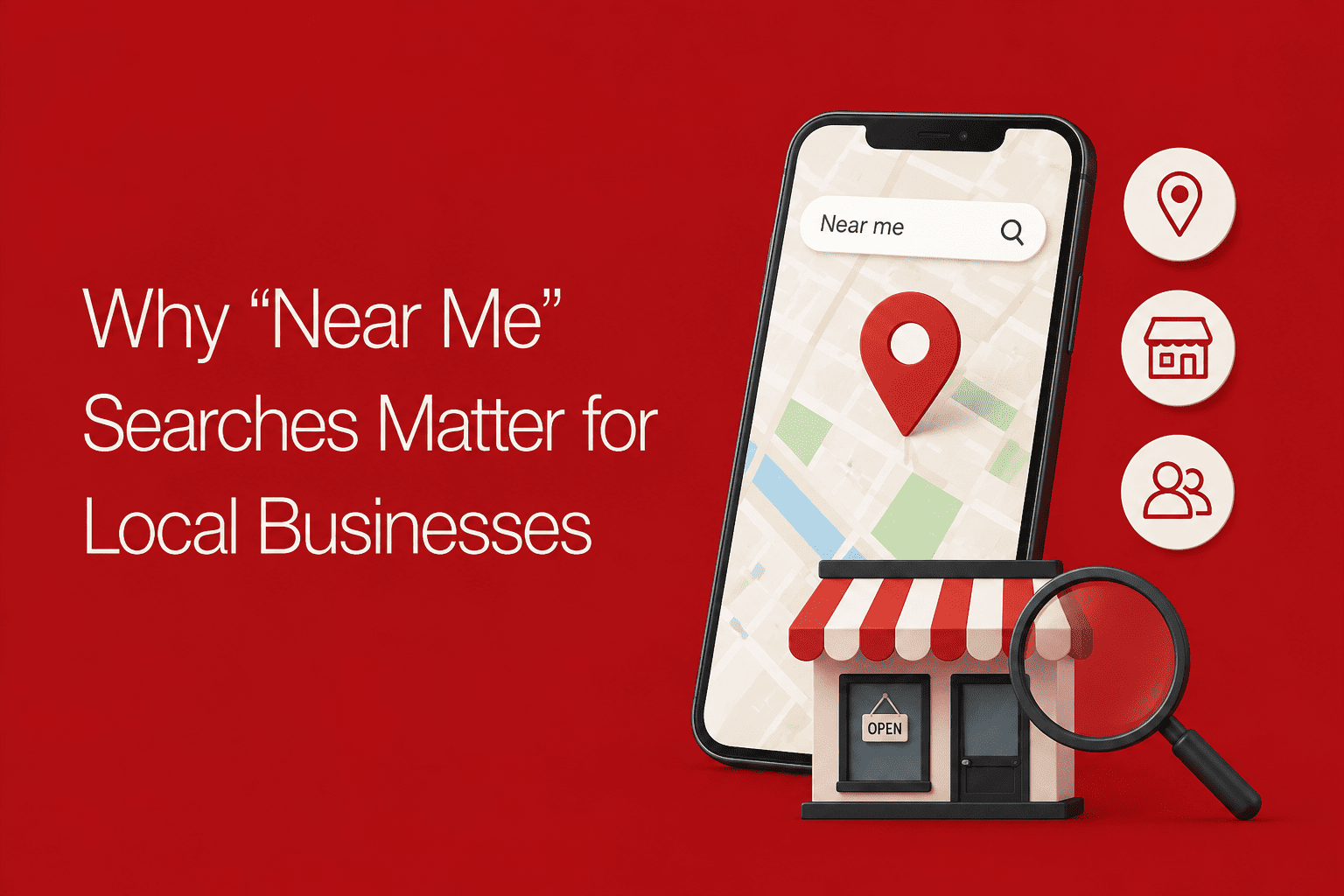
Somewhere between deciding they need something and actually buying it, a huge share of customers now type three words into their phone: near me. A “plumber near me,” a “coffee shop near me,” a “dentist near me” search is not idle browsing. It is someone standing at the exact moment of decision, ready to call, walk in, or book within the hour. For a local business, few other search behaviours carry this much immediate commercial intent.
Despite that, many small and local businesses still treat their online presence the same way a national e-commerce brand would, chasing broad keywords and ignoring the local search signals that actually determine whether they show up in this specific, high-converting moment. Understanding why “near me” searches matter, and what actually makes a business appear in them, is one of the highest-leverage things a local business can get right.
What Makes “Near Me” Searches Different
A “near me” search signals two things at once: clear intent to buy or visit, and a willingness to act immediately once a good option is found. Someone searching “near me” has typically already decided what they need; they are simply deciding where to get it, which is a much later and more valuable stage of the buying journey than someone researching a category in general.
This is also overwhelmingly a mobile behaviour, tied to a person’s real, current location rather than a general area they are researching from a desktop. Google factors in the searcher’s actual GPS position when returning results, which means ranking for a “near me” search has very little to do with traditional keyword optimisation and almost everything to do with local search signals specific to that business’s actual location.
Why This Matters More Than Ever
The volume of “near me” and location-based searches has grown enormously over the past several years as smartphone use has become universal, and Google itself has confirmed that a significant share of these searches lead to a store visit or purchase within a day. For a local business, this is not a niche search behaviour to eventually get around to; it is very likely already one of the largest sources of new customer discovery happening, whether or not the business is currently showing up in it.
It also matters because competition for these searches is often lower than businesses assume. A local business is not competing nationally for a “near me” search; it is competing only against the handful of other genuinely nearby businesses in the same category, which makes strong local visibility achievable even without a large marketing budget.
Six Ways to Actually Show Up in “Near Me” Searches
1. Fully Complete and Verify the Google Business Profile
This is the single biggest factor in local search visibility. An accurate, complete profile with the correct category, current hours, a real address and regularly updated photos performs dramatically better than an incomplete or outdated one, and an unverified profile may not appear in local results at all.
2. Keep NAP Information Consistent Everywhere
Name, address and phone number, commonly shortened to NAP, need to match exactly across the website, Google Business Profile, and every directory or listing the business appears on. Inconsistencies, even small ones like an abbreviated street name in one place and the full name in another, quietly undermine the trust signals search engines use to confirm a business’s real location.
3. Collect Reviews Consistently, Not in Occasional Bursts
Review volume, recency and rating all factor into local ranking, and a steady, ongoing flow of new reviews outperforms a large batch collected once and then left stale. Actively asking satisfied customers for a review immediately after a good experience is far more effective than a generic, occasional request.
4. Build Location Pages for Every Real Service Area
A business serving multiple neighbourhoods or nearby towns benefits from a dedicated page for each area actually served, rather than a single generic page, since “near me” results often favour businesses with content specifically relevant to the searcher’s exact area.
5. Use Location-Specific Language Naturally on the Website
Mentioning the actual neighbourhood, landmarks and service area naturally throughout website content, rather than only in a footer address, reinforces the same local relevance signals that Google’s local algorithm is looking for, without needing to resort to keyword stuffing.
6. Ensure the Website Loads Quickly on Mobile
Since “near me” searches happen overwhelmingly on mobile devices, often from someone standing outside deciding where to go next, a slow-loading mobile site directly costs conversions even when the business ranks well. A fast, mobile-friendly site with a clickable phone number and clear directions link converts far better than a slower, desktop-oriented one.
Measuring the Impact
Google Business Profile Insights shows how many searches led to a call, a direction request or a website visit, which is one of the clearest ways to see “near me” performance directly. A rising number of direction requests and calls originating from the profile is a strong sign that local visibility efforts are working, often well before it shows up in broader traffic numbers.
Getting Started
Most local businesses do not need a large, complex marketing plan to improve their “near me” visibility. The highest-impact starting point is almost always fixing the basics: a fully completed Google Business Profile, consistent NAP information everywhere the business is listed, and an active habit of requesting reviews. Those three fixes alone typically move the needle before any additional content or advertising is needed.
Frequently Asked Questions
Do “near me” searches actually include the words “near me”?
Not always. Google increasingly infers local intent even without the phrase, treating searches like “plumber” or “coffee shop” as implicitly local when made from a mobile device. Optimising for local search signals matters regardless of whether the exact phrase is typed.
How long does it take to see results from local SEO improvements?
Basic fixes like completing a Google Business Profile can improve visibility within days to a few weeks. Building a strong review base and consistent local content typically takes a few months to show its full effect.
Does paid advertising help with “near me” searches too?
Yes, local service ads and location-targeted Google Ads can appear alongside organic local results, and can be a useful way to gain visibility while organic local SEO efforts are still building up.
Is local SEO only relevant for businesses with a physical storefront?
No. Service-area businesses without a public storefront, like plumbers, electricians or home cleaning services, benefit just as much from strong local SEO, since customers searching “near me” for these services are looking for someone who can reach them, not necessarily a location to visit.